What the Repair Takes
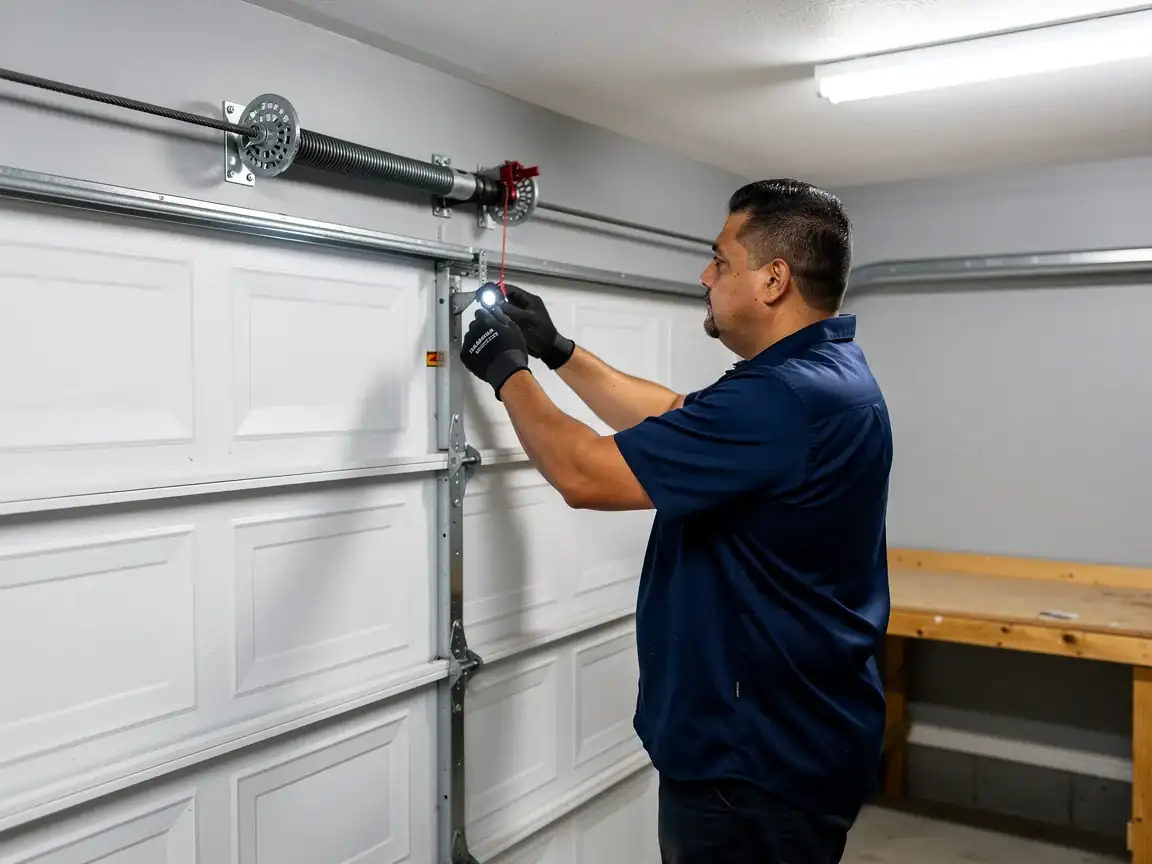
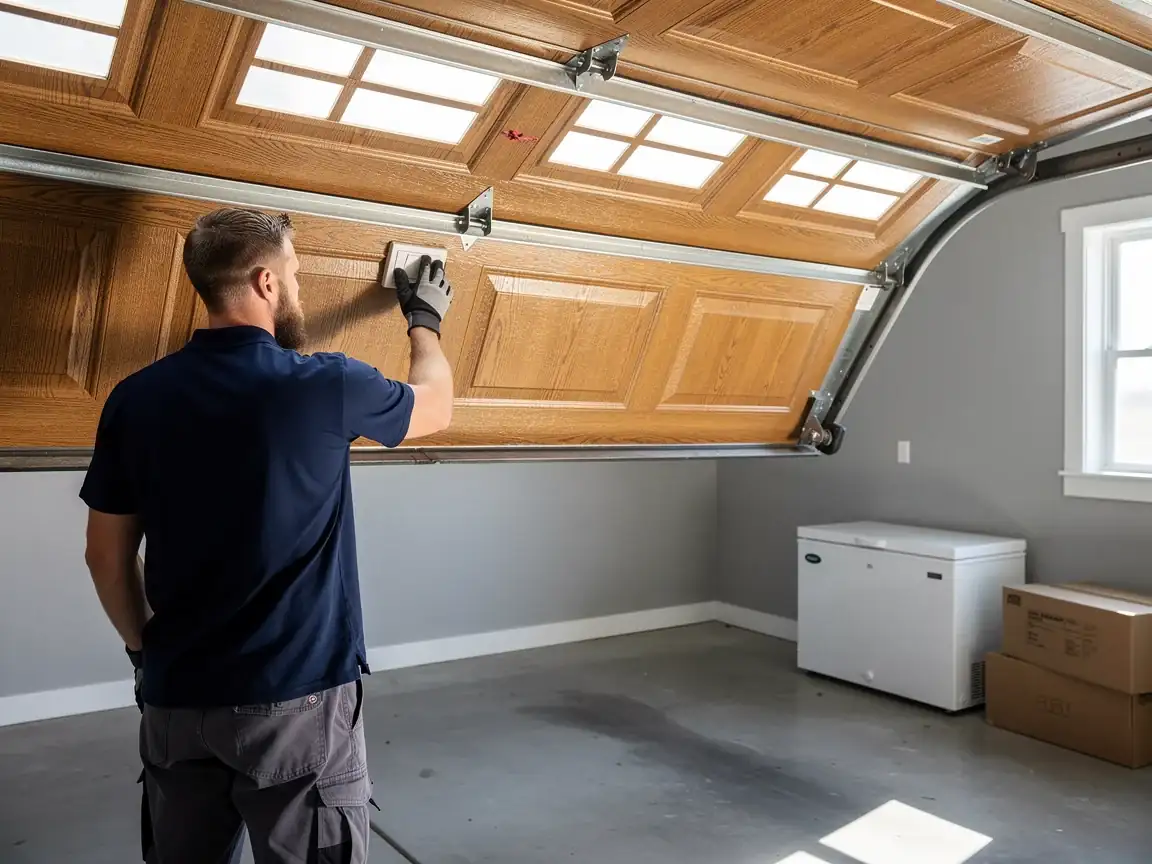
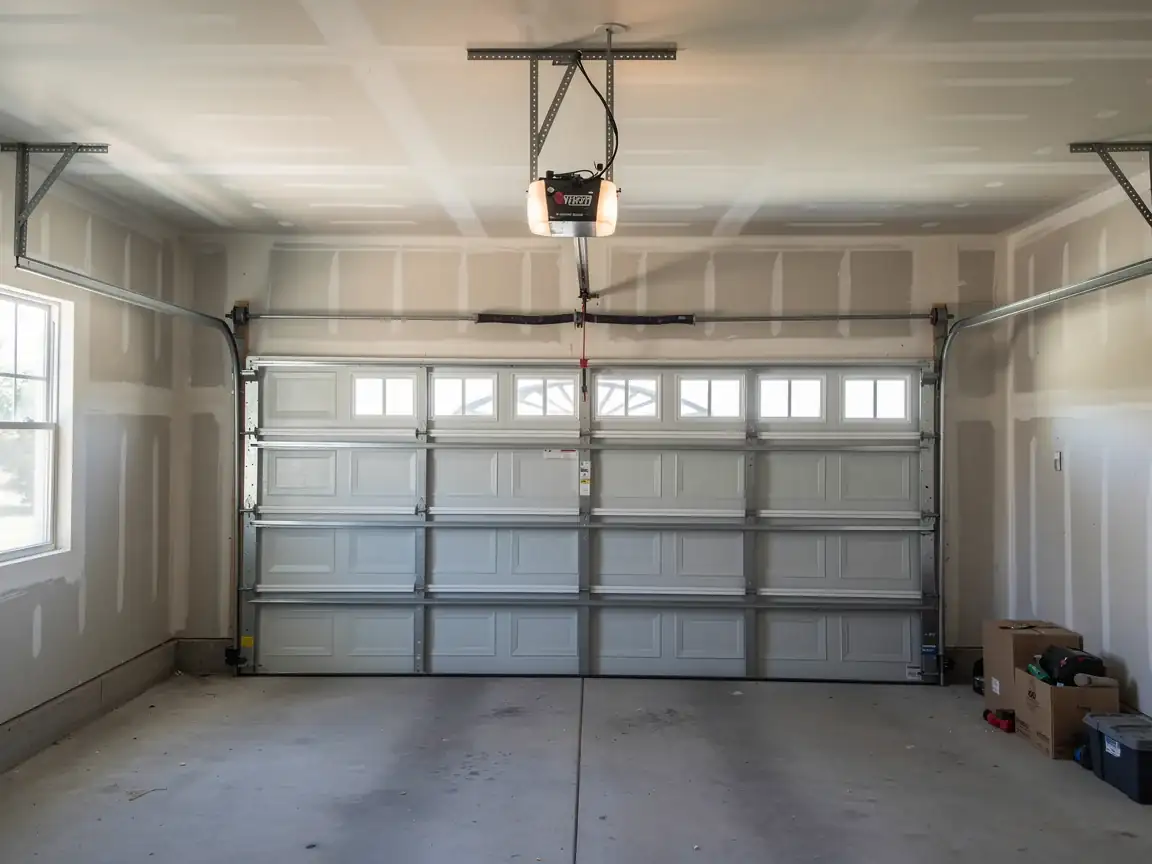
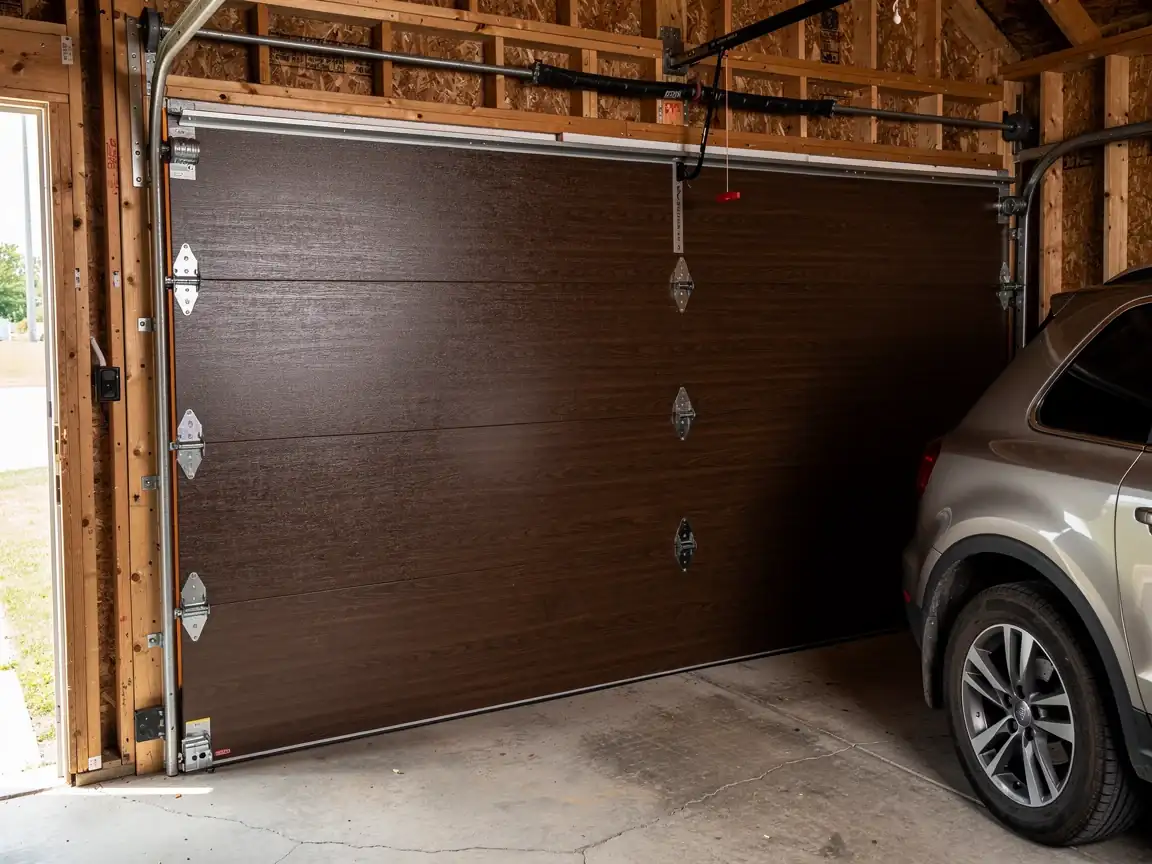
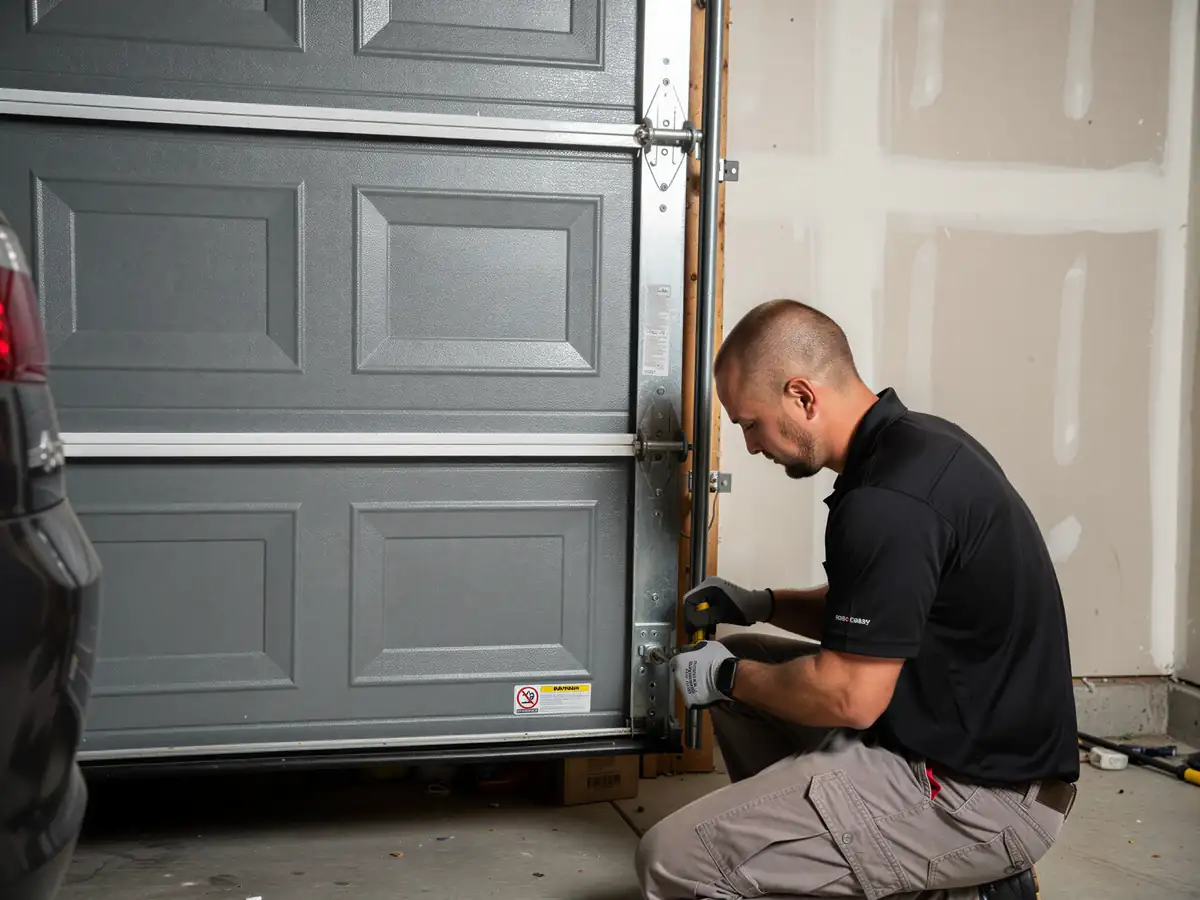
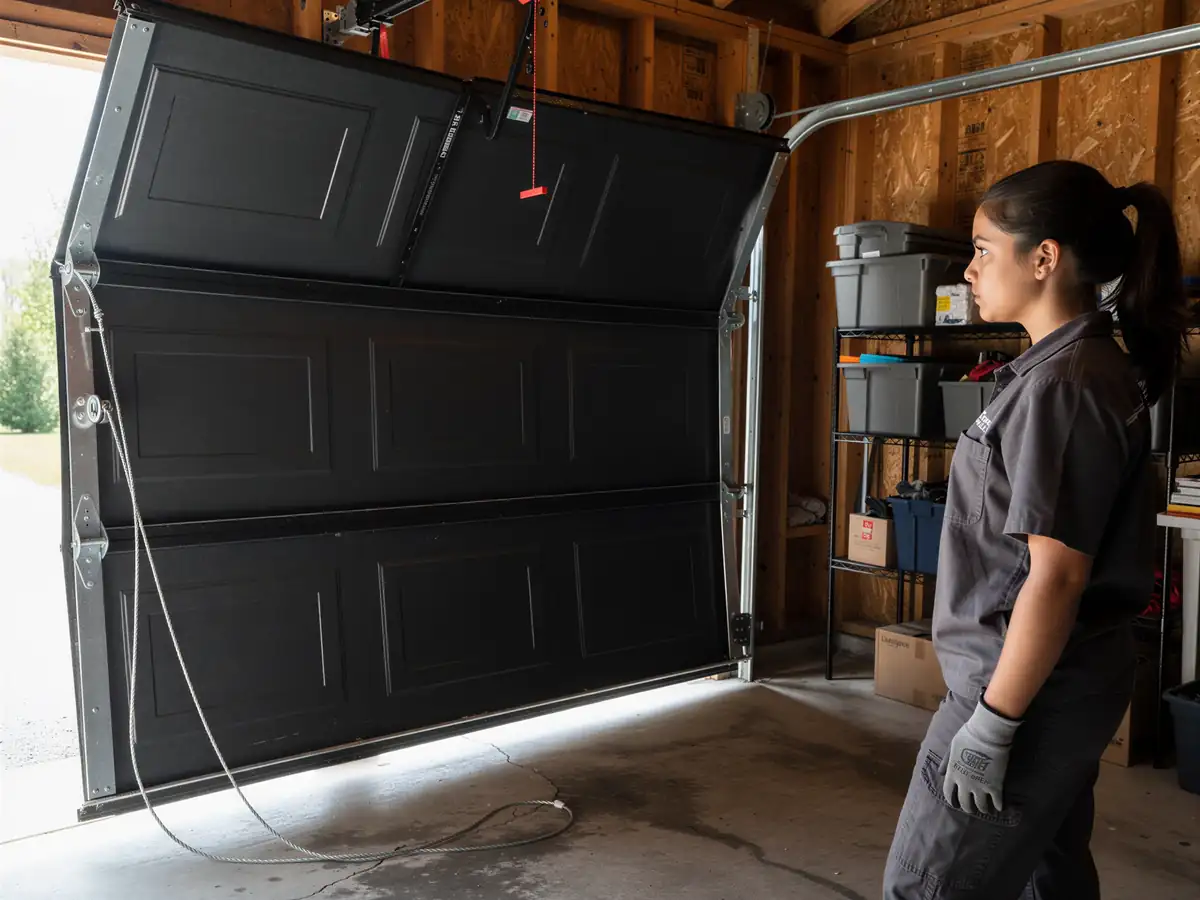
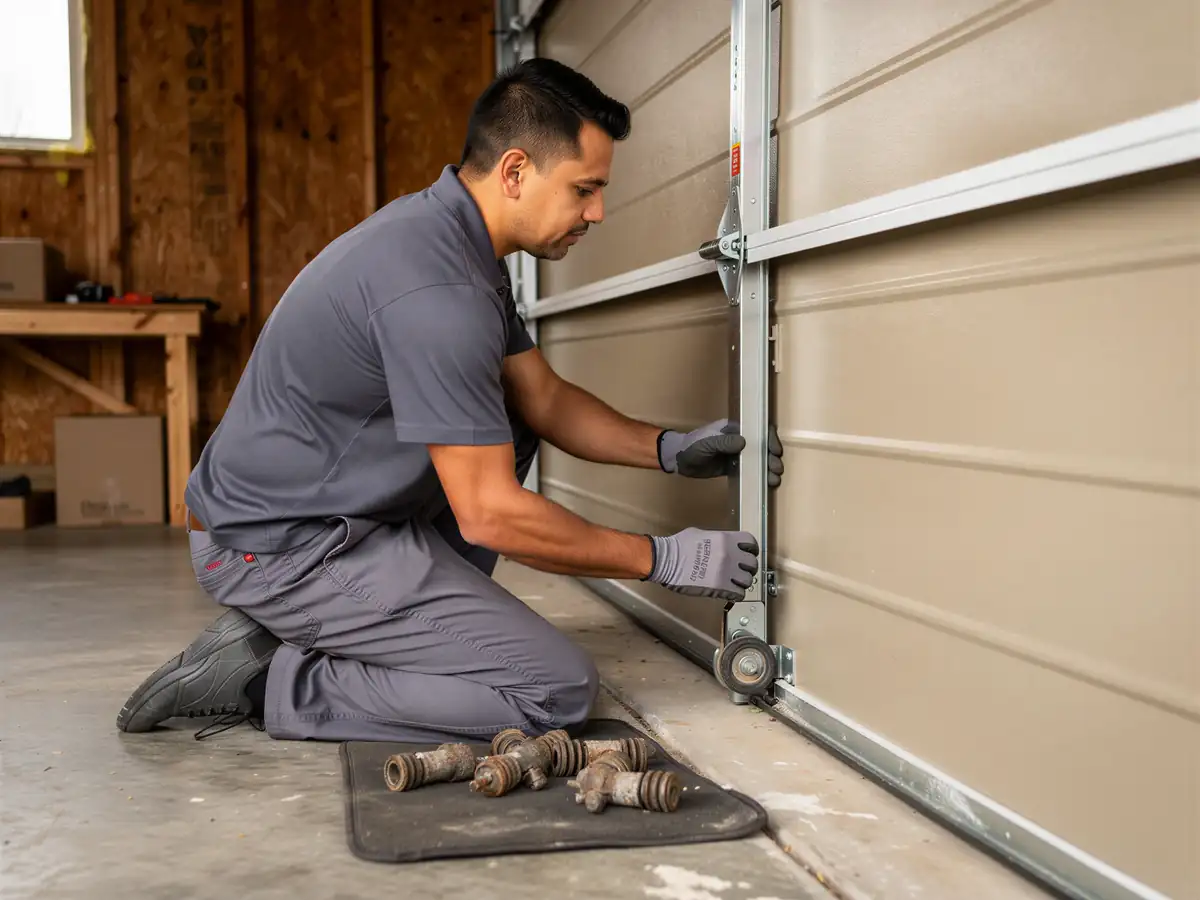
Across the wider Elizabethtown service area, the median house went up around 1975. Fort Knox sits a couple years past that, with a median build year of 1977. That's not a huge gap on paper, but it lands these doors at the tail end of the run that produced extension-spring setups with longer track sections and slightly different roller carriages than the earliest 1960s builds in other parts of the county. A roller job here usually means pulling the door off its hinges one section at a time, swapping the worn rollers for new steel or nylon units, checking the stems for play in the hinge hole, and making sure the track hasn't been bent from the old roller binding. On a standard double door that's six to eight rollers per side plus the two end hinges, and the top section rollers are usually the ones showing the worst wear because that's where the door travels fastest through the curve into horizontal track. We also check the track bolts while we're in there, since loose track is often what gets blamed on the rollers.
What Causes It Around Here
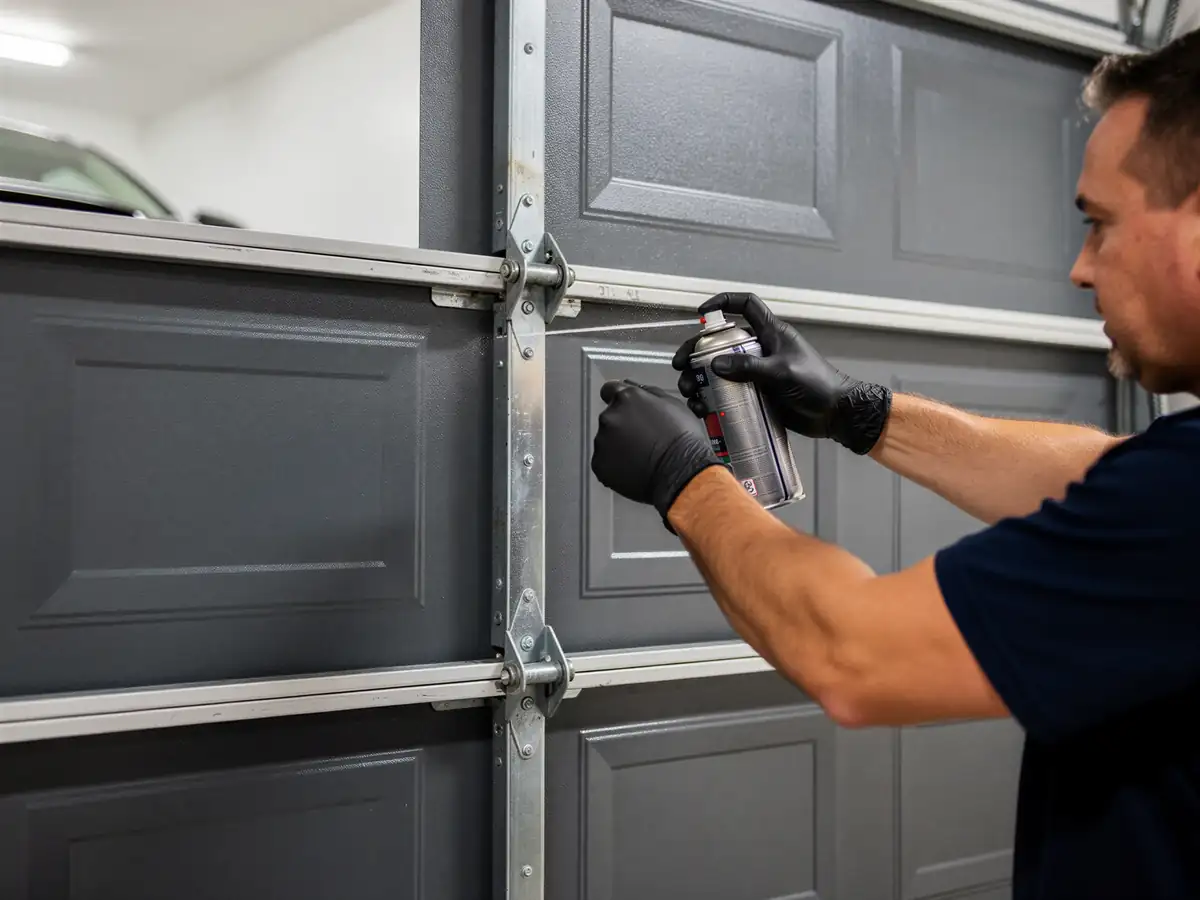
This area sits in a cold-moderate climate band, which means the rollers go through real freeze-thaw cycling every winter rather than a mild dip. Steel rollers with plain bearings seize up when grease stiffens in cold weather, and a door that gets forced through a stiff roller wears the roller wheel flat on one side within a season or two. Nylon rollers handle the cold better but the nylon itself gets brittle with age, especially once a roller passes the fifteen-year mark on a door built in the late 1970s. With 2,202 households in this part of the service area, we're not talking about a huge call volume, but the pattern repeats: whichever roller type went in originally tends to fail close to the same age across the block, because the houses were built in the same stretch of years. Road grit and winter de-icing debris that gets kicked up into the bottom track also accelerates wear on the lowest rollers, more than people expect.
Doing It Yourself
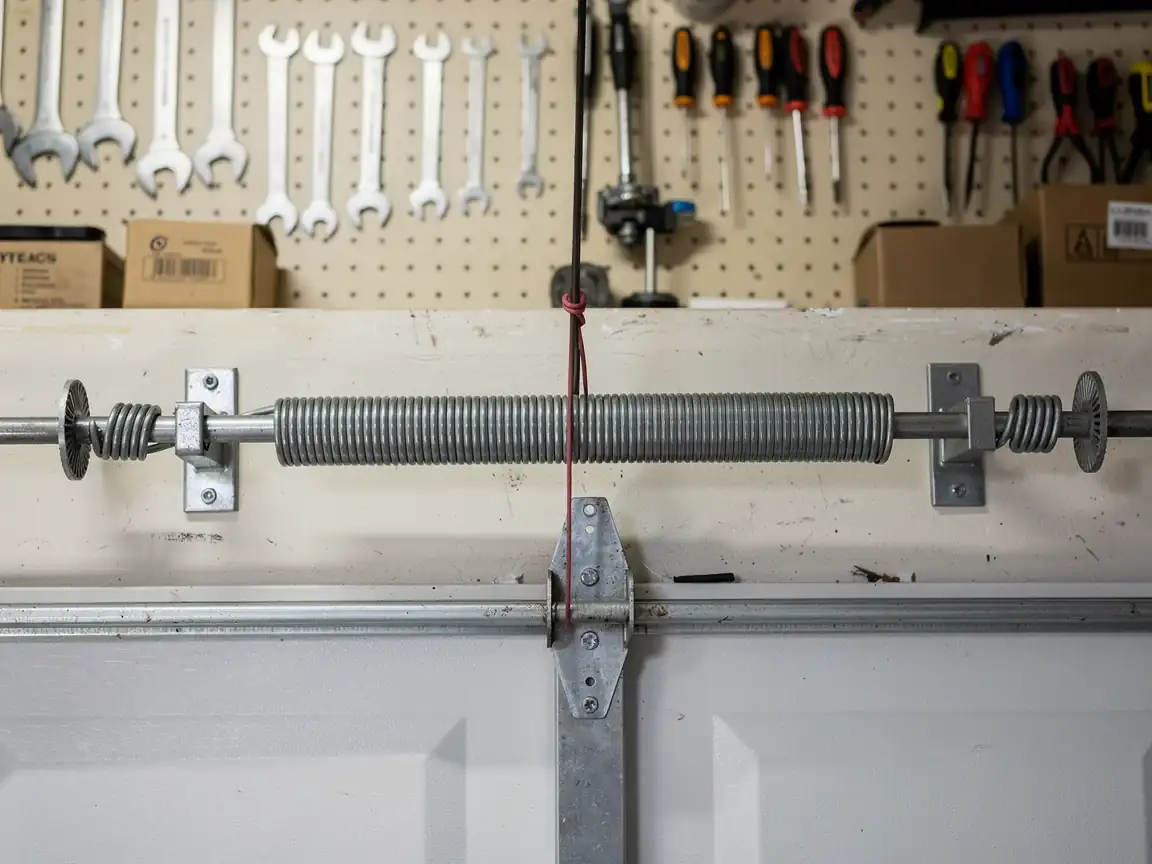
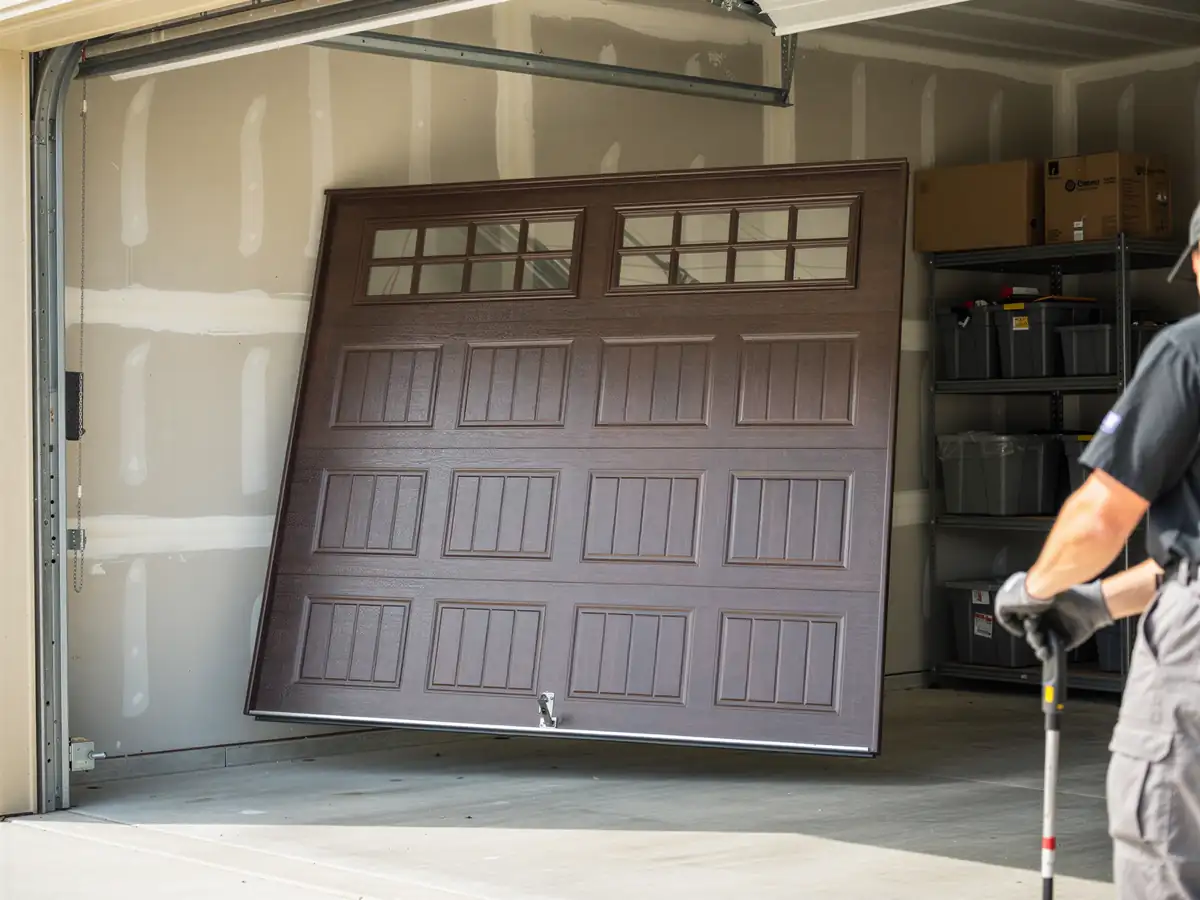
Replacing a roller on the bottom section of the door, away from the spring side, is a job a reasonably handy homeowner can do with the door down and unplugged. Pull the roller bracket bolts, slide the old roller out of the hinge, drop the new one in, re-bolt. Where it stops being a weekend project is anywhere near the torsion spring or on a door that's still under tension, because a roller stuck in a bent track section can mean the cable or spring is doing something it shouldn't be. If you're not sure whether the door is under spring tension when you start, treat it like it is and call someone. We'd rather talk you out of a job over the phone than stitch you up after.