Doing It Yourself
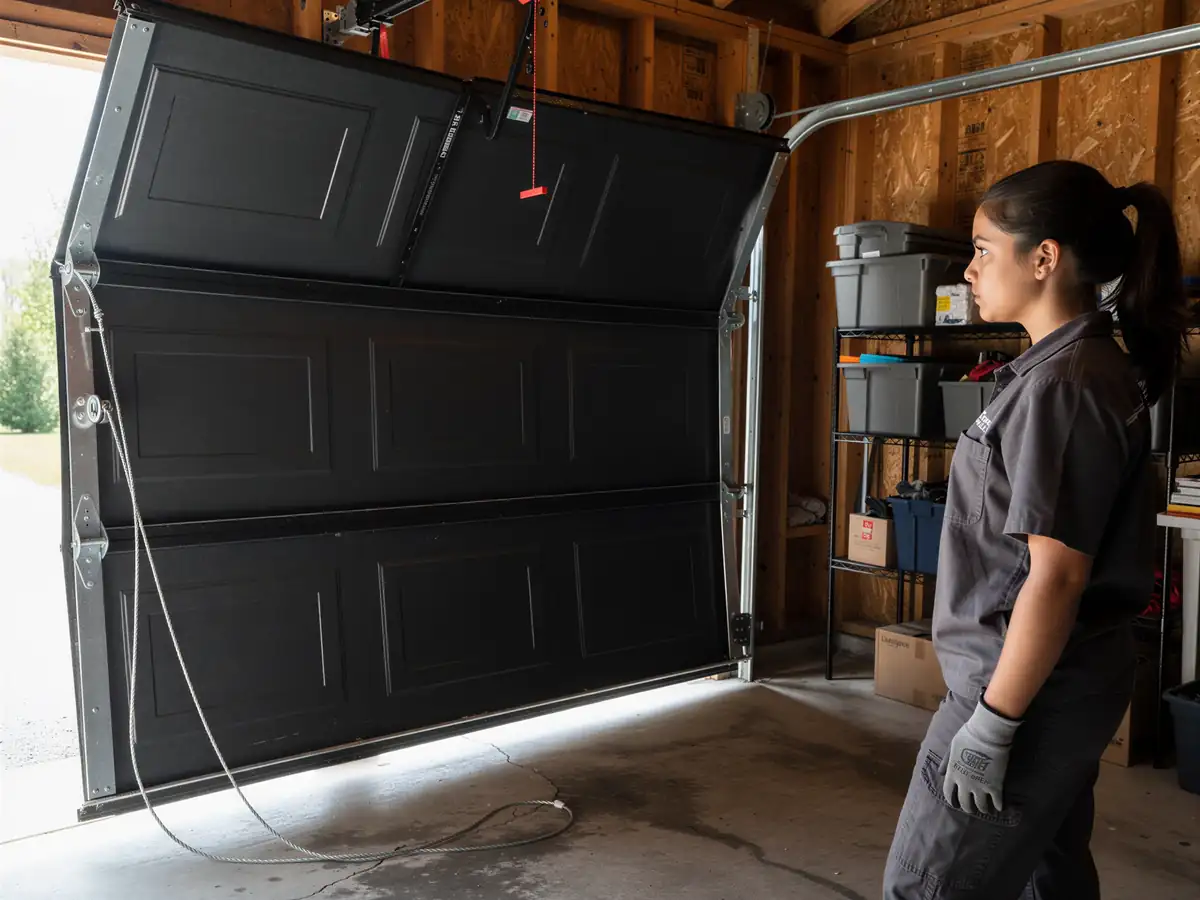
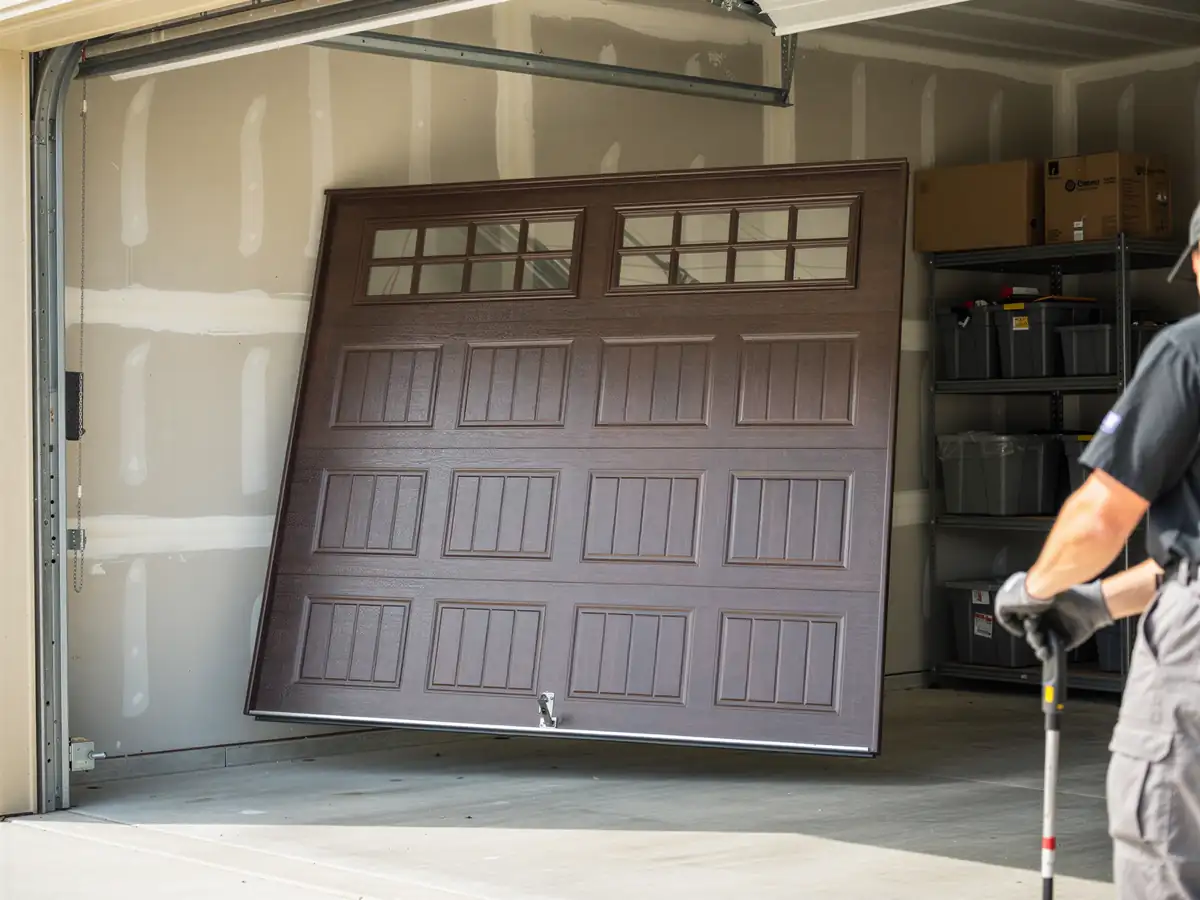
If the door is hanging at an angle or one side has popped out of the track, stop pulling on the opener remote. Running the motor against a jammed track usually bends the track further or snaps a cable, and both of those cost more to fix than the original problem. Pull the release cord, lift the door by hand if it moves freely, and leave it alone if it doesn't.
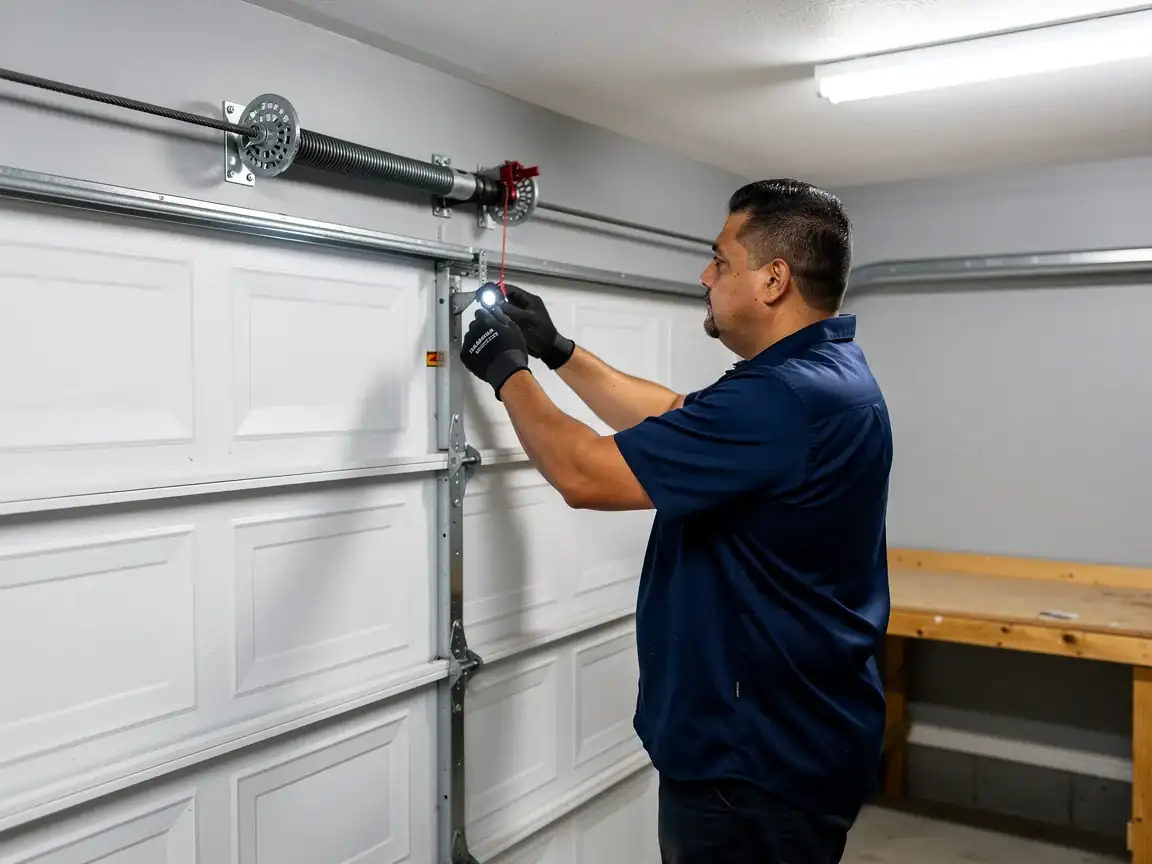
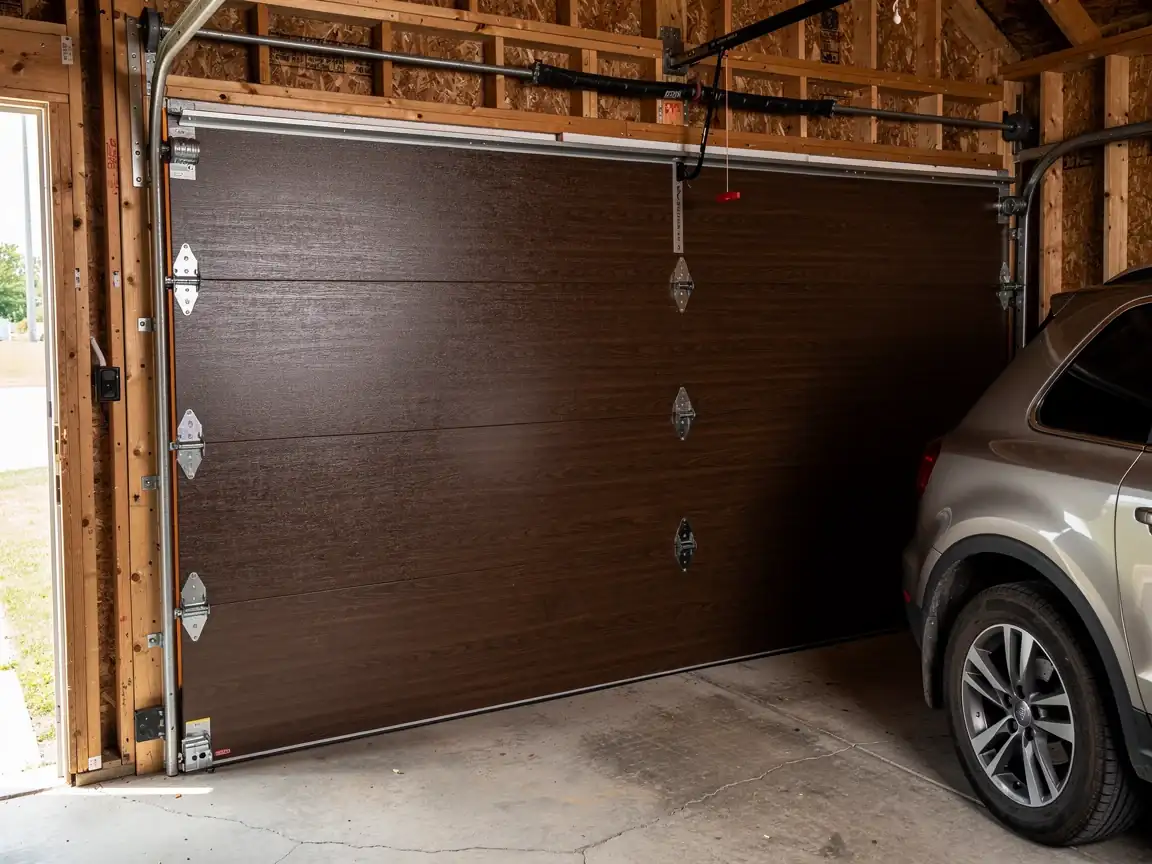
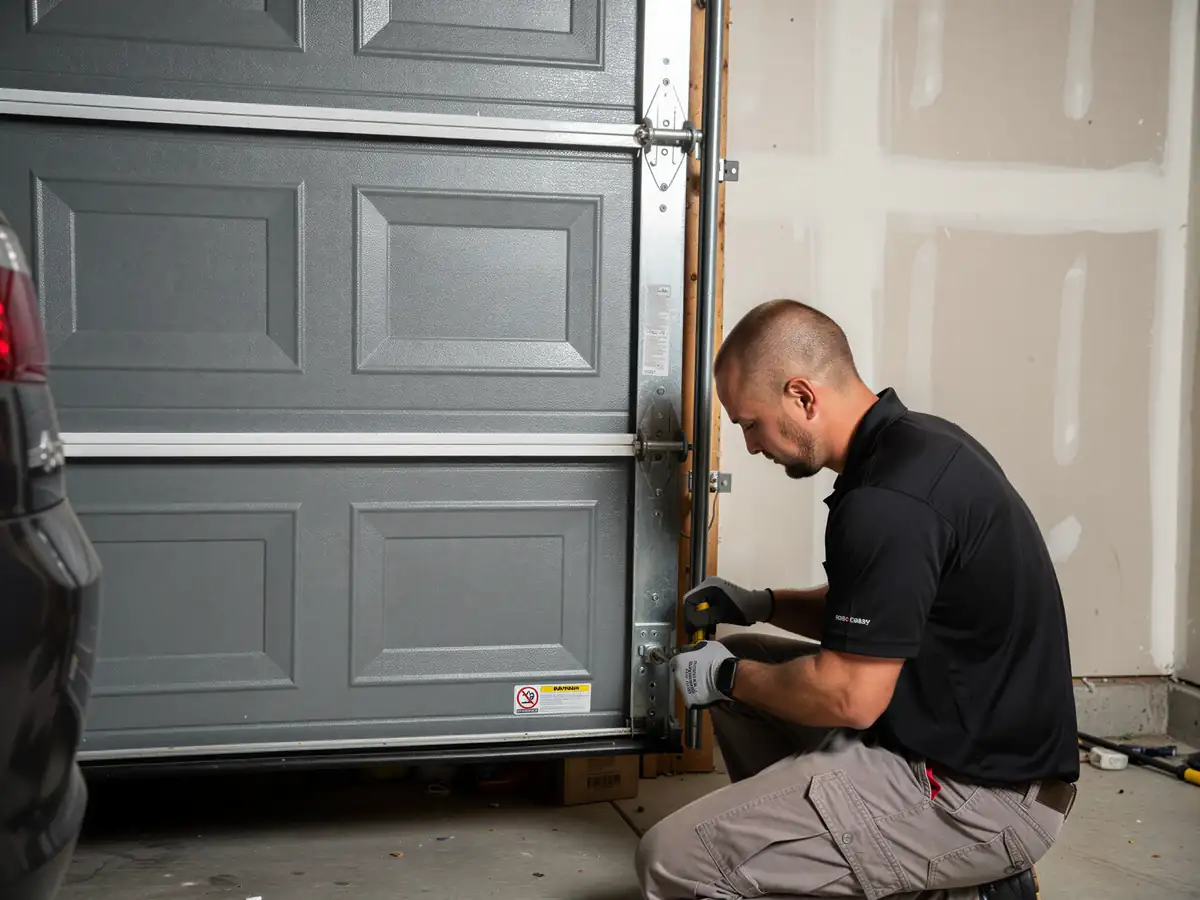
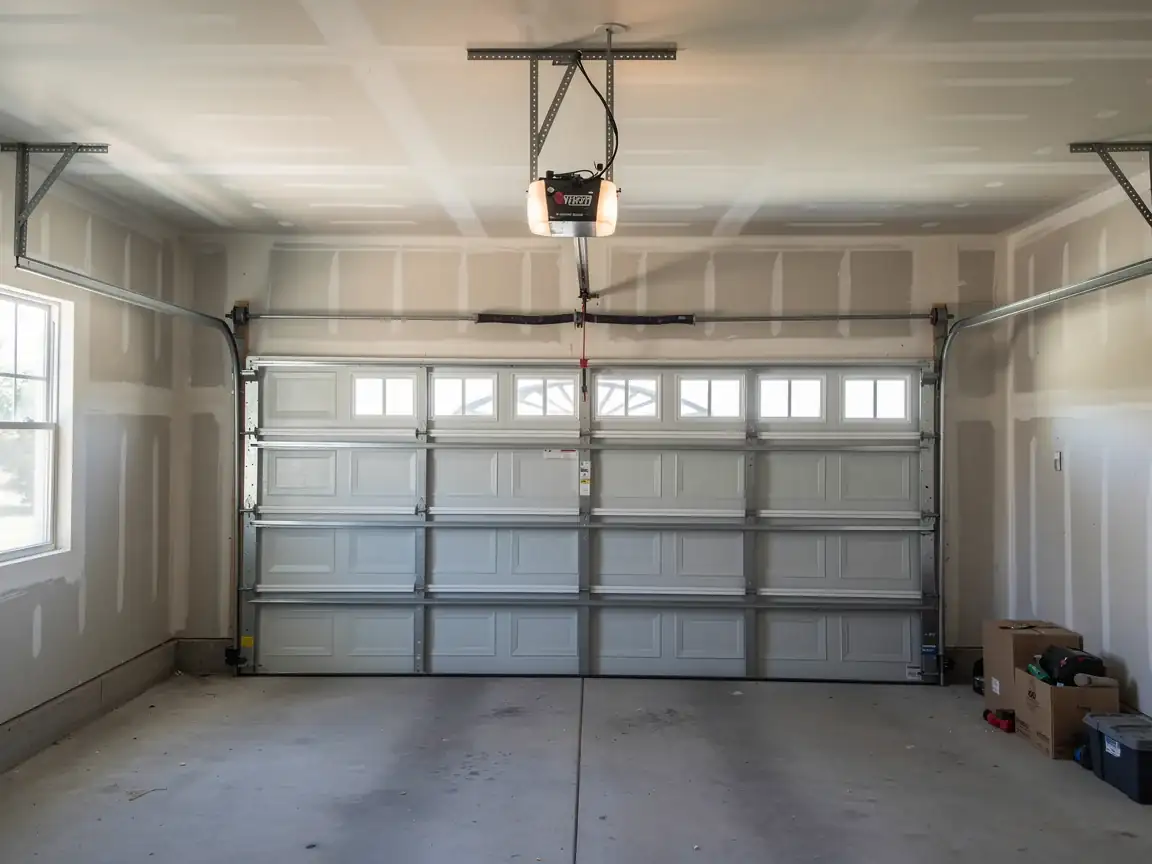
You can check a few things safely. Look at the brackets holding the vertical track to the frame - on houses built in the 1960s and 70s, those brackets are often the original steel, and loose lag screws are a common, fixable cause. Check for a roller sitting outside the track rail instead of inside it; sometimes you can see the gap from across the garage. What you should not do is try to force the roller back into the track while the door is under spring tension, or climb up to the horizontal track near the springs. That part of the job is where people get hurt.
If the door is off track on one side only and still closes most of the way, it's tempting to keep using it like that. We'd rather you call before the second roller goes.
What You Are Seeing
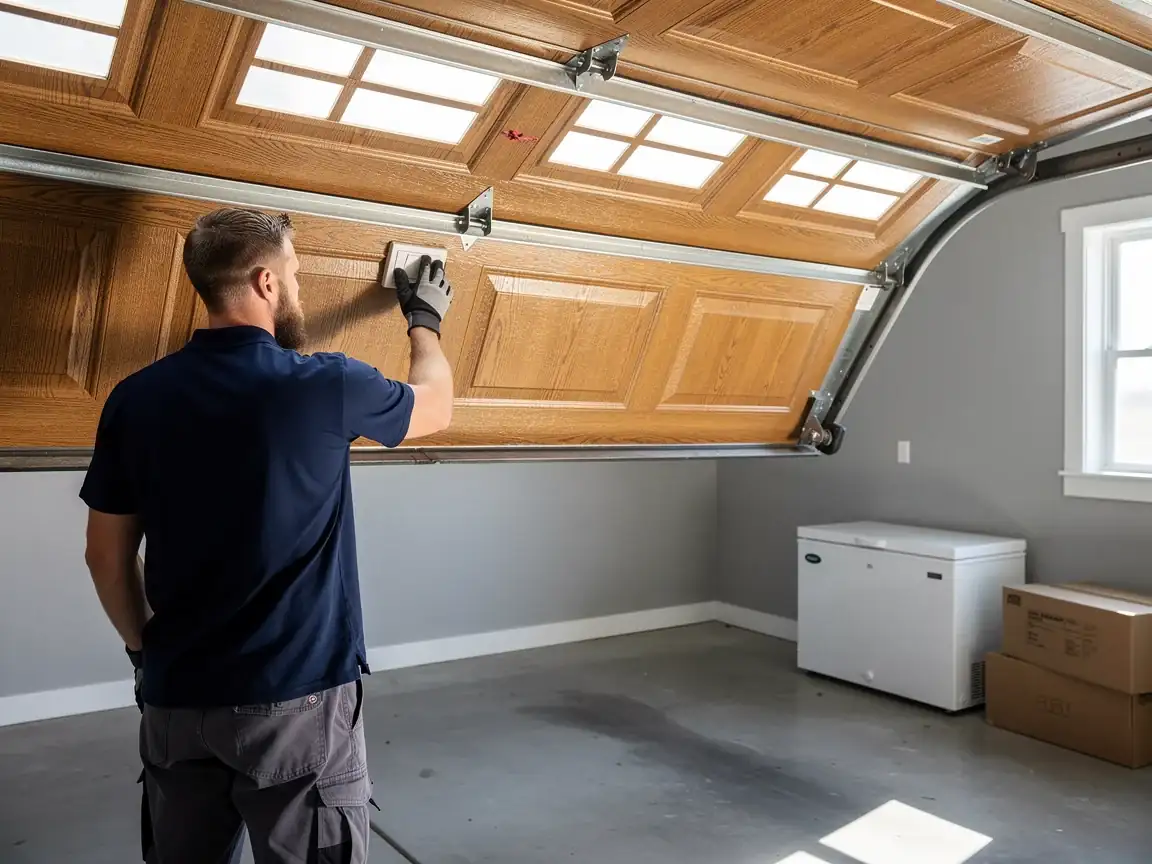
A door off track almost never fails all at once. It starts as a door that drags, shudders, or makes a popping sound a few inches before fully closing. Then one day a roller jumps the rail and the bottom corner of the door sits noticeably lower on one side, or the whole panel leans.
Sometimes it's one roller that's worn thin and finally slipped past the track lip. Sometimes the track itself has pulled away from the wall bracket, which is a different repair than a worn roller and needs different hardware. And sometimes the cable on one side has frayed or come off its drum, which lets that side of the door drop while the other side holds - this one looks like an off-track door but it's a cable problem.
The giveaway that it's track-related rather than spring-related is usually the sound: a grinding or scraping noise as the door travels, versus the sudden loud bang of a spring letting go. If your door came off the track and you also heard a bang, treat that as a spring failure with a secondary track problem, not just a track problem.
What Causes It Around Here
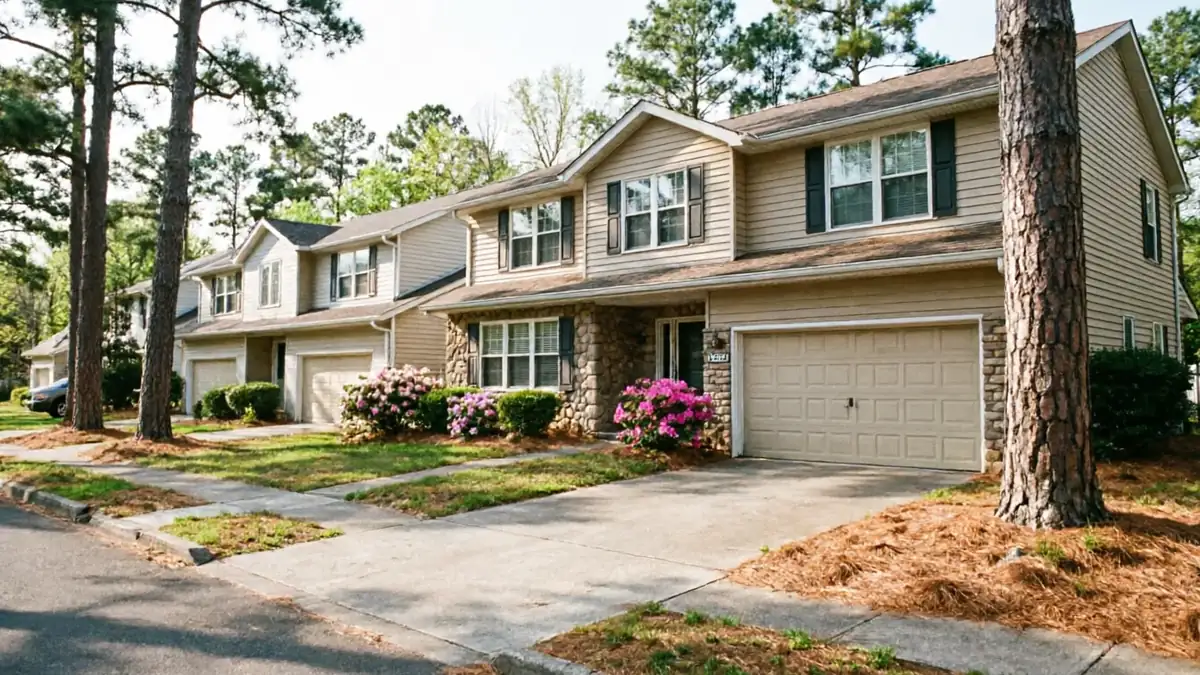
Elizabethtown's housing stock runs mostly 1957 to 2001
With the bulk of it dating to the 1960s and 70s across the area's older neighborhoods. Garage doors from that era were built with lighter steel track and roller hardware than what's sold today, and forty-plus years of expansion and contraction has a way of working lag bolts loose in the framing. On a lot of these original setups, the track brackets were never upgraded when the door or opener was replaced, so you end up with a newer door running on an older, slightly sprung track.
The cold winters here add a second layer to it
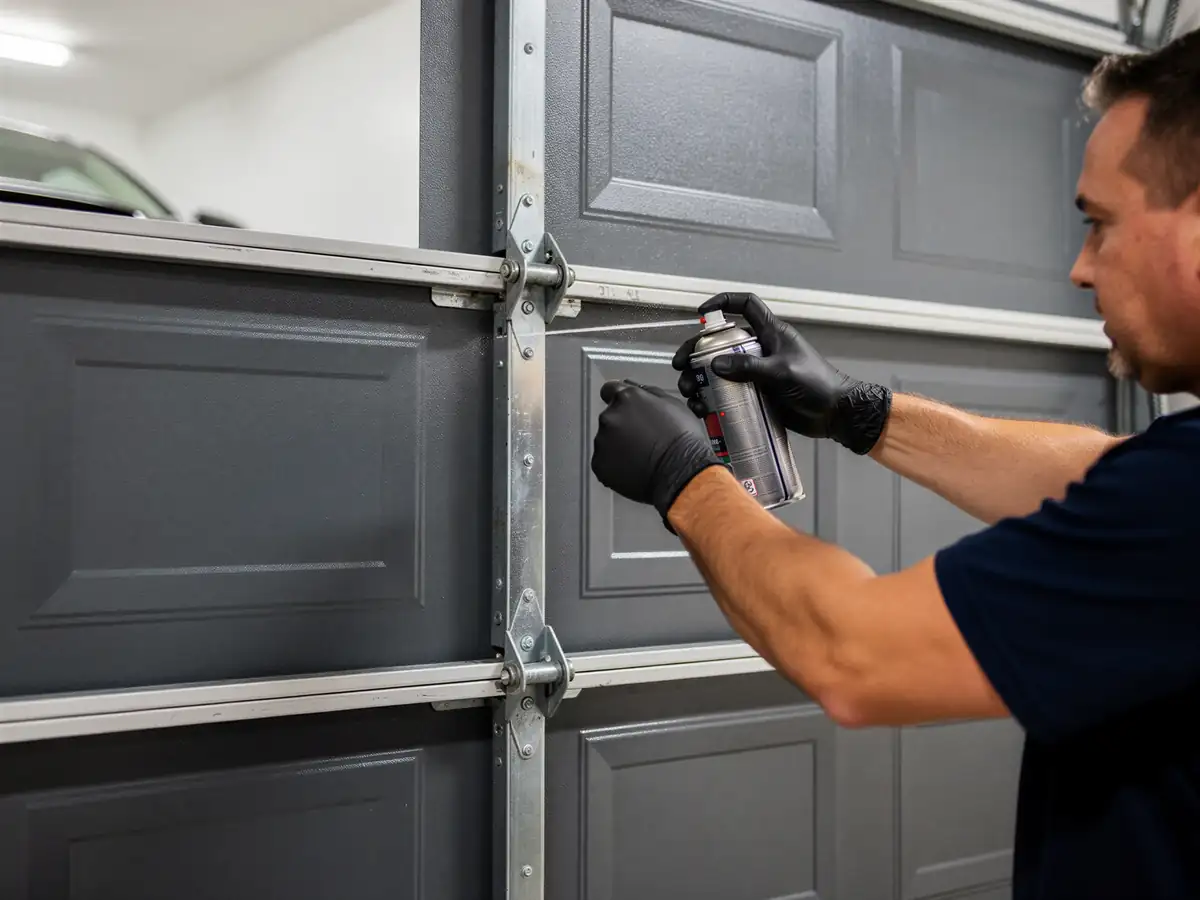
Steel track contracts in cold weather, and grease that's gone thick or dry doesn't let rollers seat the way they should on a cold morning. A roller that's borderline worn will often choose a 20-degree morning to finally jump the rail, because the metal has less give and the roller bearing is stiffer than it was in August.
Put those two things together
Aging original hardware plus a real cold season - and off-track calls cluster here in a way they wouldn't in a market with newer housing or a milder winter.
What the Repair Takes
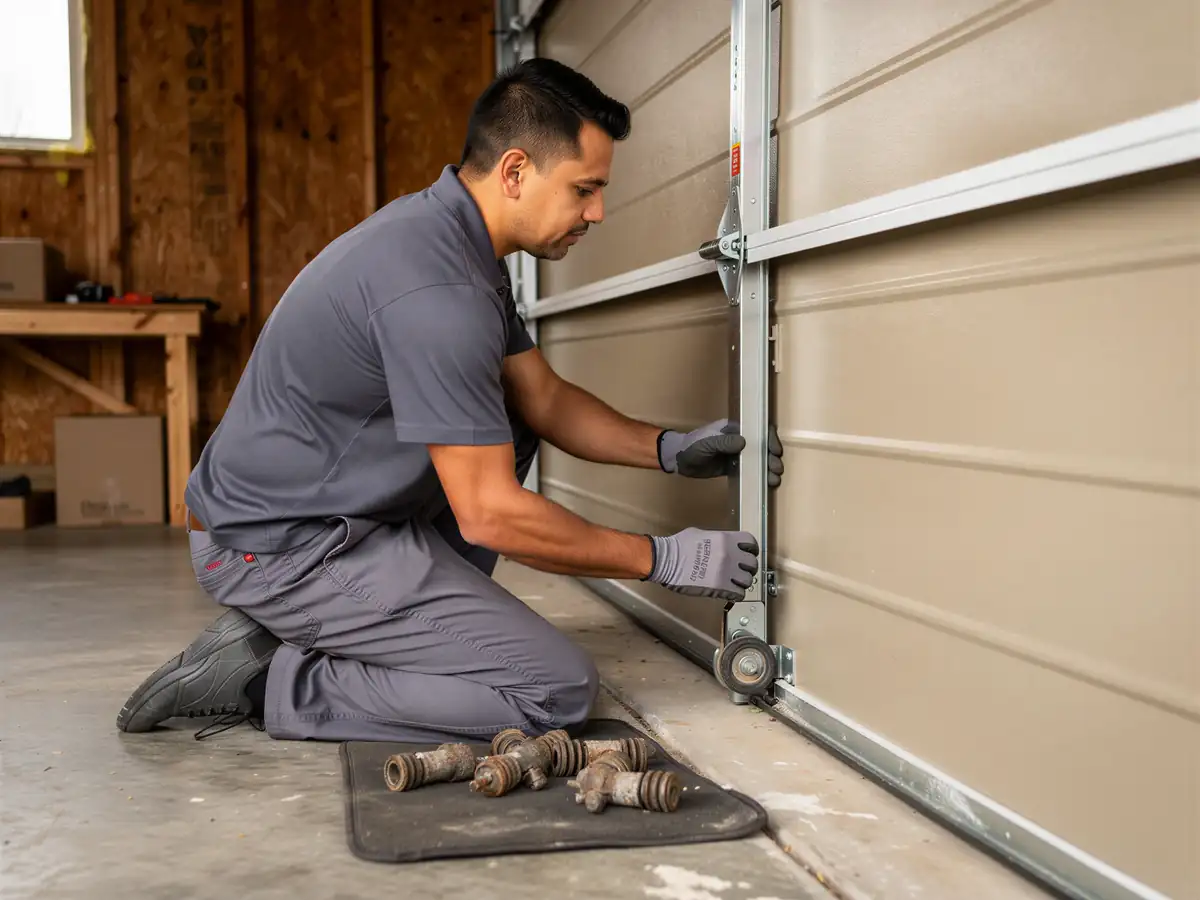
Fixing an off-track door starts with figuring out which of three things actually failed: the roller, the track bracket, or the cable. A worn roller with a sound track is usually a straightforward swap - we release tension, slide the old roller out, set a new one, and reseat the door on the rail. A bent track or a bracket that's pulled loose from the framing takes longer, because the track has to be pulled true or replaced on that section before the door will run straight again.
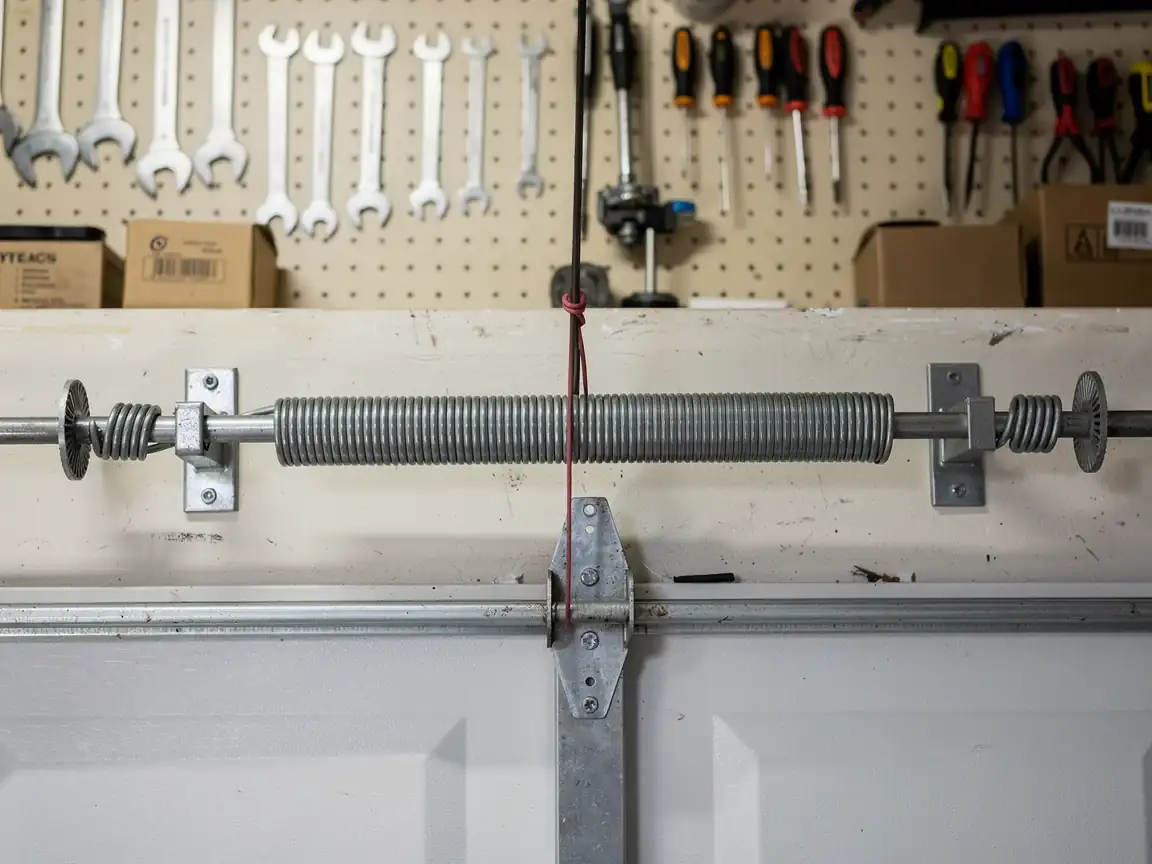
If it's a cable that's slipped off a drum, that's a tension job, not a track job, and it gets treated that way - cables under tension are not something to handle without the right tools.
One honest limit: if the track is bent badly enough, or the door itself has racked out of square from running off-track for a while, patching the track section isn't worth it. At that point replacing the full track assembly, and sometimes the door, costs less over time than repeated patch repairs on hardware that's already fighting itself.