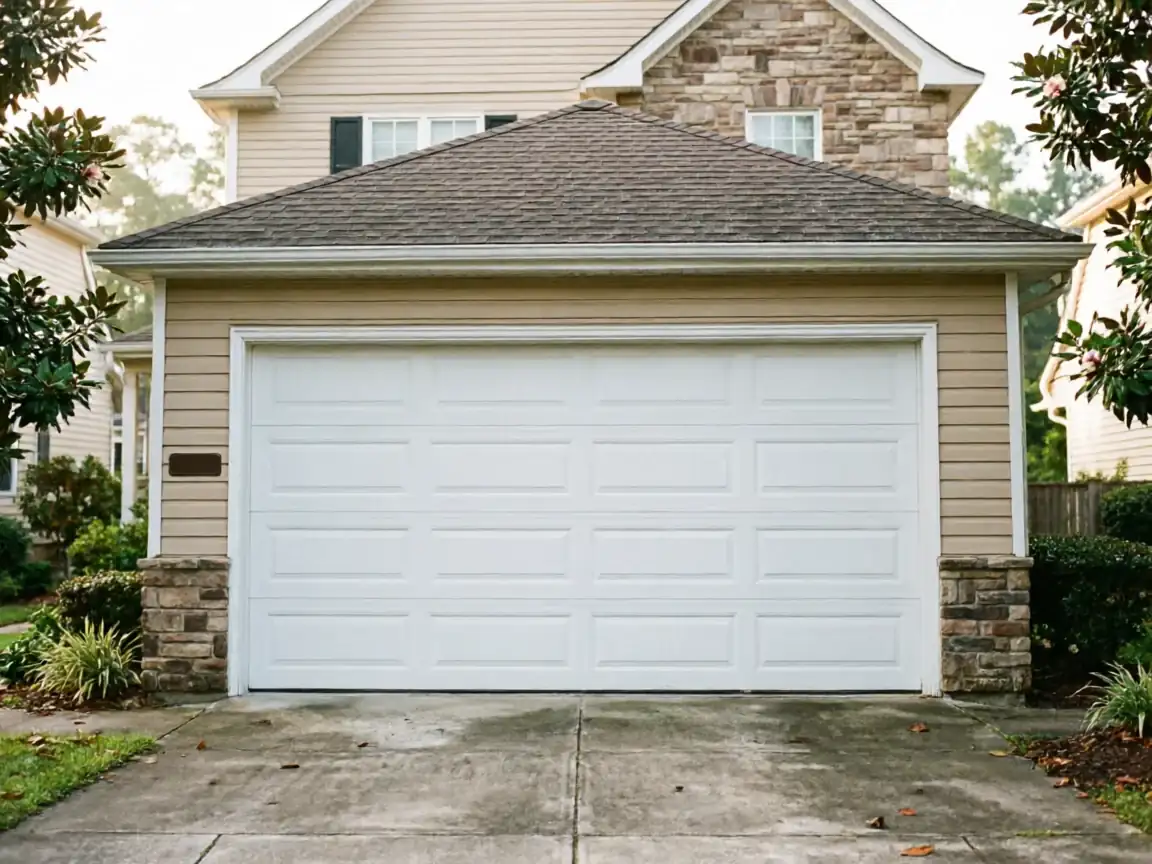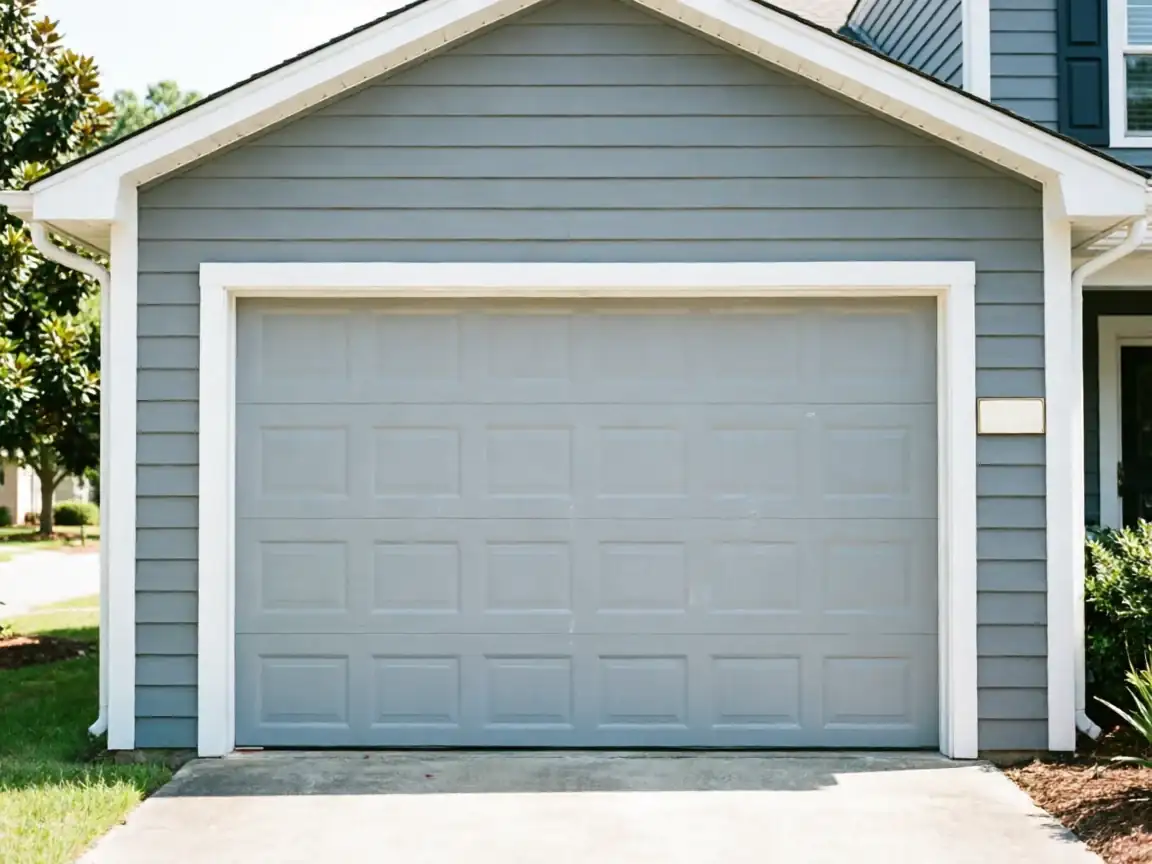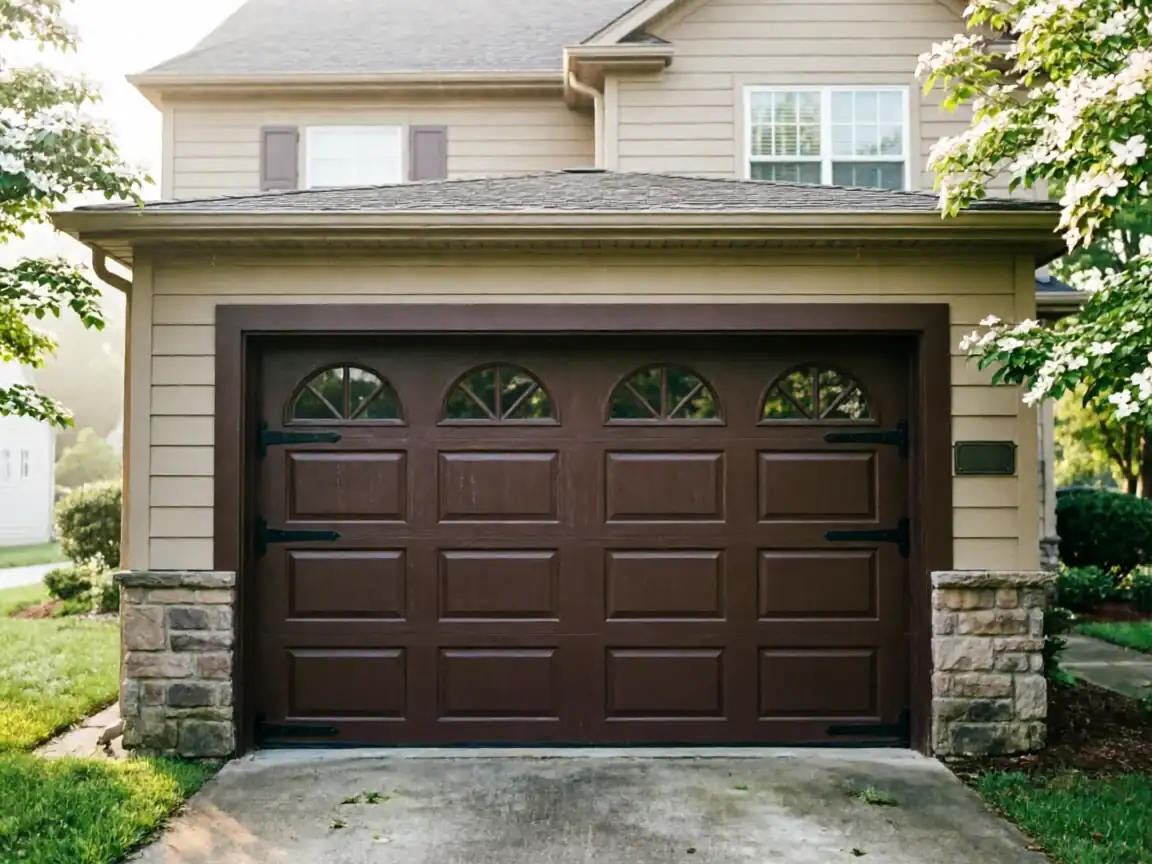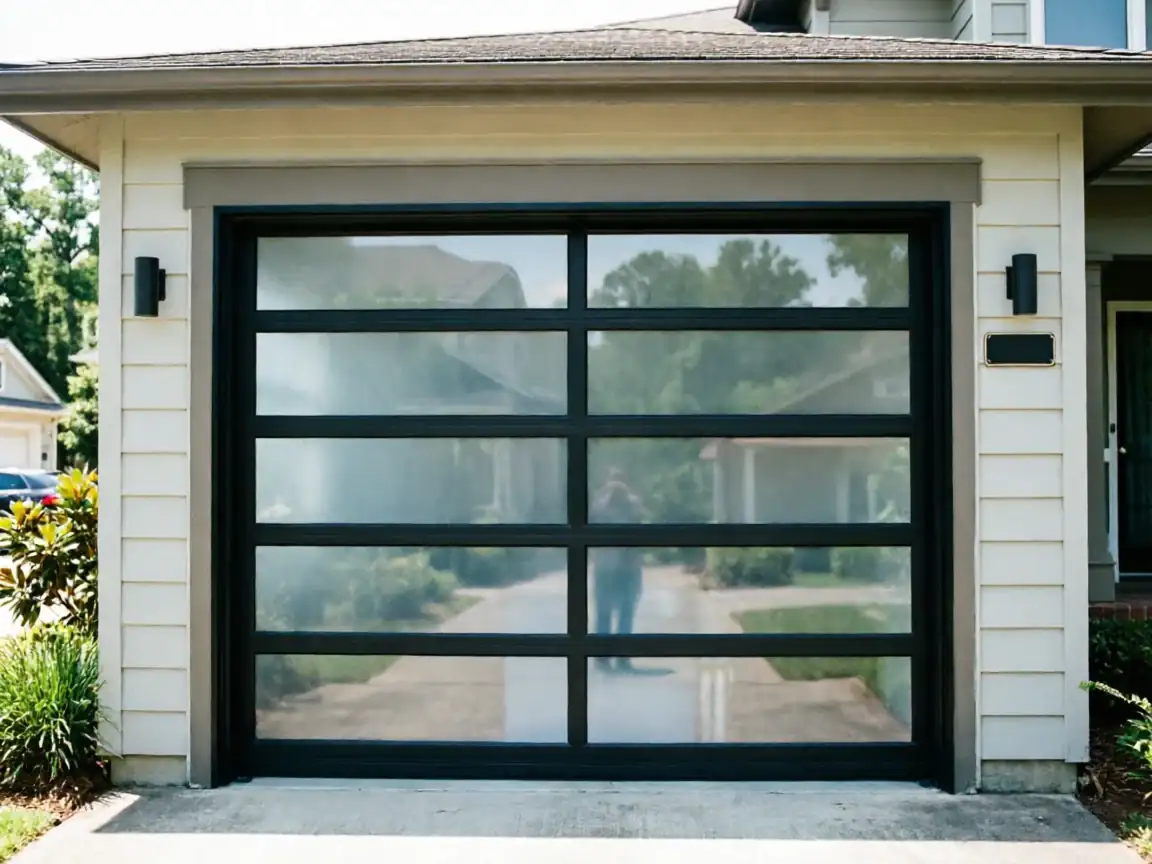
Doing It Yourself
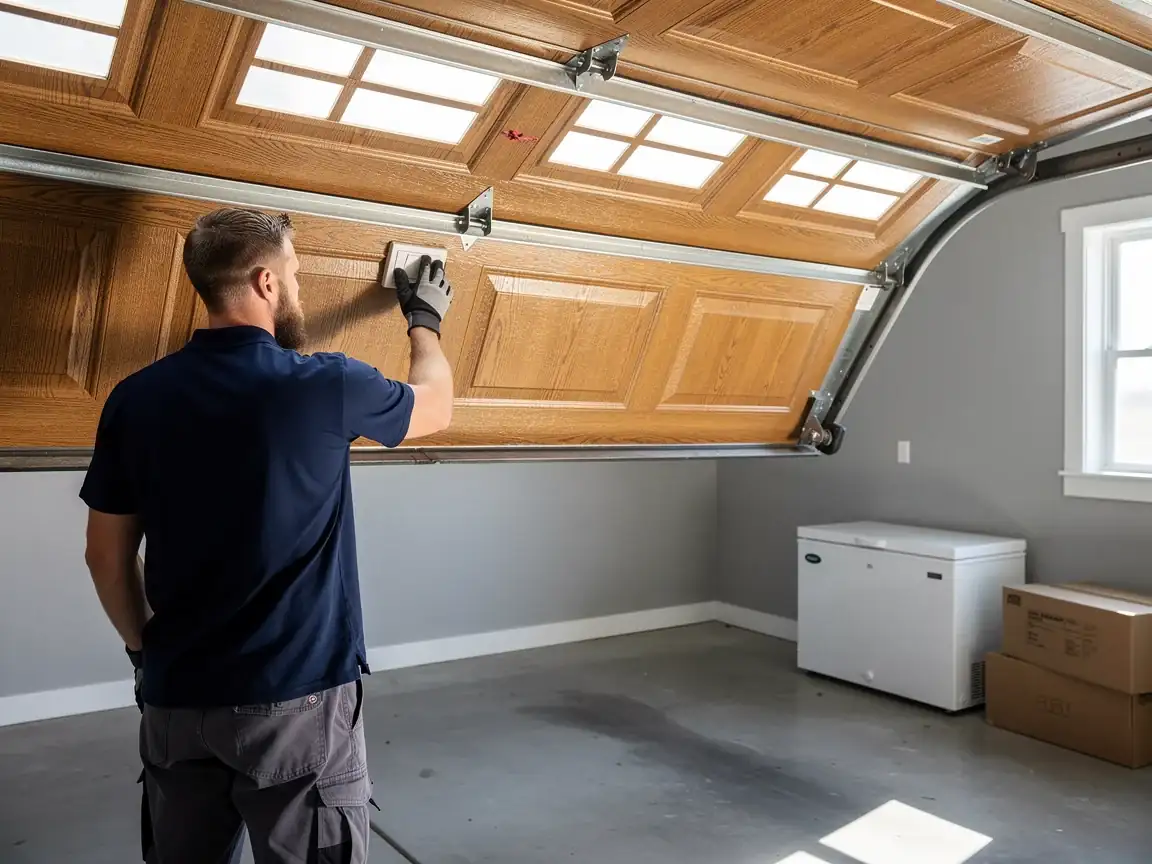
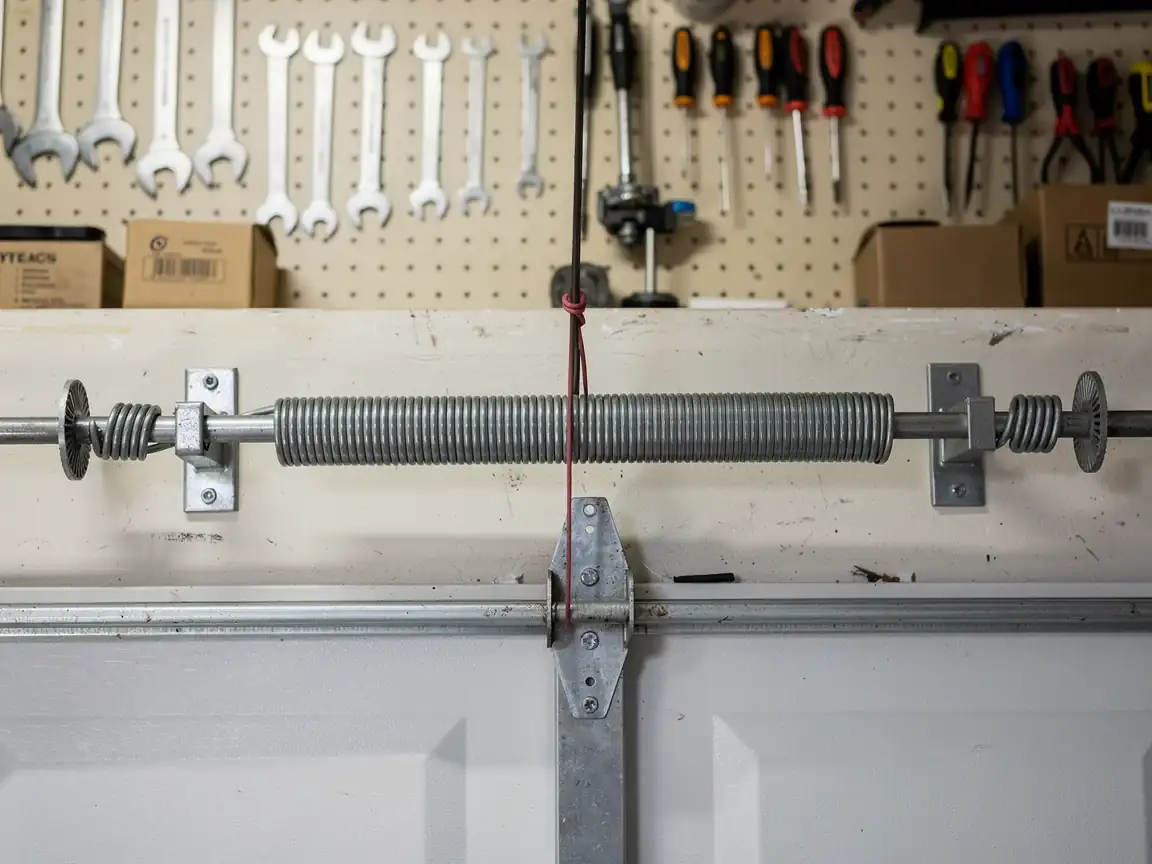
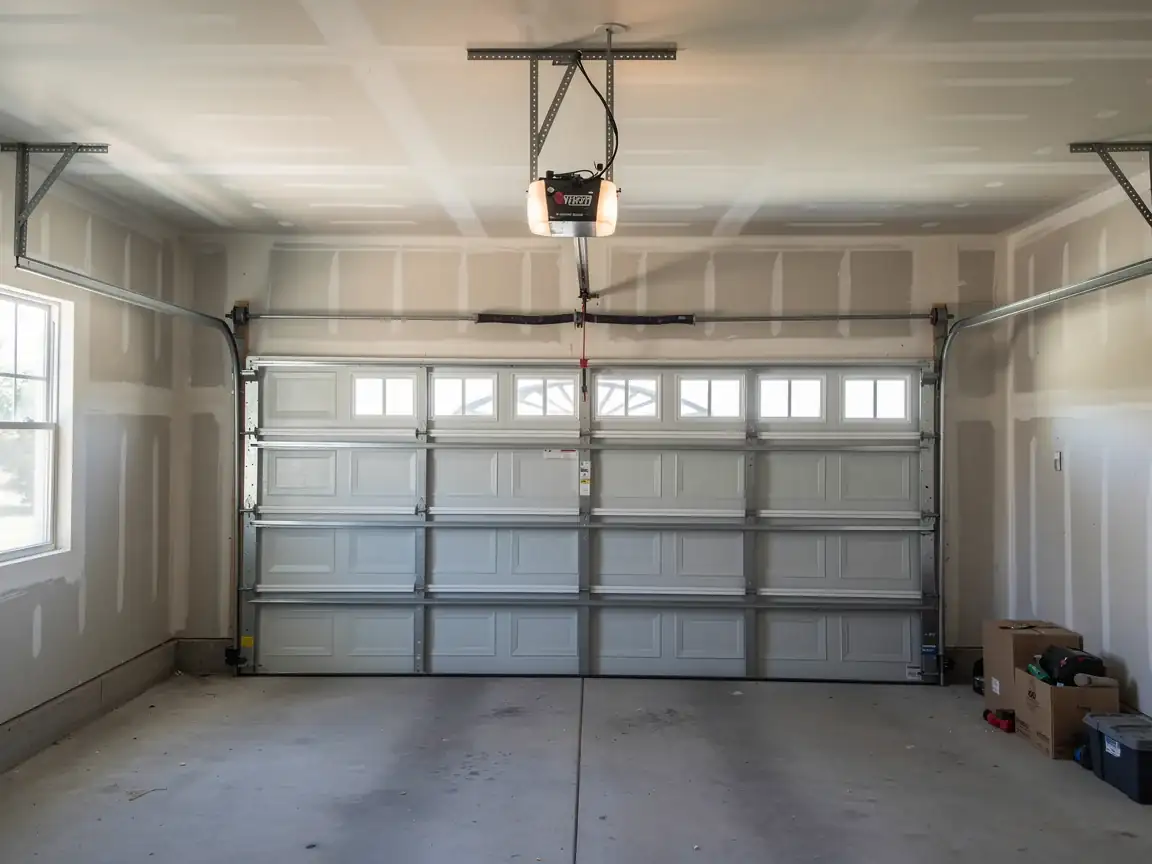
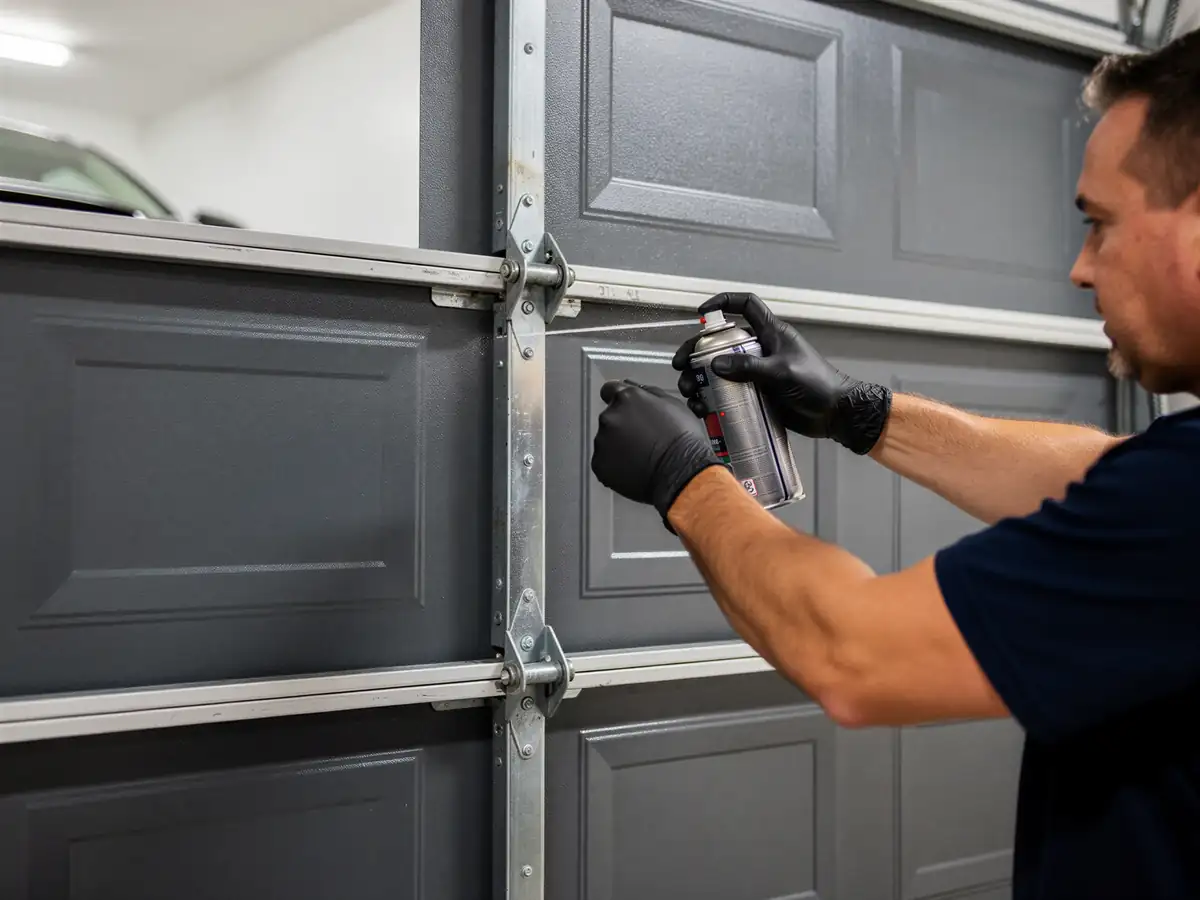
There's real maintenance you can do without a truck in your driveway. Once a season, pull the release handle, swing the door, and check it holds position about halfway up - if it drifts, the spring tension is off. Wipe the tracks with a dry rag instead of spraying lubricant into them; grease inside a track collects grit and makes rollers bind, not glide. A light coat of lithium grease on the hinges and the spring coils (not the track) once or twice a year keeps steel from drying out, which matters more here than in a warm-climate market since cold tightens metal and makes dry parts crack instead of flex.
Check the weatherstrip at the bottom of the door for gaps - with winters cold enough to matter in this part of Kentucky, a gapped seal lets cold air sit against the bottom panel and the opener's sensors.
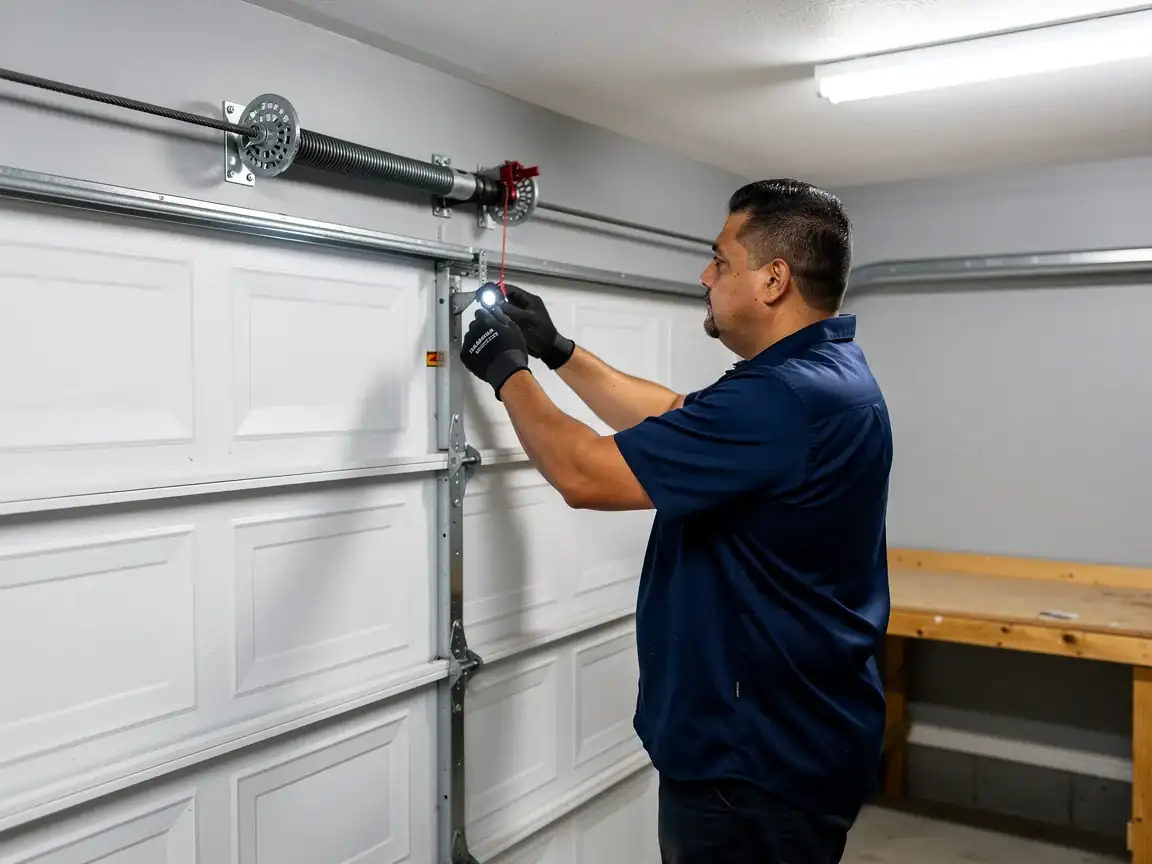
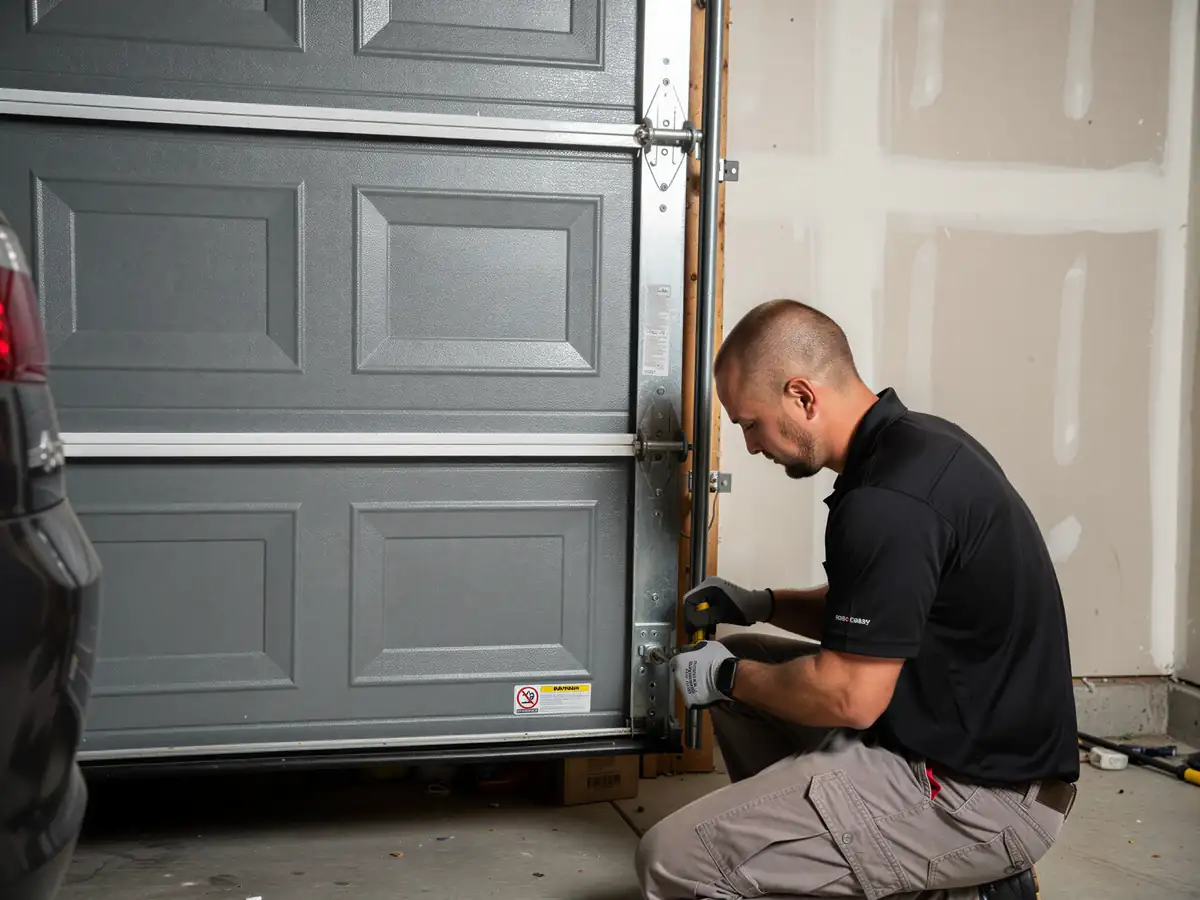
What you shouldn't touch: the torsion spring itself. It's under enough stored tension to break a bone if it lets go, and that's true no matter how old or new the door is. If a bolt on the spring anchor bracket looks rusted through or the cable is frayed, that's a call, not a DIY afternoon.
What You Are Seeing
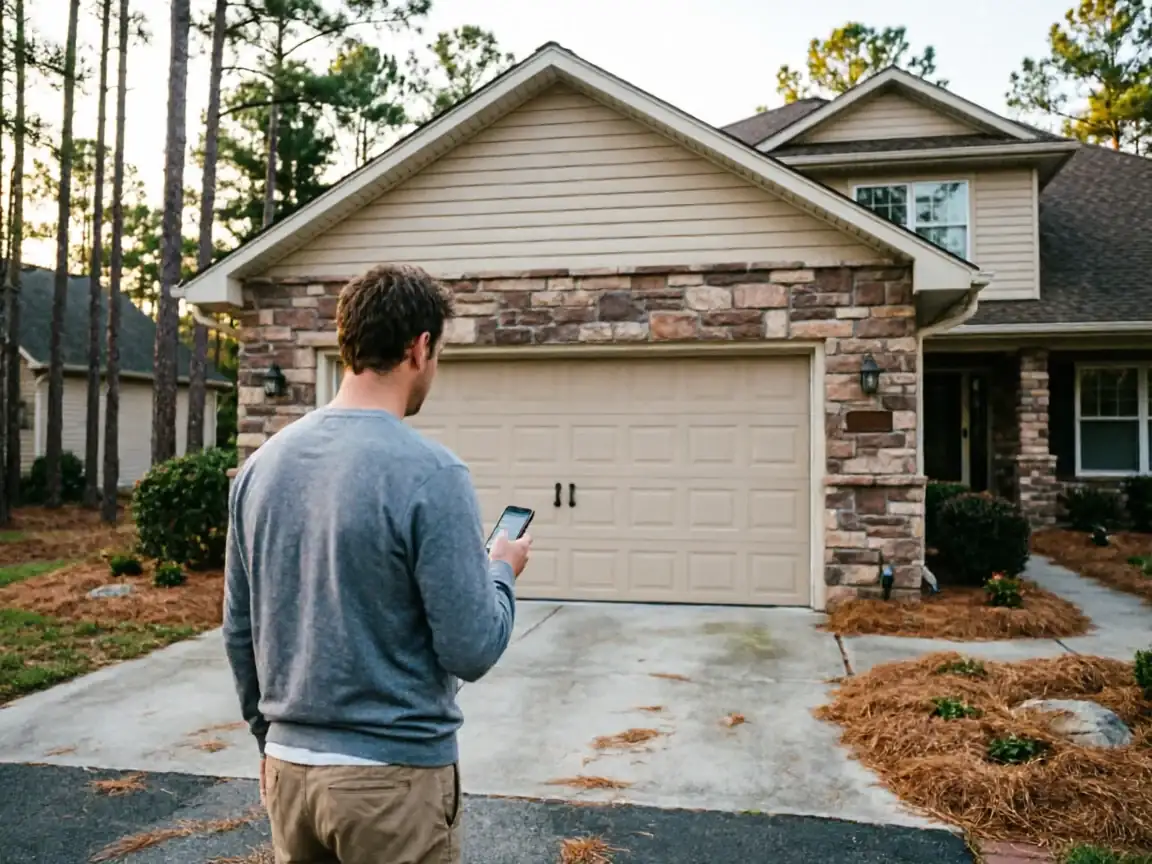
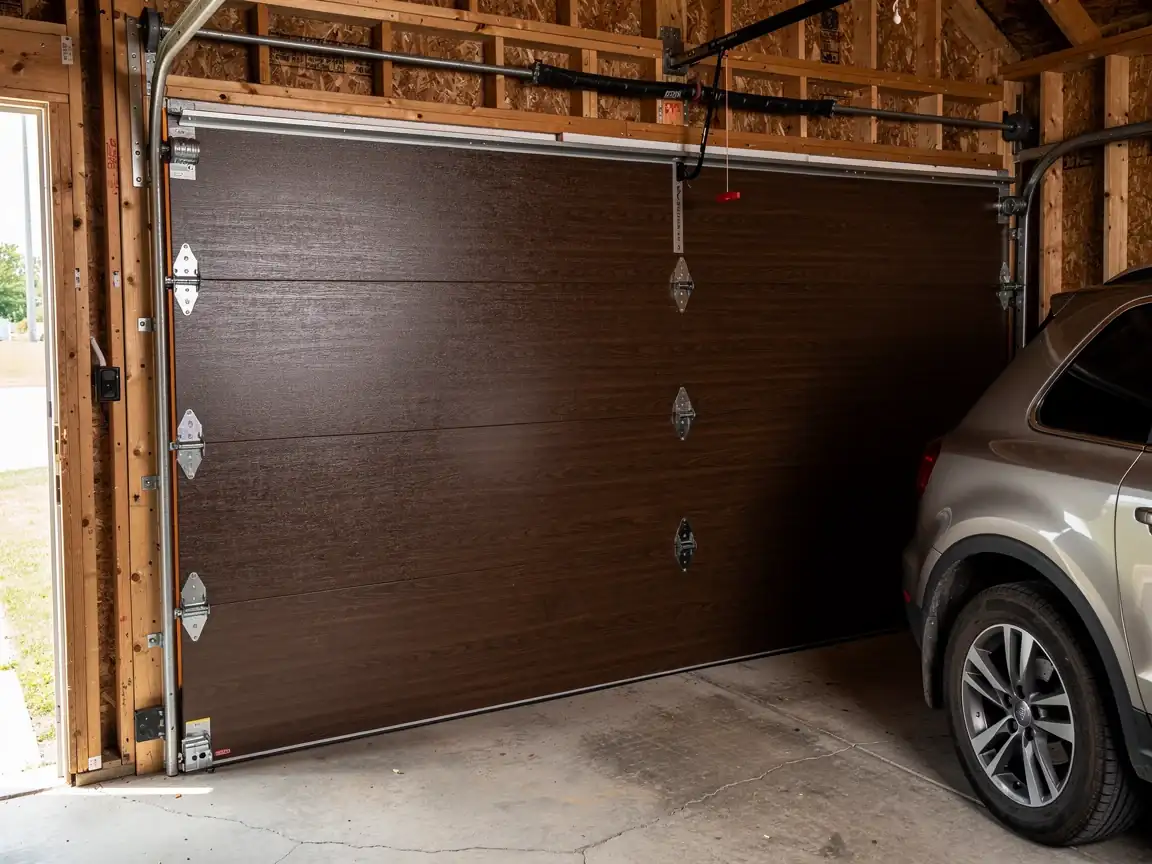
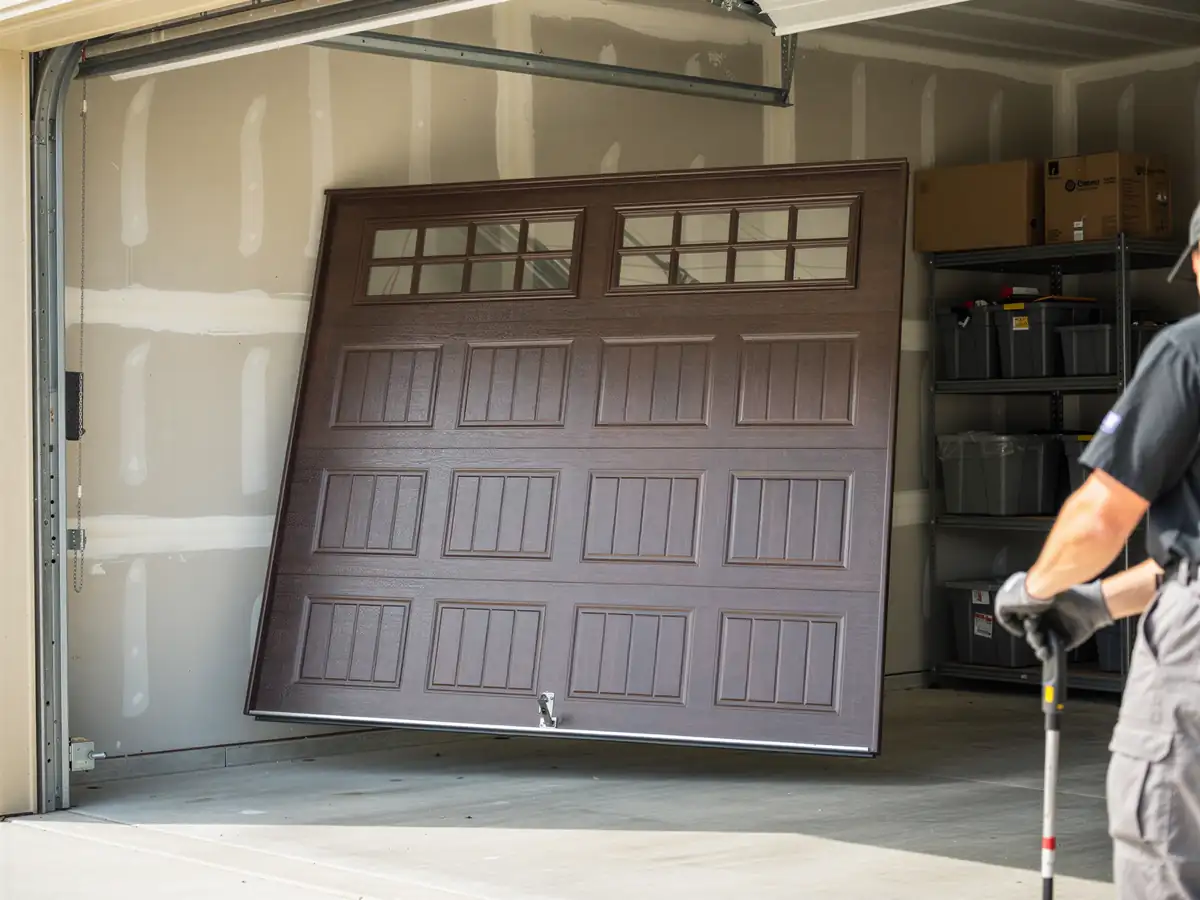
The complaint we hear most isn't "the door won't open" - it's a door that's gotten loud, or jerky, or that reverses itself a few inches off the floor for no clear reason. That jerkiness is usually a roller that's worn oval instead of round, or a track bolt that's backed out just enough to misalign the rail. On older doors it shows up as a grinding sound right as the door passes the point where the spring does most of its work.
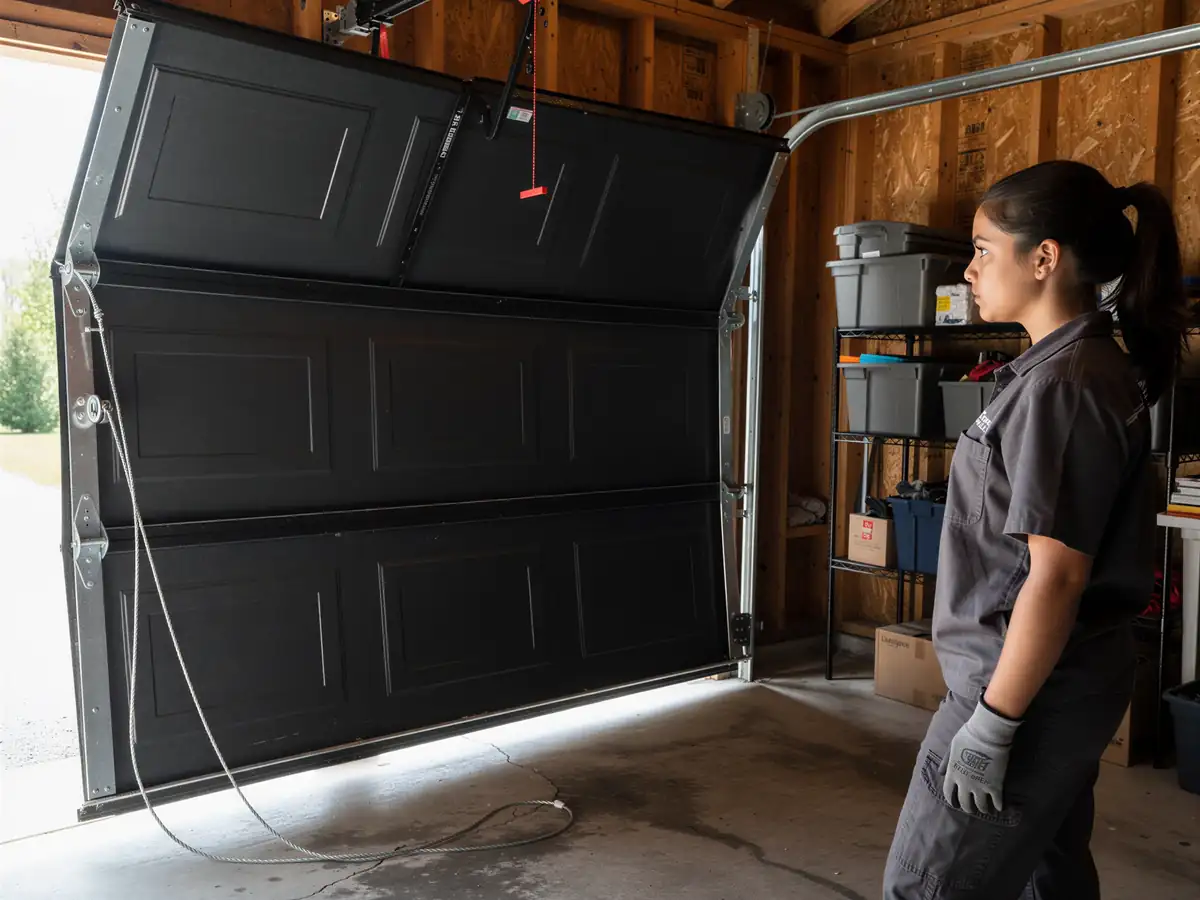
You might also notice the door feels heavier than it used to, even though nothing about the door changed - that's spring fatigue, and it's gradual, so most owners don't catch it until the opener starts straining or the door won't hold itself open manually.
A door that slams the last foot instead of settling usually means the opener's travel limits drifted, often tied to the same worn hardware. None of these are emergencies on day one. Left alone, they usually turn into one.
What Causes It Around Here
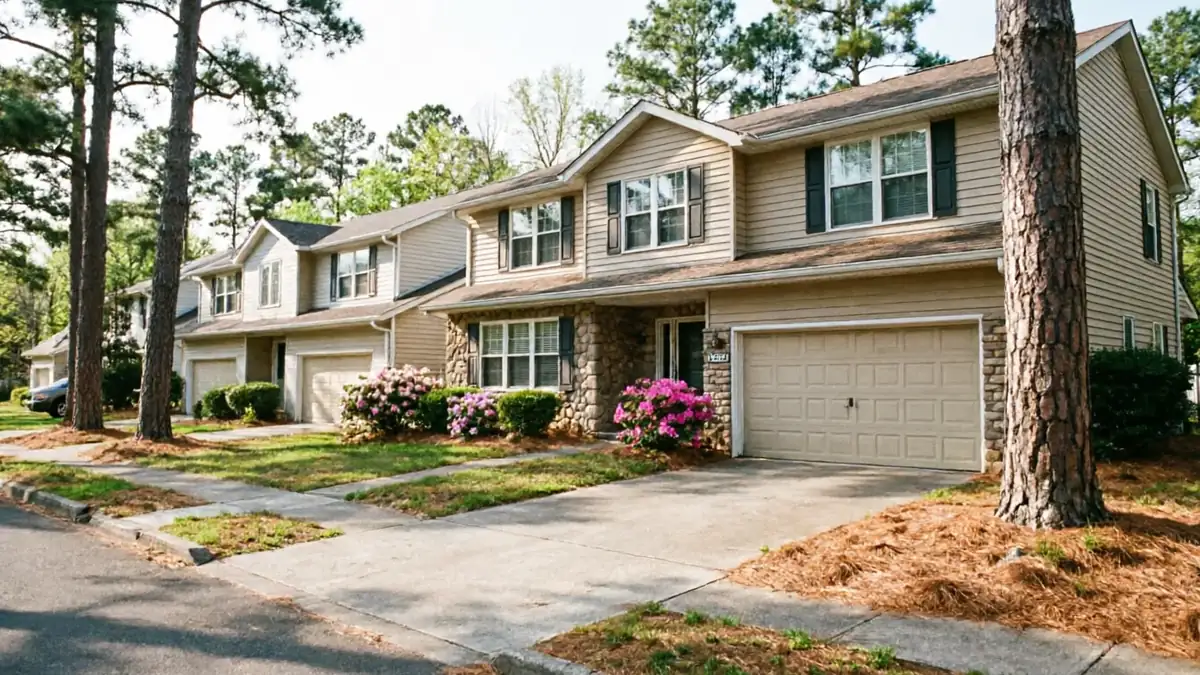
Housing across this service area mostly went up between 1957 and 2001
With the median build year around 1975, and the bulk of it concentrated in that 1960s-and-70s wave across eight named areas in and around Elizabethtown. That matters for maintenance because a door built in that window is now 50 to 65 years into a mechanism rated for a fraction of that life, running on hardware nobody has restocked in decades.
- 65 years
The climate band here is cold and moderate
Enough freeze-thaw cycling each winter to work steel fasteners loose and dry out factory grease faster than a mild-climate house would see. Combine original 1970s-era torsion springs with repeated cold snaps and you get the pattern we actually run into: a spring that's been fine for fifteen years suddenly fatigues in a January cold stretch, or a roller bearing that seized overnight and shears the next time the door cycles.
Newer builds in the area see less of this
But across 16,726 households and 5,889 owner-occupied houses in the service territory, older stock still makes up a real share of the calls.
- 16,726 households
- 5,889 owner-occupied
What the Repair Takes
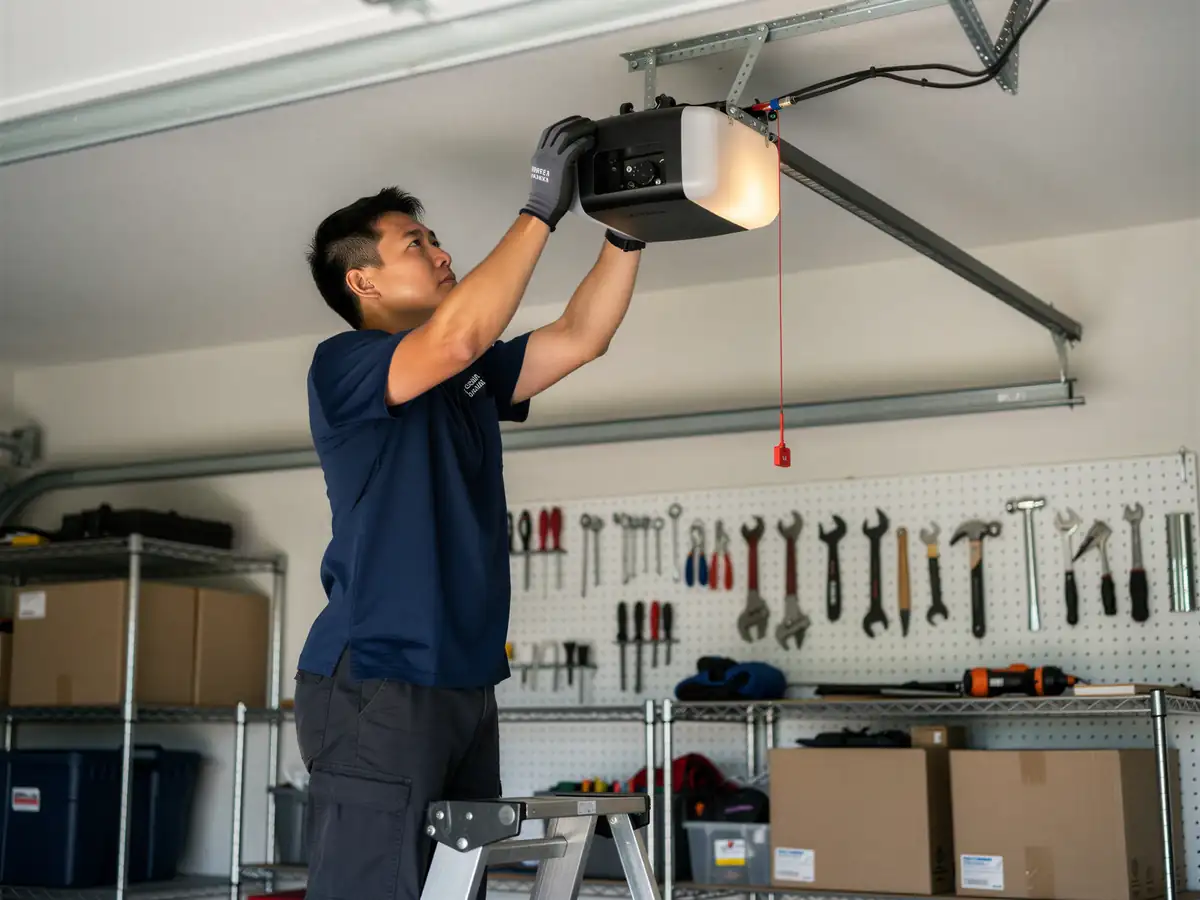
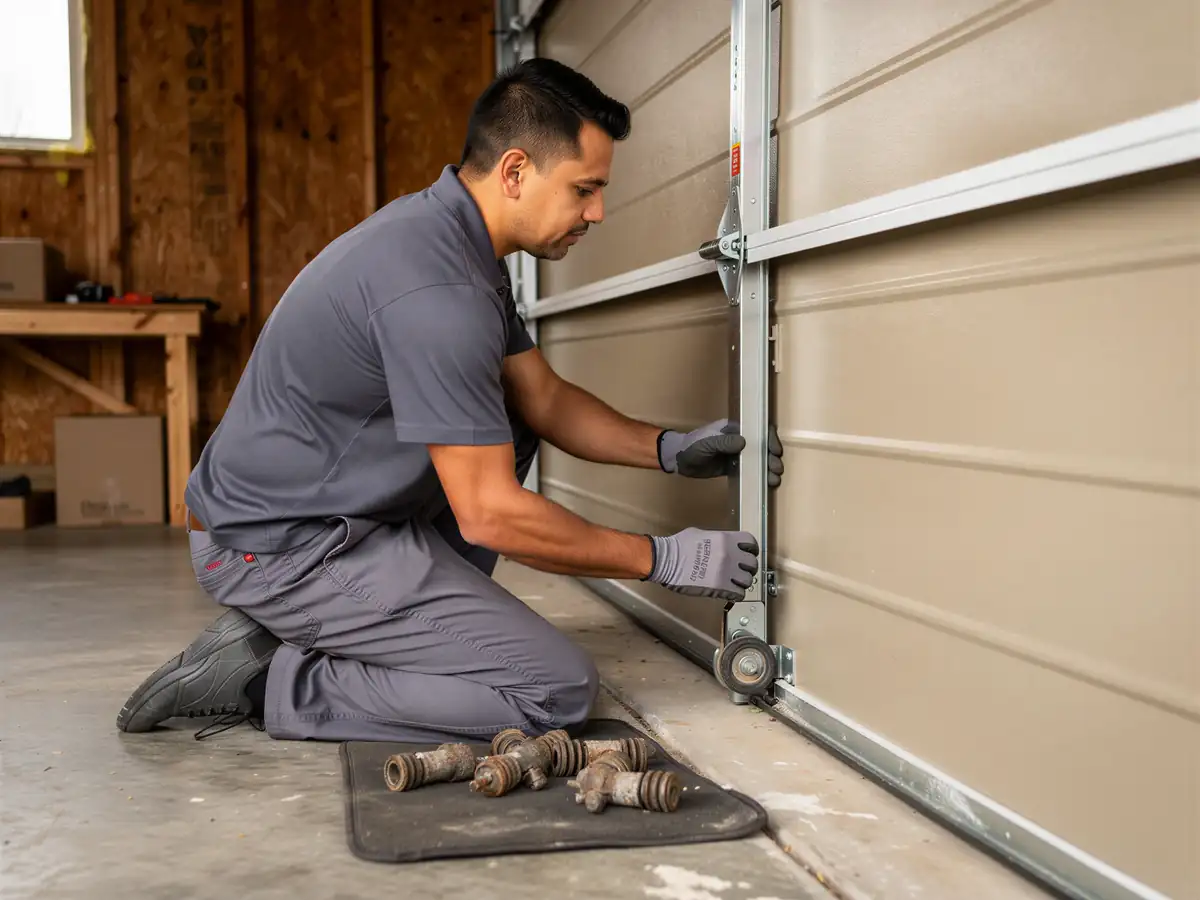
A standard maintenance visit covers lubrication, hardware inspection, track alignment, and spring tension check - most of that gets done in one trip. If we find a roller or hinge that's failing, that's usually a same-visit swap. A full spring replacement is a different job: we carry common sizes, but if your door uses an odd cable drum or an older spring wind no longer made new, that part can take a day or two to source, and we'll tell you that up front rather than make you wait around a truck with no part on it.
We're not going to sell a full opener replacement when a $30 part fixes the actual problem, and we're not going to patch a door whose track is bent beyond straightening - at that point a repair just delays the real fix and costs more over time. Given the median household income in this area sits around $55,375, most owners we work with want the straight answer on which one it is before we start, not after.