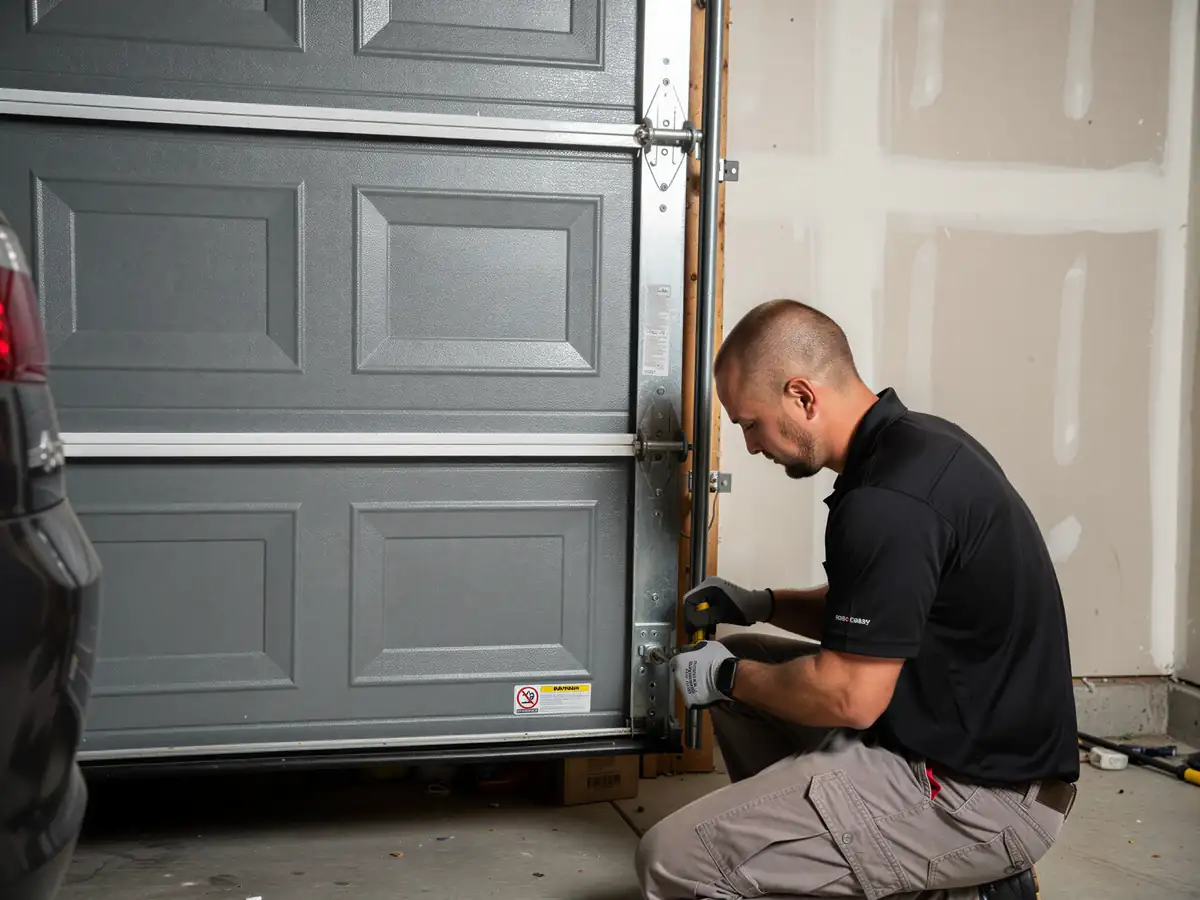
What the Repair Takes
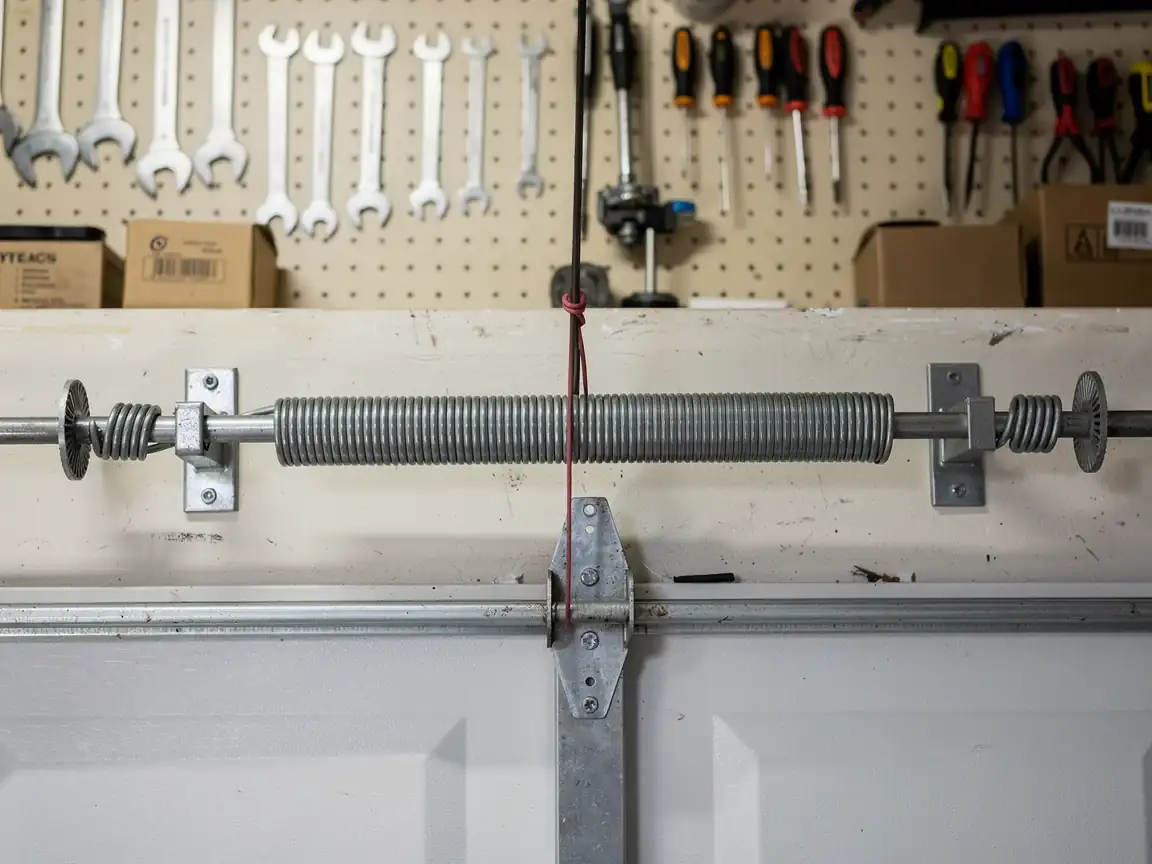
The call we get most out of Fort Knox is a door that won't lift, or lifts crooked, because an extension spring has let go. That's not a coincidence of bad luck - it's the hardware. Most garage doors in Fort Knox went up in the building boom around 1977, which means steel sectional doors on extension-spring tracks instead of the torsion-spring setups you'd find on newer builds. Extension springs stretch along the horizontal track rather than coiling on a bar over the opener, and on a door this age the springs are often original or close to it.
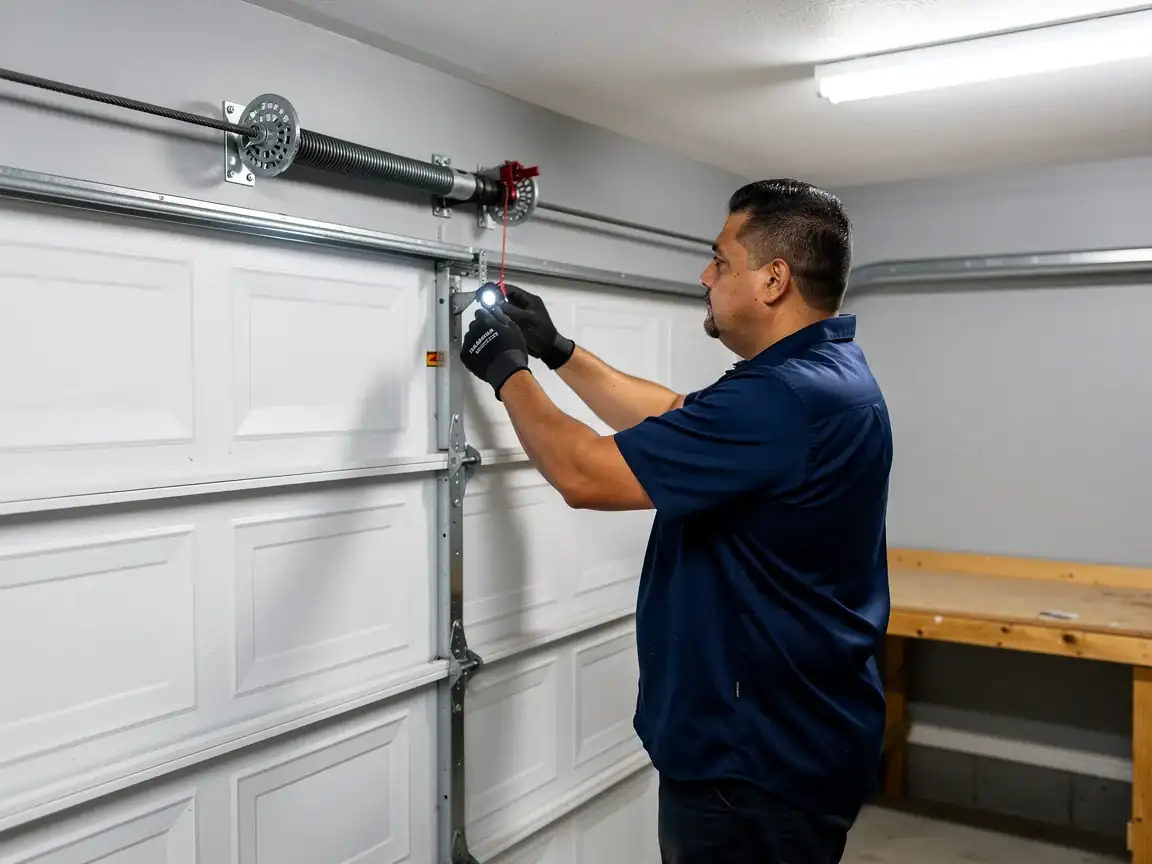
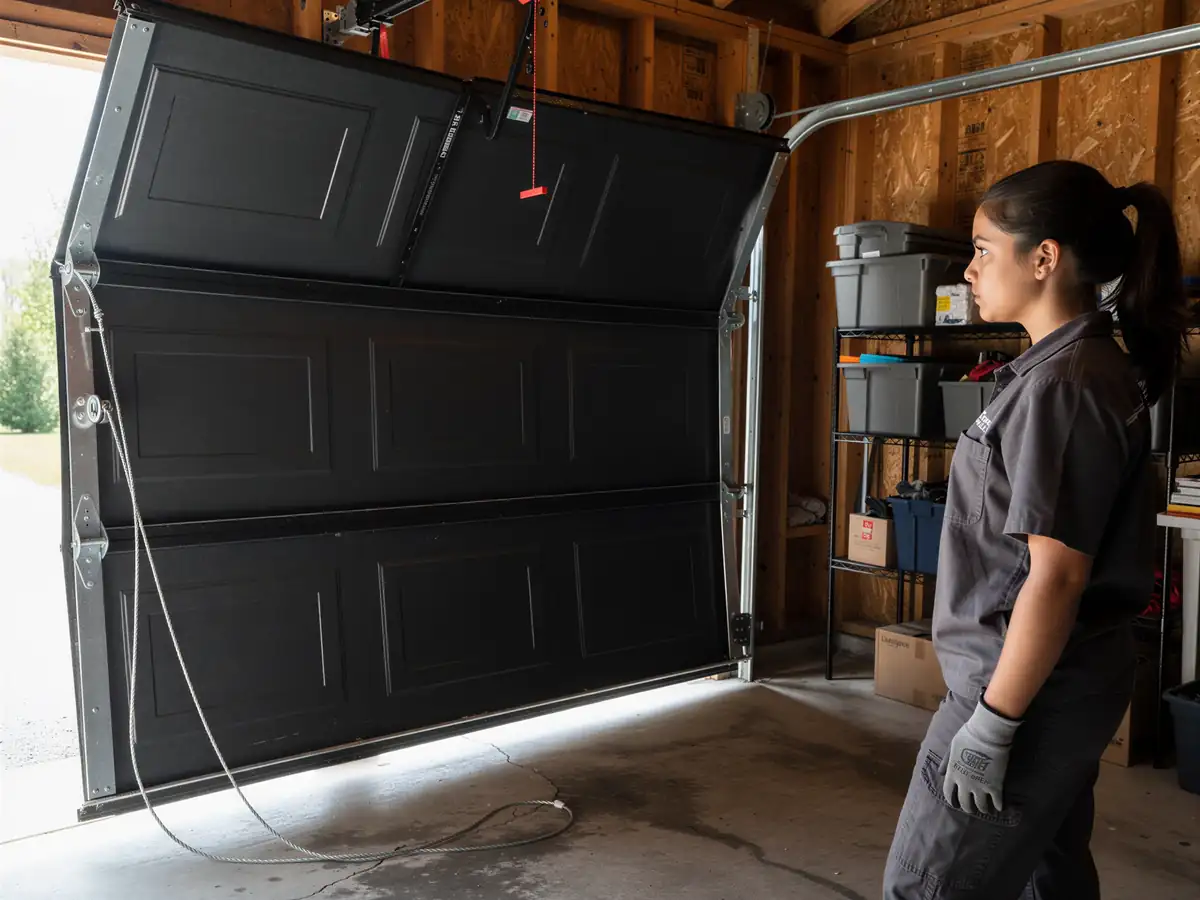
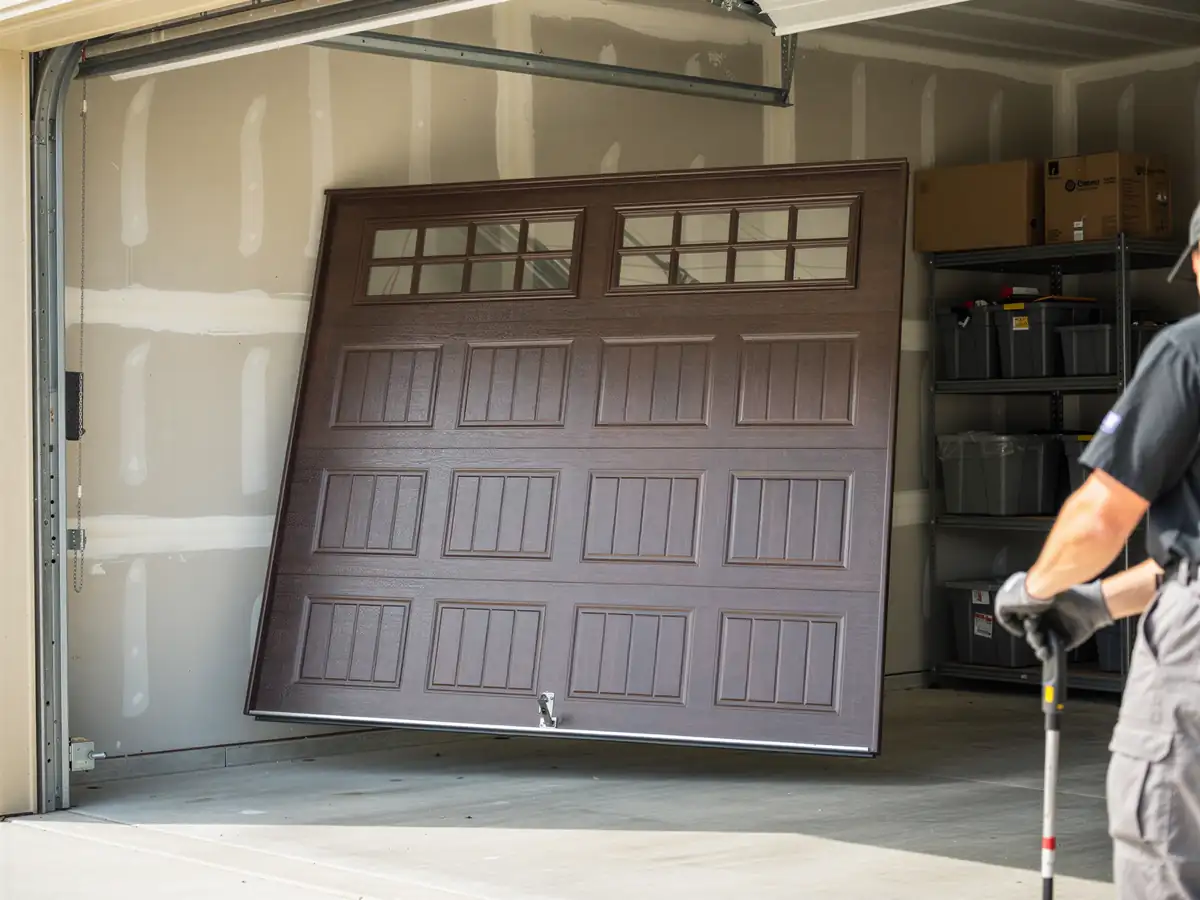
When one side of a stretched spring gives out, the door drops unevenly, binds in the track, or won't release from the opener's safety reversal at all. Fixing it right means replacing both springs as a pair, checking the pulley cable isn't frayed where it rides the stretched coil, and confirming there's a safety containment cable through the spring - a lot of installs from this era skipped it, and it's the one piece that keeps a snapped spring from becoming a projectile in your garage. We don't patch one side and call it done; mismatched spring tension just moves the problem to the other cable within a season.
What Causes It Around Here
Fort Knox sits inside a region where winters put real stress on garage door steel - the climate here runs cold and swings enough that metal contracts hard overnight and expands again by afternoon. On a door built when polyurethane insulation between panels wasn't standard, that swing travels straight through to the hardware. Extension springs lose tension faster under that kind of cycling than torsion springs do, which is part of why this suburb's failure pattern leans toward spring snap rather than opener burnout.
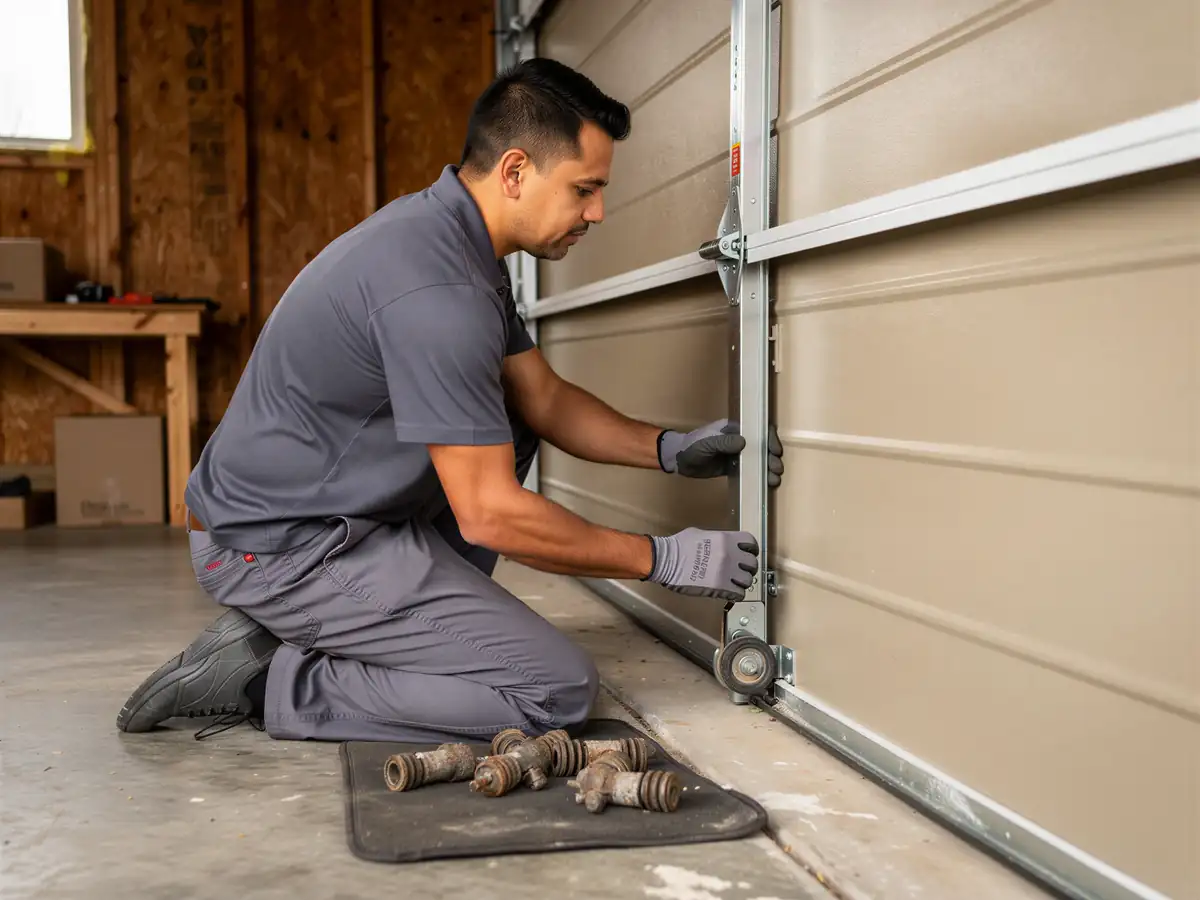
The other driver is just time on the hinge. A door installed new in the late 1970s has gone through four or five decades of temperature swings, and rollers that started as steel on steel have worn their tracks oval instead of round. That shows up as a door that rattles on the way down even before a spring goes. We also see track misalignment on these older installs more than on newer ones - the original mounting brackets weren't always lagged into a stud, and 45+ years of vibration works screws loose a little at a time.
What Is on the Truck
Because the drive from Elizabethtown to Fort Knox runs about 14 miles each way
We stock the truck for what this suburb's housing stock actually needs rather than loading it generic. That means extension springs in the sizes that match a 1970s-era sectional door, galvanized lift cables, and the pulley hardware those systems use - parts that newer torsion-spring doors don't need at all. We also carry safety containment cables separately, since retrofitting one onto an older door that never had one is a common add-on here.
- 14 miles
What we don't carry on every run is a replacement door panel matched to a specific 1970s-era profile
Some of those sectional designs were discontinued decades ago, and if a panel's bent beyond a cosmetic fix, we may need to order a compatible size rather than an exact match, or talk through a full door replacement instead. That's a conversation worth having honestly rather than promising a part we'd have to backorder. For a straightforward spring or cable job, the parts ride with us and the trip from Elizabethtown doesn't add a second visit.
Doing It Yourself
An extension spring under full tension is not a DIY job - it can release with enough force to break a hand or a windshield, and that's true whether the door is five years old or forty-five. If your door in Fort Knox has dropped unevenly or won't budge, the safe move is to disconnect the opener (pull the emergency release cord) and leave the spring alone rather than trying to re-hook it yourself.
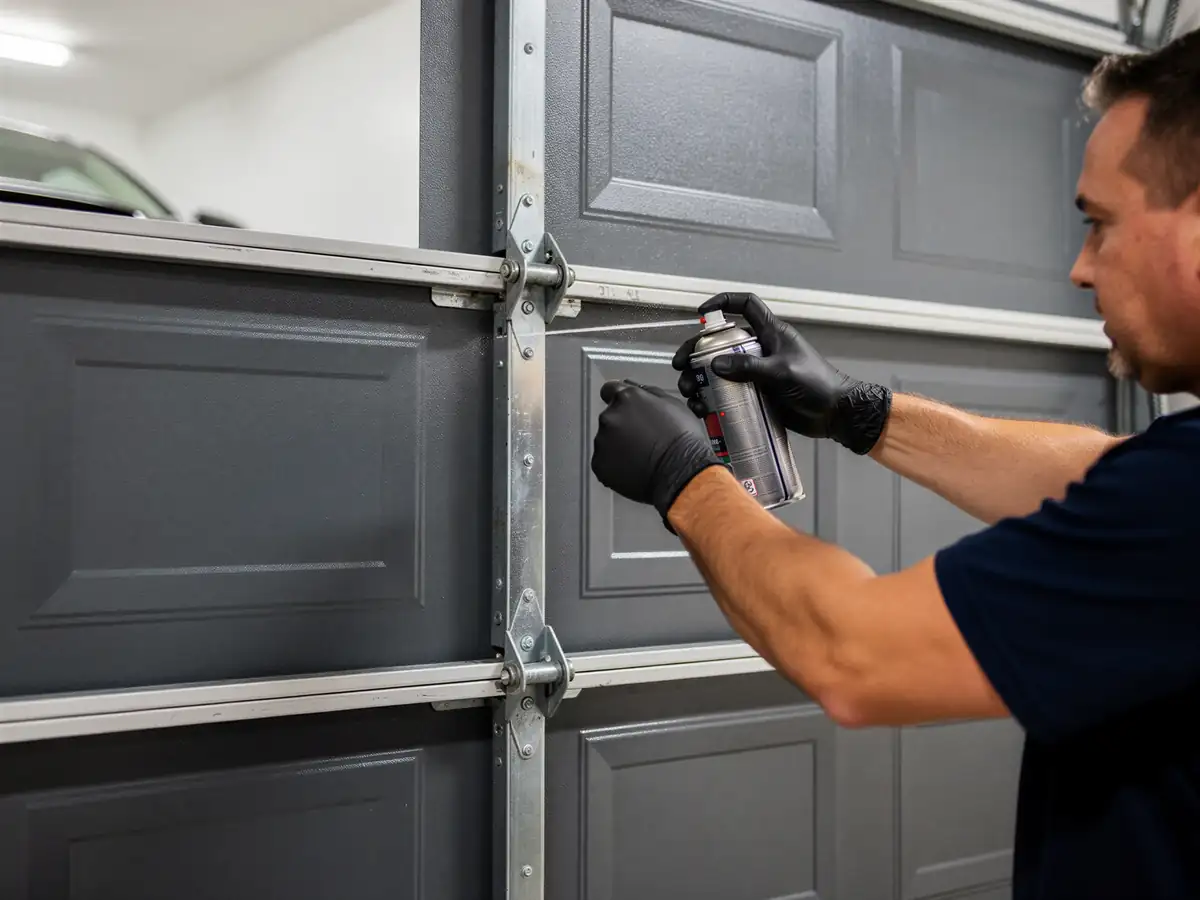
What you can check safely: whether the track mounting brackets are loose against the frame, whether a roller has visibly jumped the track, and whether the door is binding only on one side (a sign of uneven spring tension, not a reason to force it). None of that requires touching a spring under load. If the door moves freely by hand with the opener disconnected, the opener itself may be the issue rather than the springs - worth ruling out before assuming the bigger repair. Beyond that, call it in; a 45-year-old spring system doesn't give you a second warning before it fails.