Booking a Visit
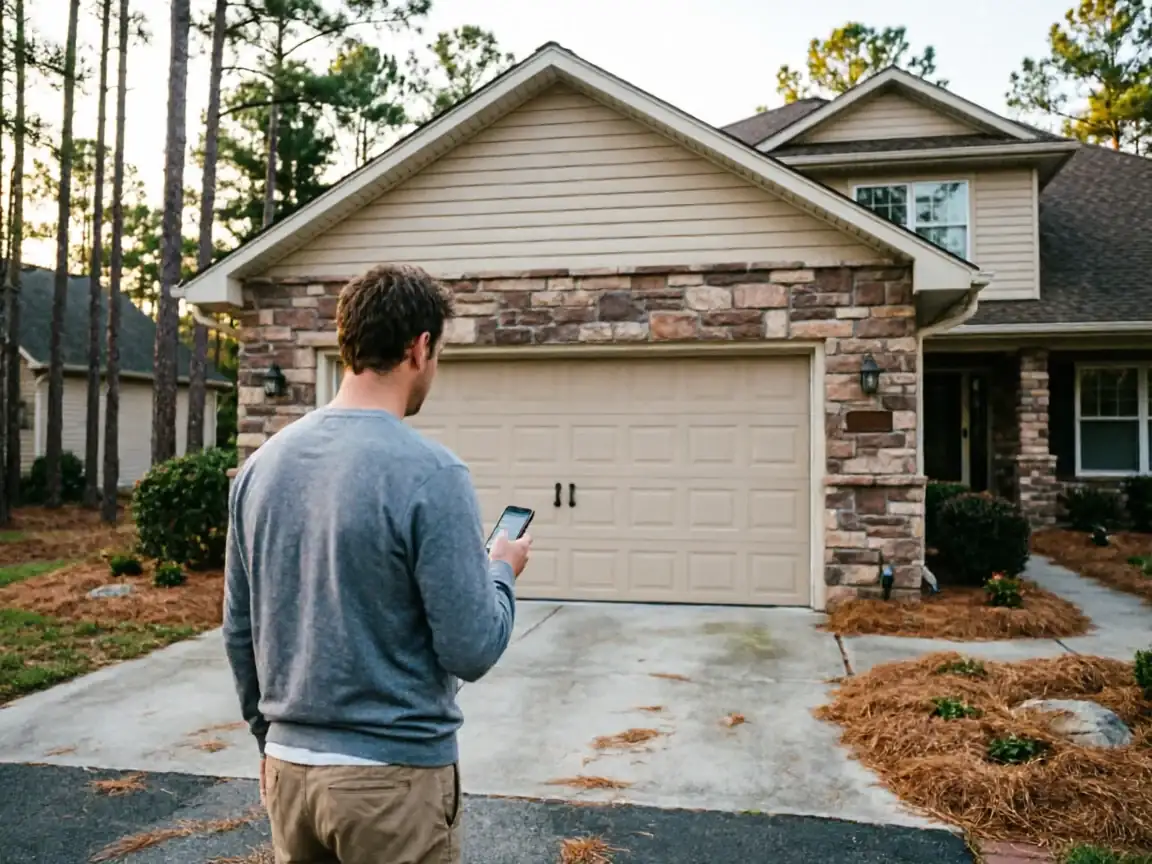
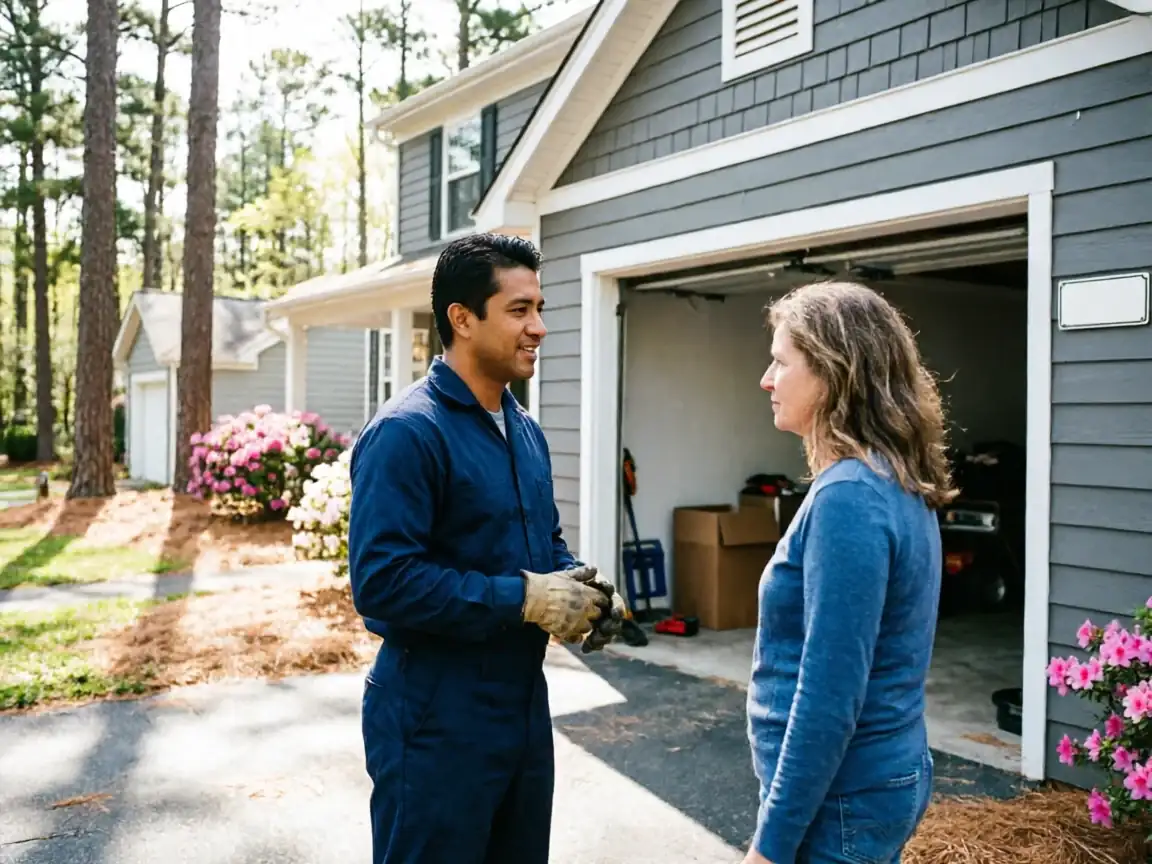
We don't keep a branch in Hodgenville - the truck comes from Elizabethtown, about 13 miles up the road. That's close enough that an off-track door doesn't sit and wait long, but it does mean you're scheduling a visit, not walking into a shop. When you call, tell us what the door is doing: did it come off one side only, or both, and did you hear a bang or a slow grind before it quit. That detail changes what goes on the truck before we leave the yard. If you want the full rundown of what we handle in town beyond this one fault, that's on our main Hodgenville page, and if you're actually closer to Elizabethtown proper, the off-track page there covers that side of things.
We won't quote a response window here because it depends on the day's route, not on Hodgenville specifically. What we can tell you is the drive is short enough that off-track calls from this side of the county don't get bumped to the bottom of the list.
What Is on the Truck
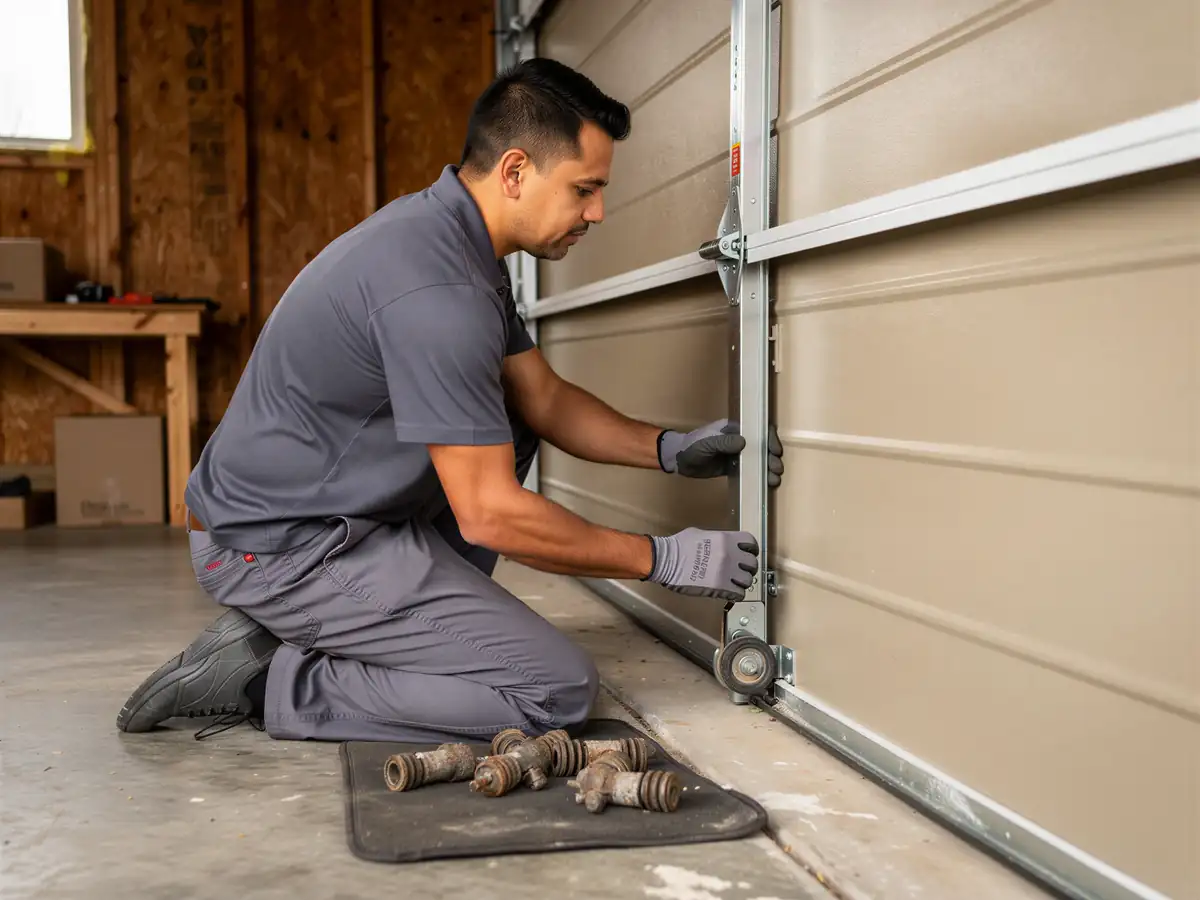
For an off-track call we carry replacement rollers (nylon and steel), short and long sections of standard track, new track brackets, and hinges in the common sizes. On a lot of Hodgenville jobs the door is on original or near-original track from when the house went up, and the gauge and hole spacing on that older stock doesn't always match what's sold off the shelf today, so we also carry spacers and universal brackets to bridge the gap rather than reordering a whole new track run.
Cables and the bottom fixtures that anchor them ride along too, since a cable that's jumped its drum is one of the more common reasons a door comes off one side. What we don't carry as standard stock is a full replacement section for every discontinued panel profile - if the track damage is bad enough that we're also looking at a bent or torn panel from an older door, that part may need to be ordered, and that's a lead-time conversation we have with you up front, not after the fact.
What the Repair Takes
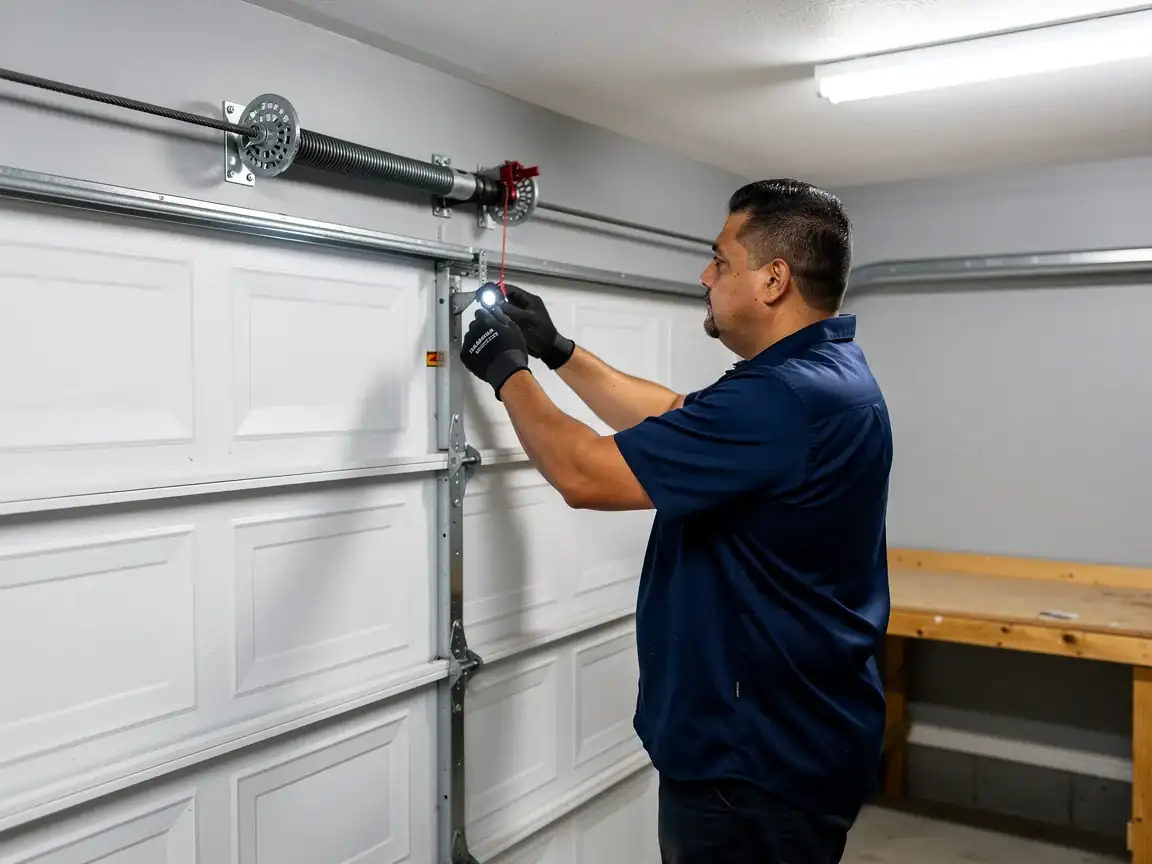
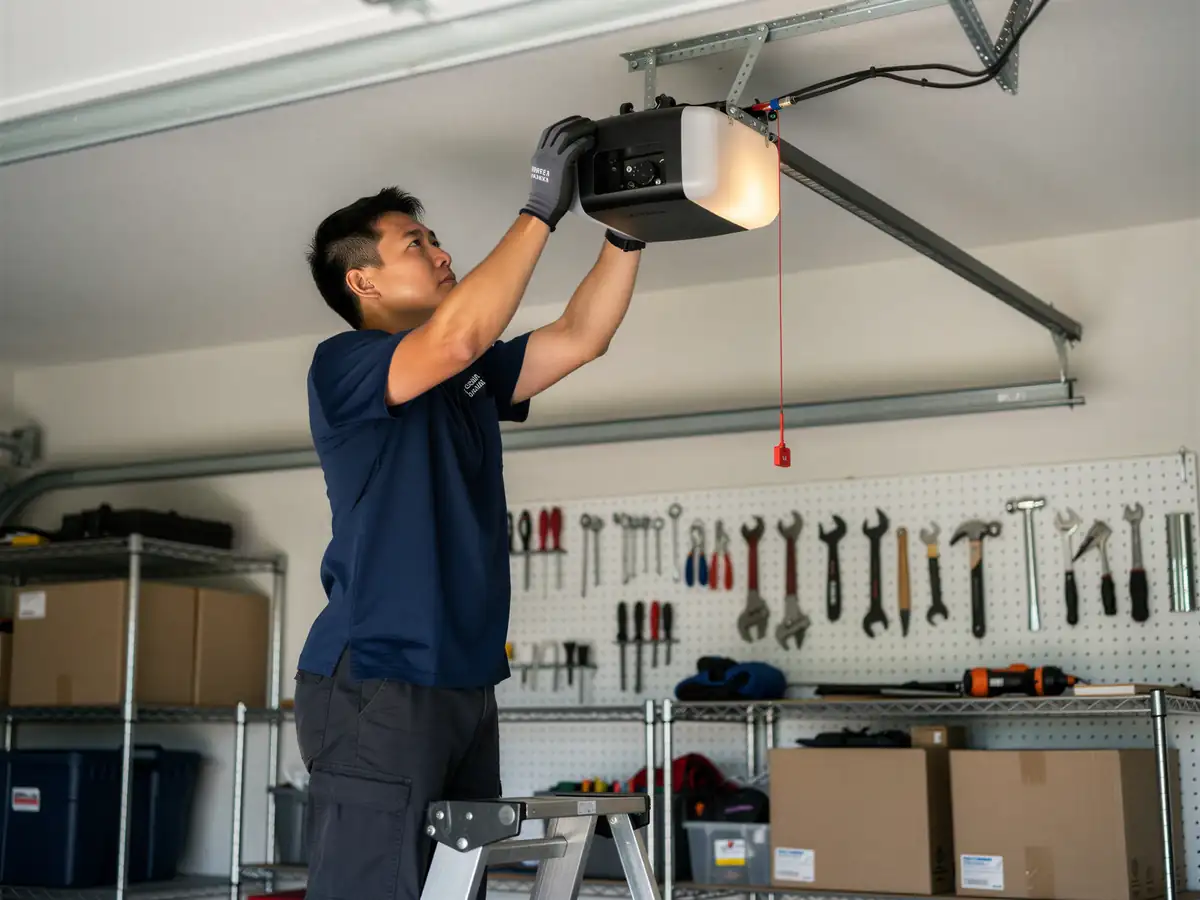
First we kill power to the opener and release the emergency cord
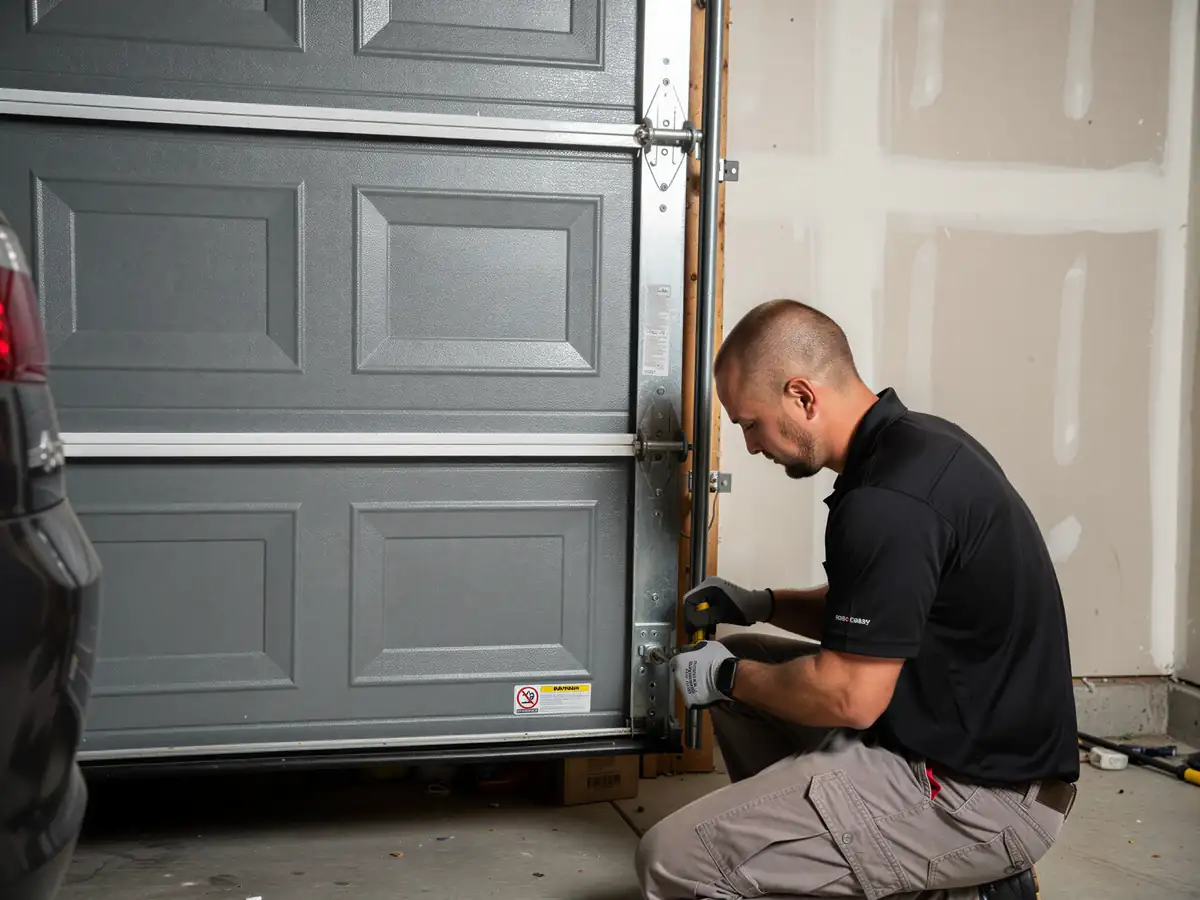
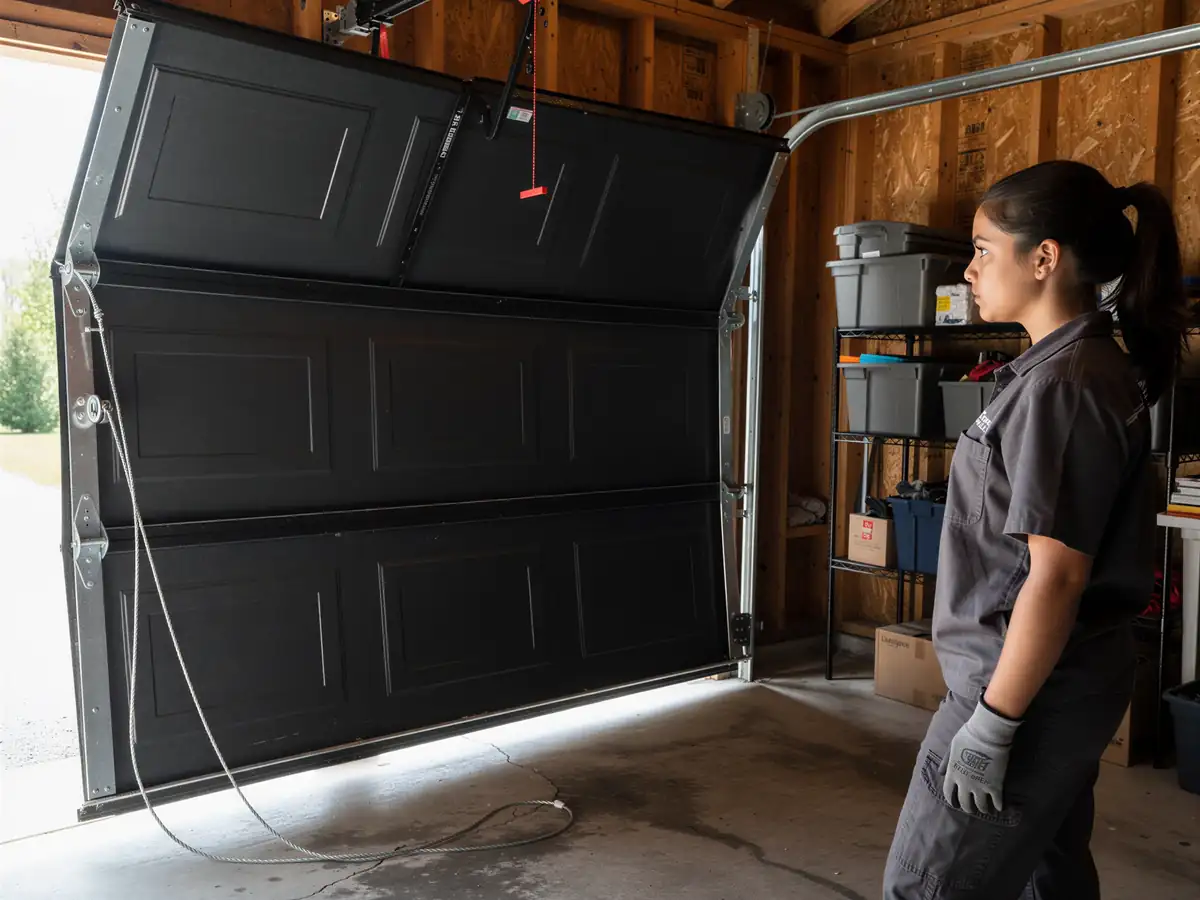
Because a door on a bent or disconnected track can drop without warning once the opener is fighting it. Then we check whether the rollers simply jumped the track lip (a quick re-seat) or whether the track itself is bent, bowed, or pulled away from the jamb - that second case means pulling the damaged section and setting new track square to the opening, which takes longer and matters more on a door that's already decades old and wasn't perfectly plumb to begin with.
Once the door is back on true track, we run it by hand several times before reconnecting the opener, checking for binding, drag, or a roller that wants to walk again
If the cable or drum caused the jump, that gets replaced and tensioned, not just rehung. A straightforward re-track on one side usually wraps in well under an hour; a bent-track job with bracket work runs longer. We'll tell you which one you've got before we start pulling anything apart.
What You Are Seeing
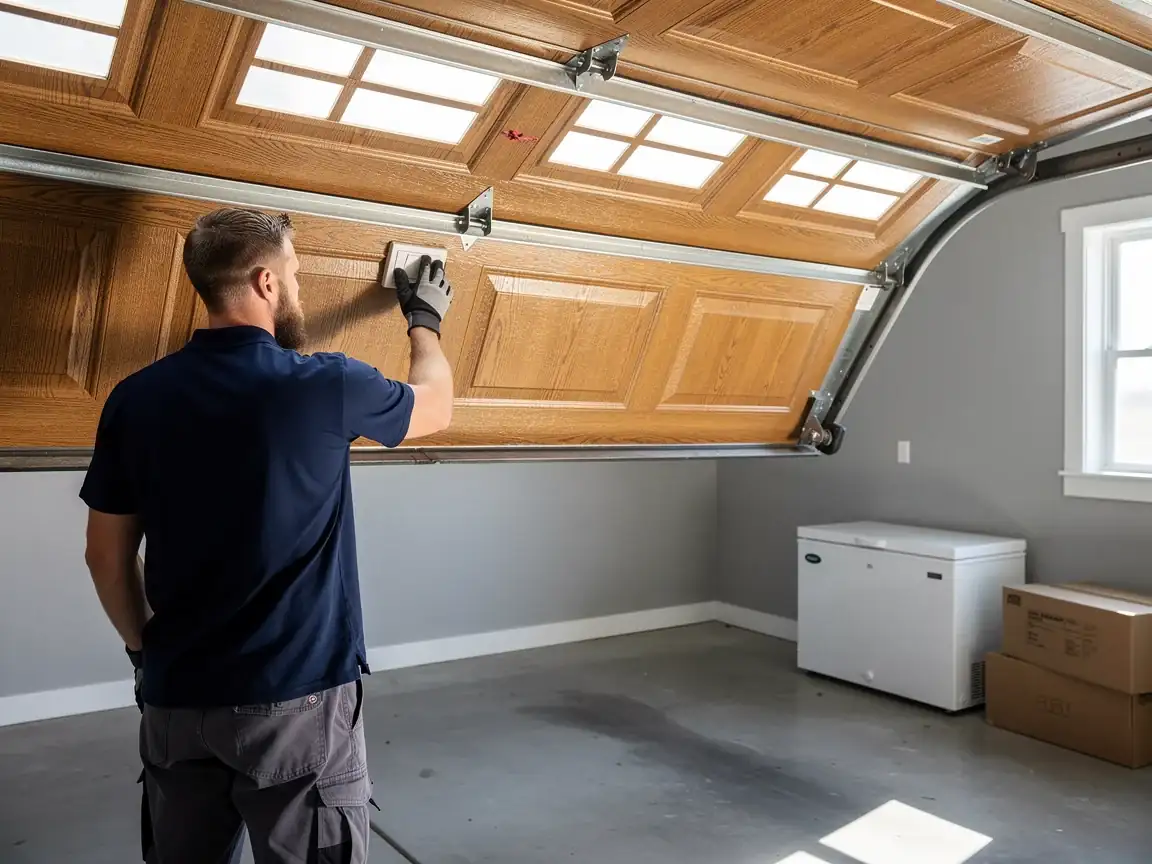
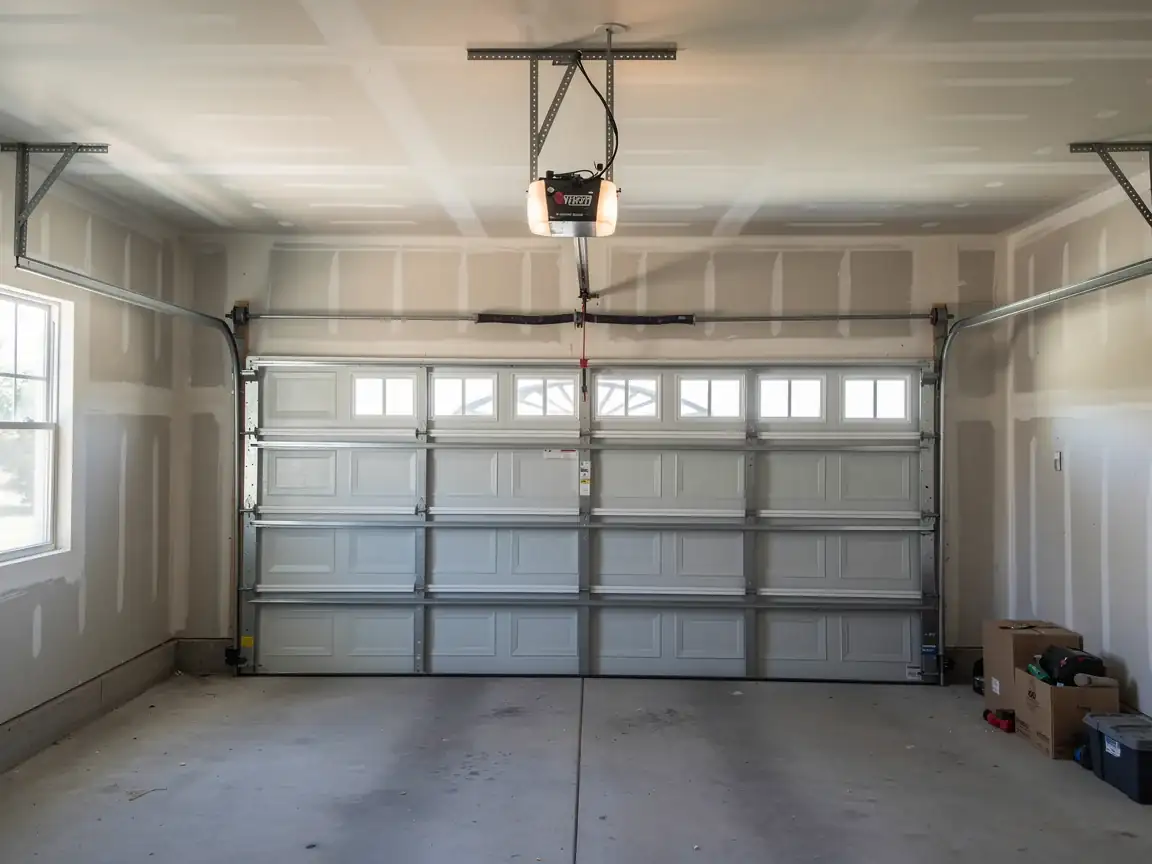
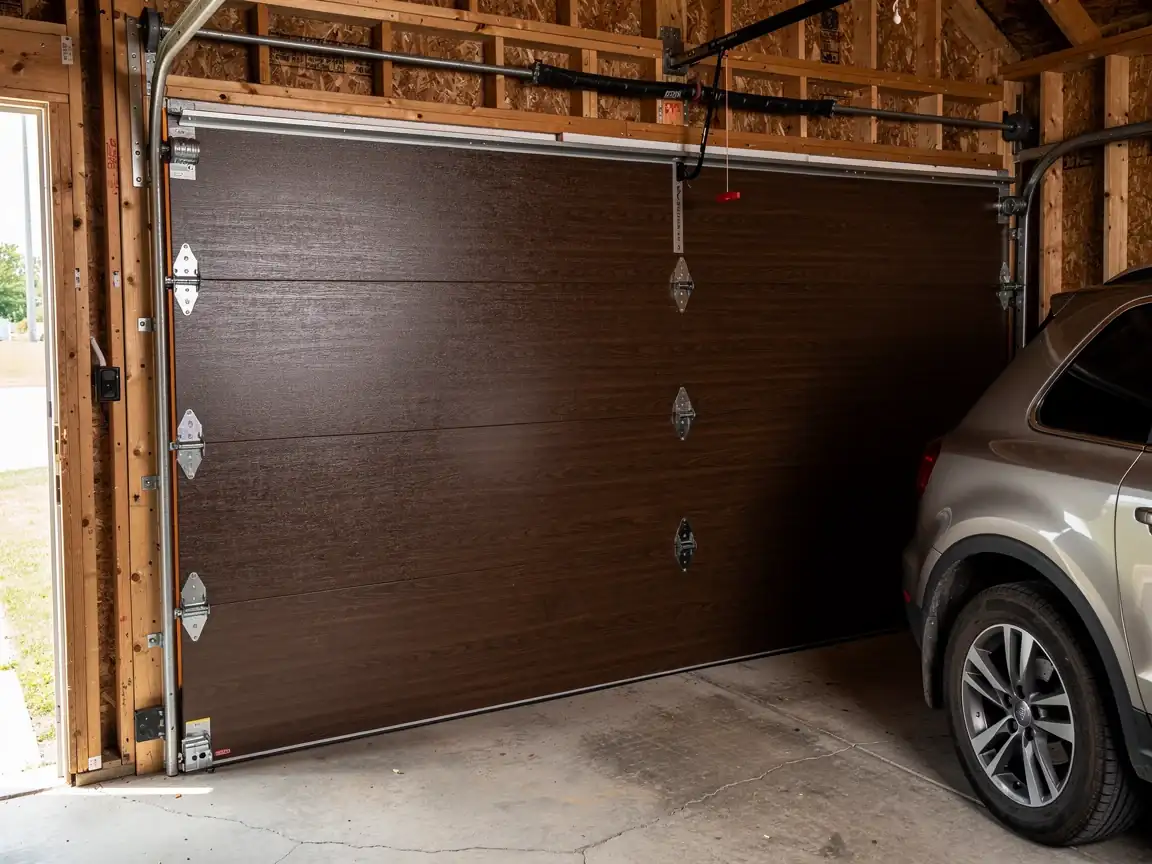
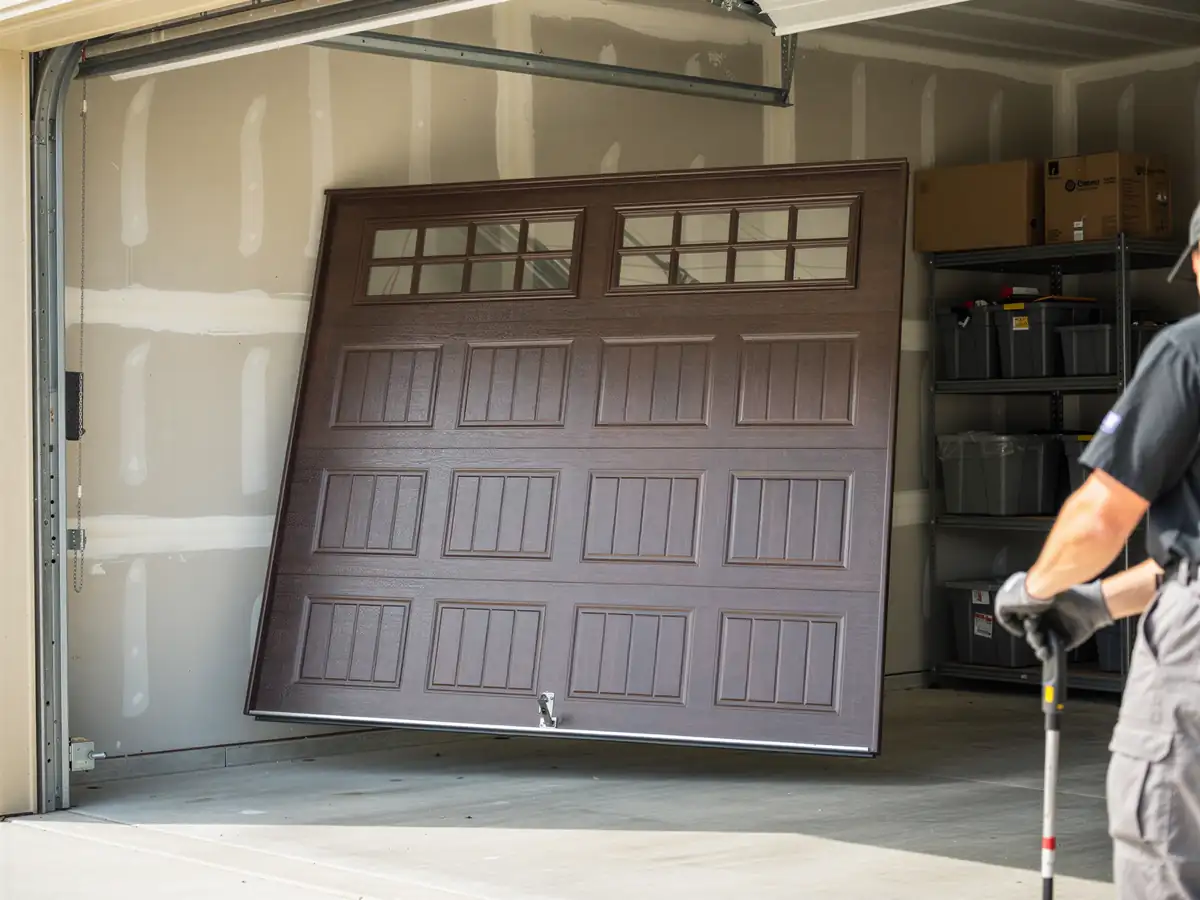
The usual signs: the door sits crooked in the opening, one bottom corner is higher than the other, or it's stopped moving altogether with the opener still humming. Sometimes a roller is visibly sitting outside the track rail instead of inside it. You might hear a pop or a scrape right before it happens, especially if a cable let go first and pulled the door sideways as it came down.
A door that's merely noisy but still tracking straight isn't this problem - that's usually rollers or hinges wearing out, not the door leaving the rail. Off-track is specific: the panel is no longer riding where it should, and running the opener again after that will only bend the track worse or tear a panel seam. If you're not sure which one you've got, stop running the opener and call before you find out the hard way.
What Causes It Around Here
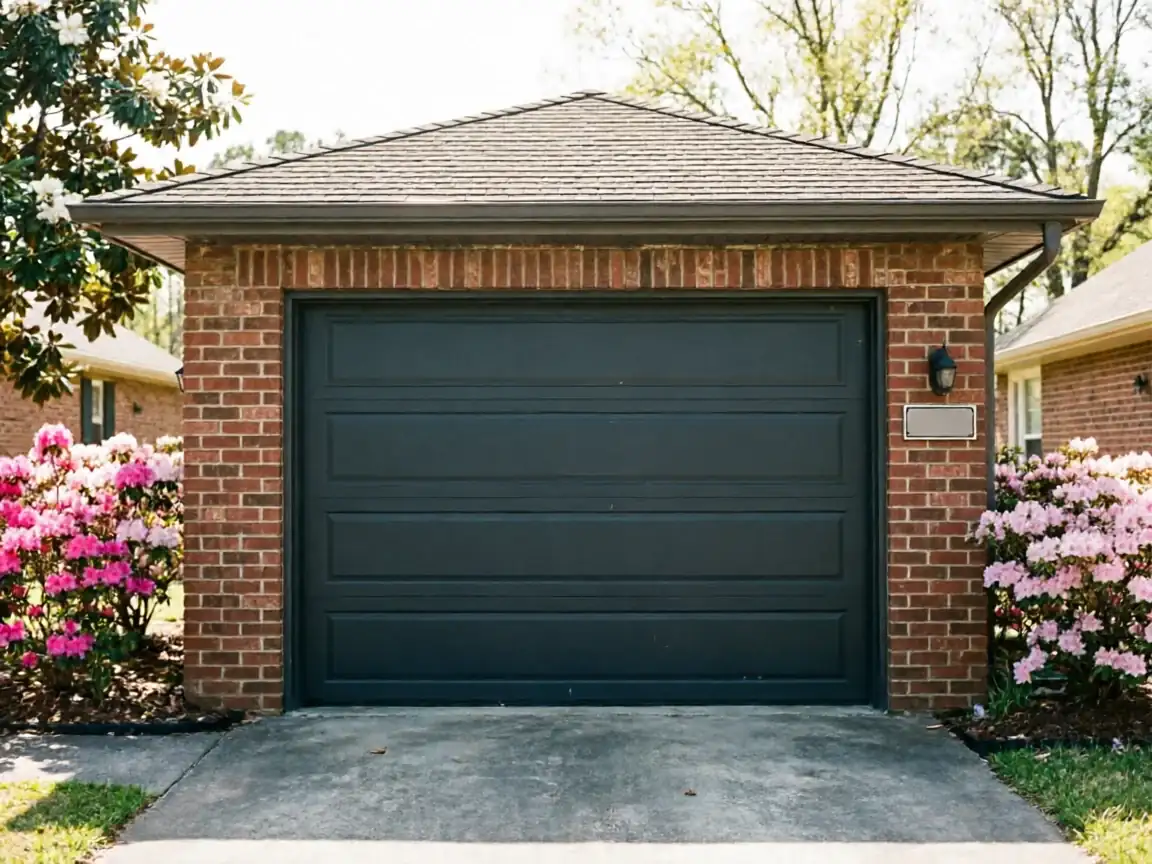
Hodgenville's housing stock runs older than a lot of the service area - the median build year here is 1968, which puts a good share of these garages on original steel track that's been resetting and re-tensioning itself for over fifty years. That track was installed to the standards of its day, with lighter gauge steel and narrower rail than what's sold now, and decades of seasonal swing push it slightly out of true a little more each year.
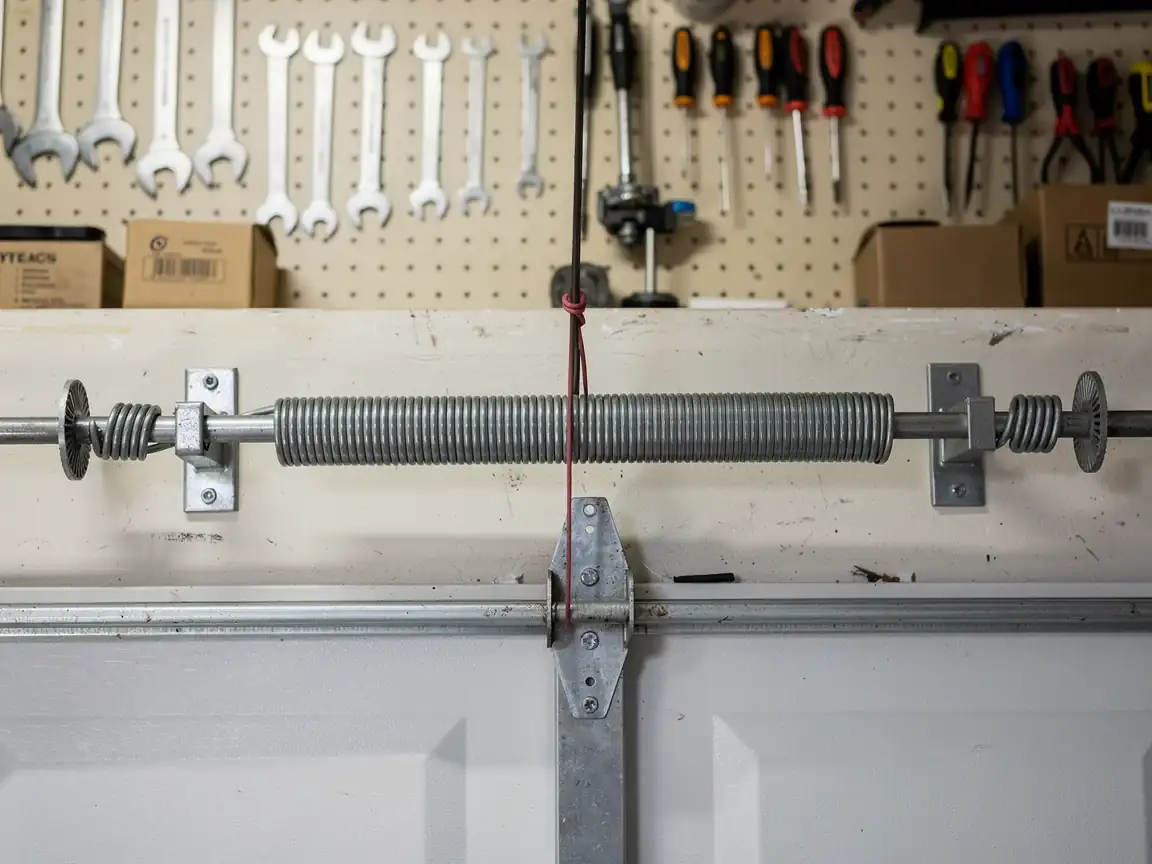
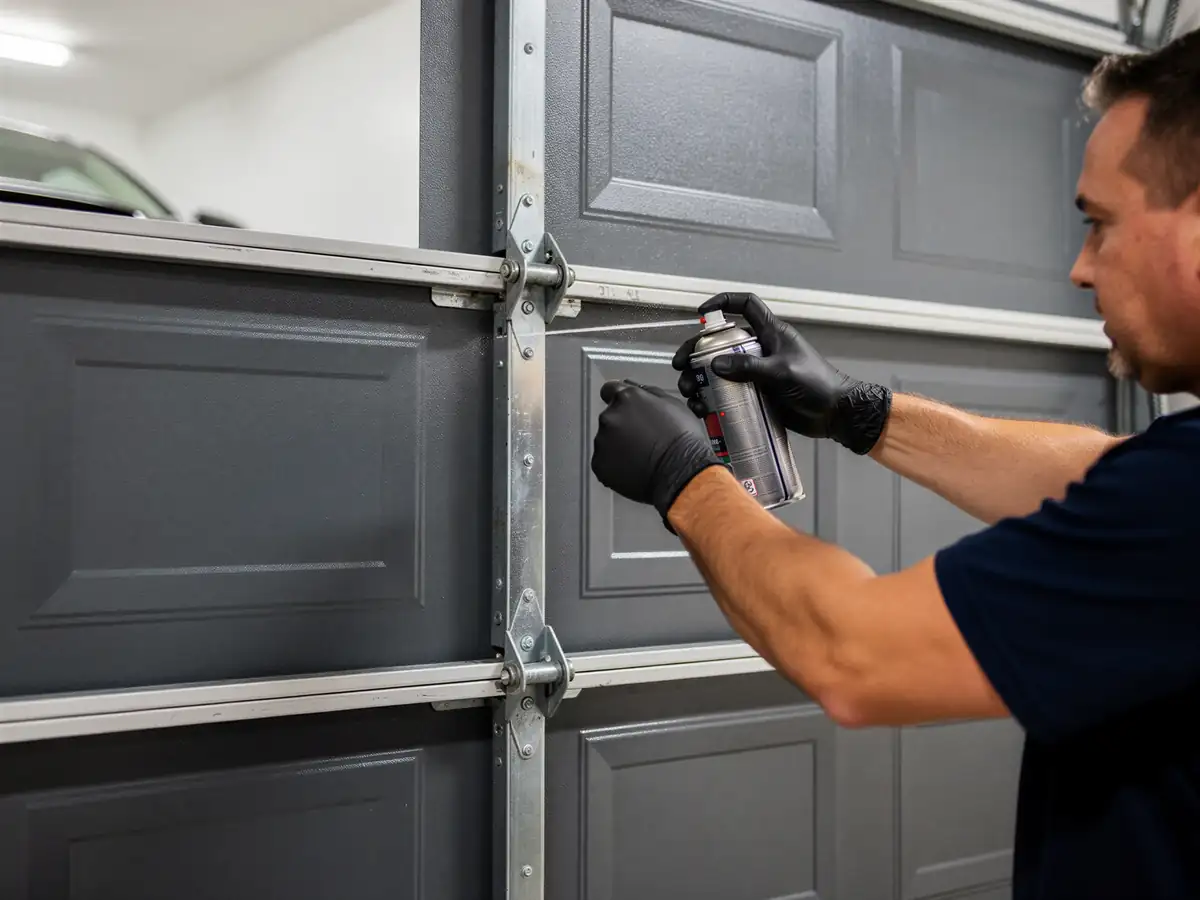
Cold-weather moderate climate conditions make this worse in winter: steel contracts, grease stiffens, and a door that was already riding a hair off-plumb binds just enough that a roller catches the rail edge and pops free. On an older one-piece or early sectional door, that's often enough to pull the whole panel sideways. Garage doors on houses built before the 1980s around here also tend to run lighter overhead and manual spring assist rather than today's torsion setups, which changes how the door behaves once it's already partway off the rail - it doesn't always stop cleanly, it keeps traveling.
Doing It Yourself
Don't try to force the door back onto the track by hand while it's under spring tension or still connected to the opener
That's how fingers and door edges meet. If the door is only partway off and nothing looks bent, you can sometimes relieve tension safely by pulling the release cord first, but if a cable has snapped or the track is visibly bowed, leave it alone and call.
What you can do before we arrive
Don't run the opener trying to "force it through," and don't prop the door open with a board to keep it from swinging - that just adds stress to a track that's already out of alignment. If the door is older stock from the 1960s or 70s, there's a decent chance the fix involves matching odd hardware rather than a same-day shelf part, so having the make and rough age of the door ready when you call saves a second trip.