Serving Elizabethtown, KY & nearby
(270) 203-4611
Elizabethtown, KY

Garage Door Maintenance for Hodgenville's 1968-Era Doors

Hodgenville homes cluster around 1968, a decade before the service area's 1975 median. That gap changes which springs and openers tend to fail here. We drive out from Elizabethtown.

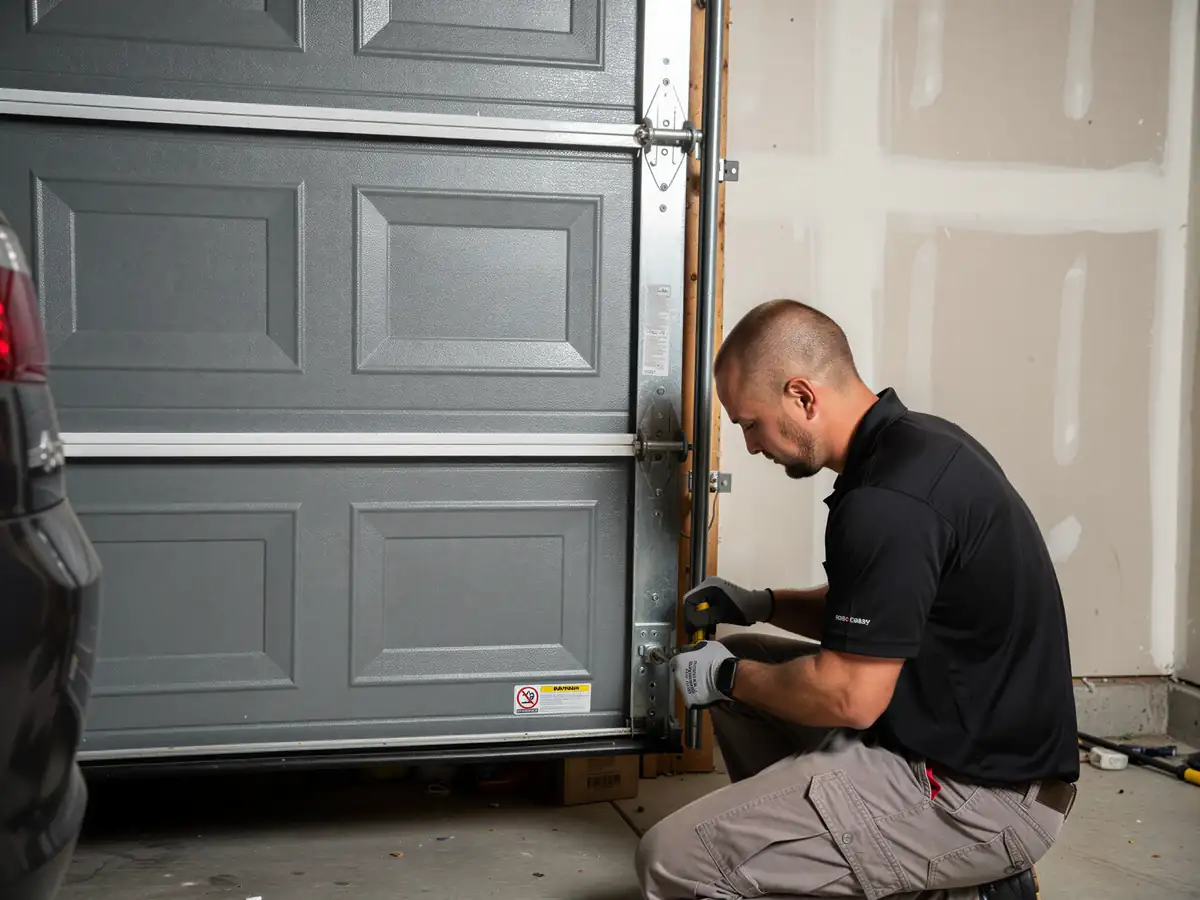
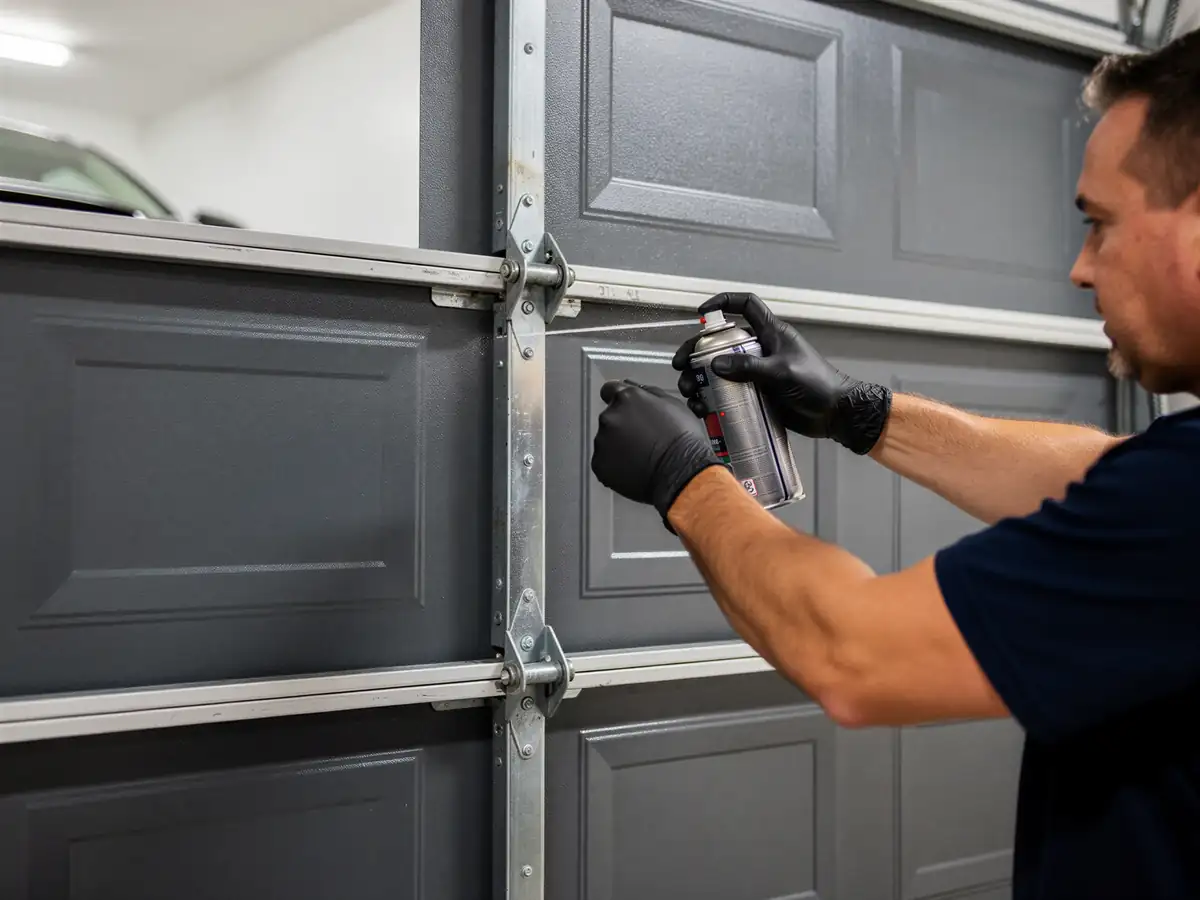
A technician in black gloves sprays lubricant on a gray garage door hinge.
Elizabethtown, KY
8 services
5 service areas
Diagnosis first, then the fix

Booking a Visit

We run maintenance visits out to Hodgenville from our Elizabethtown shop, about 13 miles up the road. There's no local branch here, so we build the trip around your schedule rather than a drive-by route, which means we ask a few more questions up front: age of the door, whether the opener has been swapped since the house was built, and whether anything's already grinding or sticking. That lets us load the right springs and rollers before we leave rather than guessing. Hodgenville is a smaller pocket of the territory we cover - 1,149 households - so we're not running trucks through here every day, and we'd rather schedule a visit that actually has the right parts on it than show up twice.

What Is on the Truck

Across the wider service area, most houses were built between 1957 and 2001, with a median around 1975. Hodgenville runs older than that average - homes here cluster closer to 1968 - so the torsion spring sizes, the drum styles, and the opener mounting brackets we carry for this stop skew toward what a late-1960s garage actually has, not what a newer build in another part of the county would need. That's a meaningful difference: a spring cut for a 1975 door won't always wind correctly on a 1968 shaft, and we've seen techs show up with the wrong one because the paperwork just said 'service area standard.'

What the Repair Takes

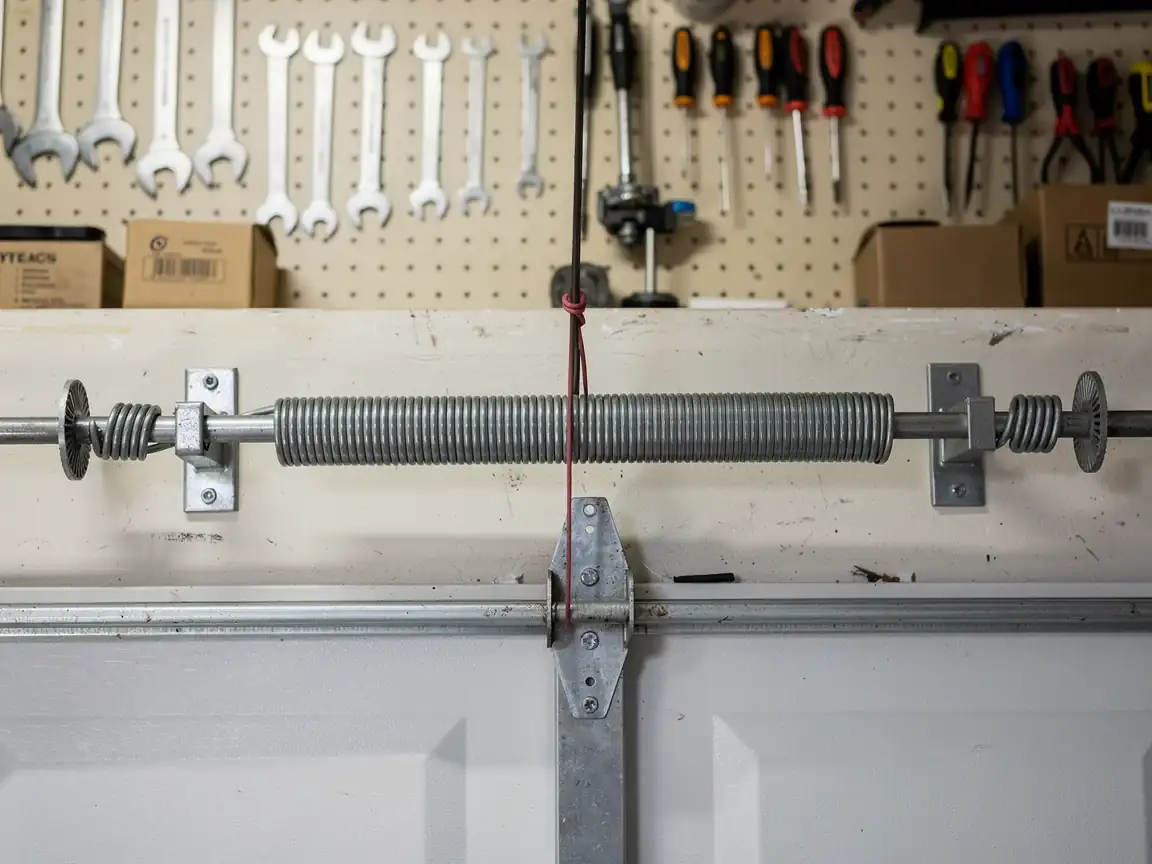
A maintenance visit on a door this age usually means checking torsion spring wind and cable tension against original hardware that's had five decades of Kentucky winters on it, lubricating tracks and hinges that may never have been serviced, and testing the opener's force settings if one's been added since the house was built. On a door built close to 1968, we're also watching for panel seams and track gauge that don't match what's sold today - sometimes a part has to be special-ordered rather than pulled off the truck, and that's the honest limit here: we can tune and adjust most of what we find, but a one-off bracket or an obsolete track width can mean a short wait.

What You Are Seeing

Homeowners here usually call about a door that's gotten loud, slow, or uneven - lifting unevenly on one side, hesitating halfway up, or making a bang when the spring finally lets go. Doors this age weren't built with today's safety cables or auto-reverse sensors as standard, so a failing spring doesn't just stop the door, it can let a panel drop hard. If you're noticing the opener straining more than it used to, that's often the spring losing tension gradually rather than the motor wearing out.

What Causes It Around Here

This area sits in a cold, moderate climate band, and a 1968-built garage wasn't insulated or sealed the way a newer one would be. Decades of winter temperature swings on original steel hardware means more rust on cables and more brittle plastic idler pulleys than you'd find on a door half that age. Combined with a track system that's rarely been realigned since installation, the freeze-thaw cycle each year is doing slow, steady damage that doesn't show up until the door is already struggling.
Doing It Yourself

Lubricating hinges and rollers, clearing track debris, and tightening visible bolts are reasonable DIY jobs on a door this age, and doing them twice a year will buy you real time before anything fails. What we don't recommend touching yourself is the torsion spring or anything under tension - on hardware pushing 55 years old, the steel has fatigued in ways you can't see, and that's not a job to learn on. If your opener's safety reversal doesn't trip when you set a board under the door, stop using it and get that looked at before it's a bigger repair.

How it works

From “it’s stuck” to “it’s fixed”

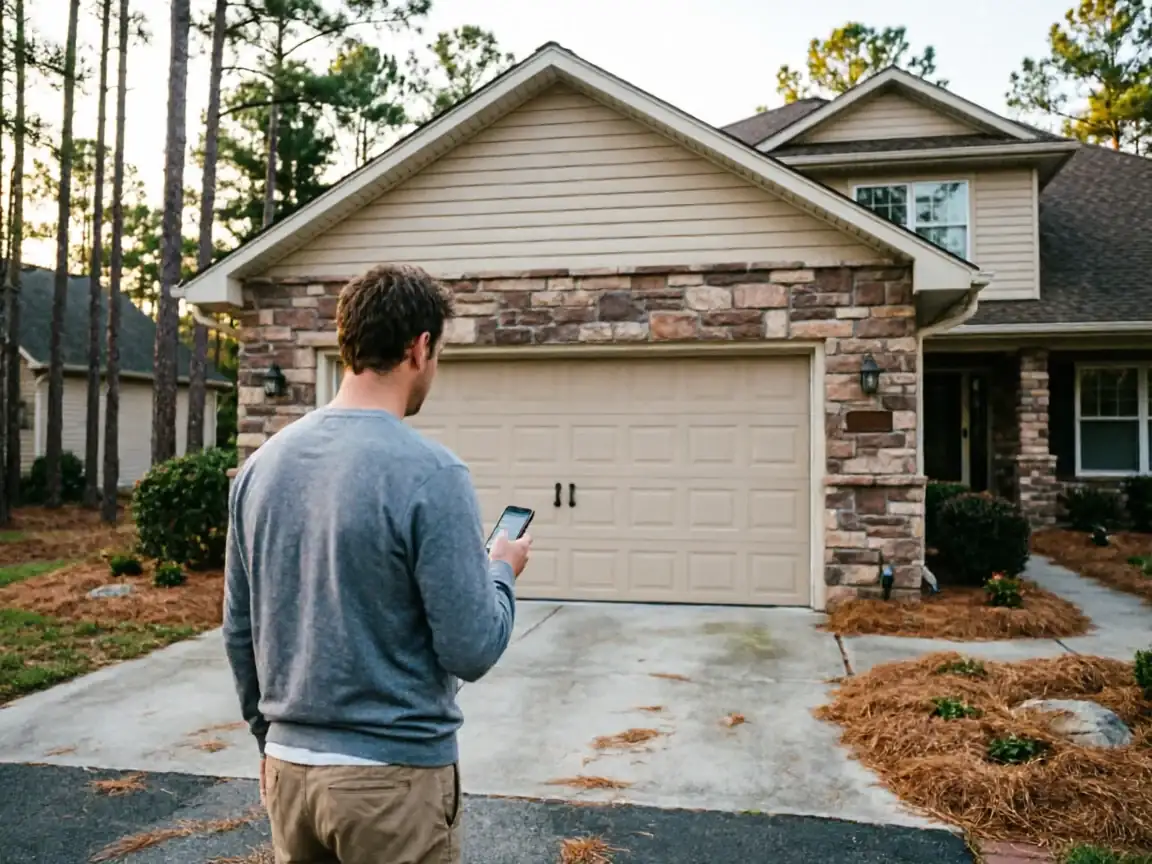
A man stands in a driveway, looking at his phone in front of a garage door.

Tell us what’s wrong

Describe the symptom - won’t open, loud bang, opener runs but the door won’t move.

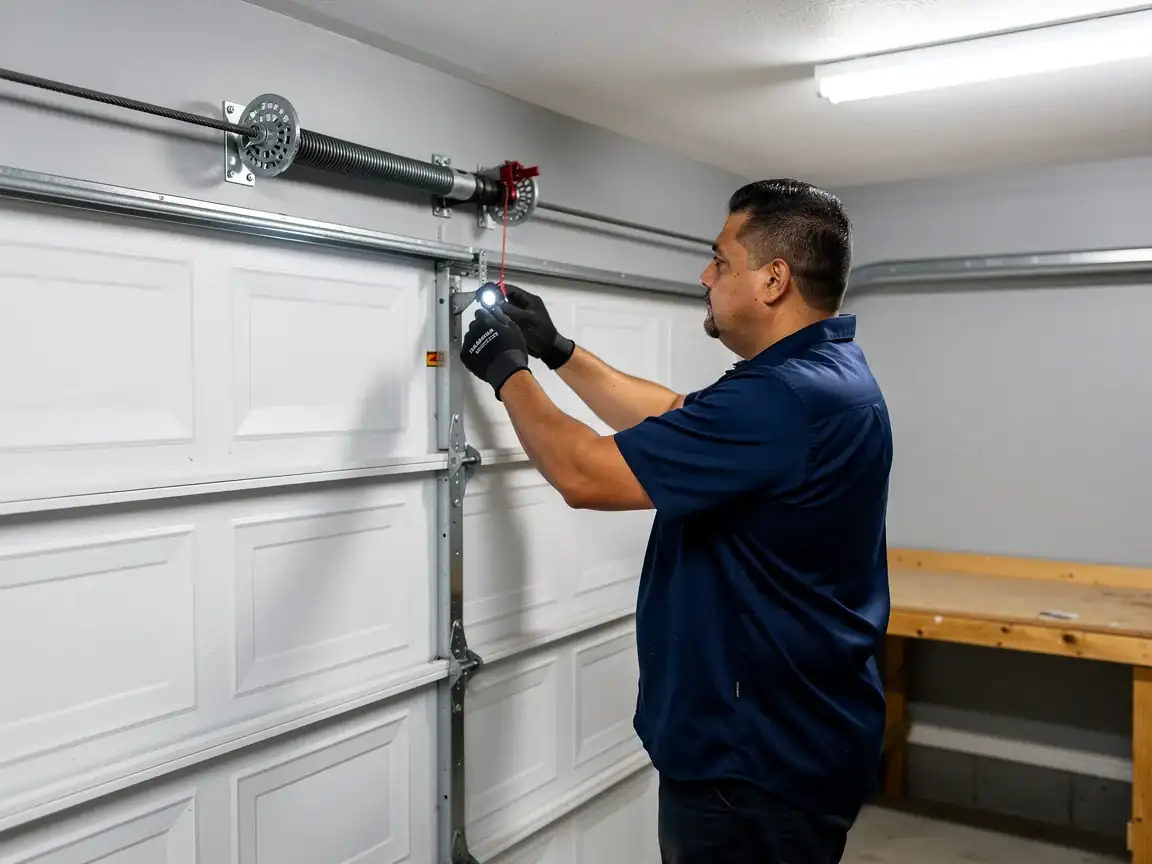
A technician inspects the garage door torsion spring with a flashlight.

On-site diagnosis

A technician tests the door under power and by hand and finds what actually failed.

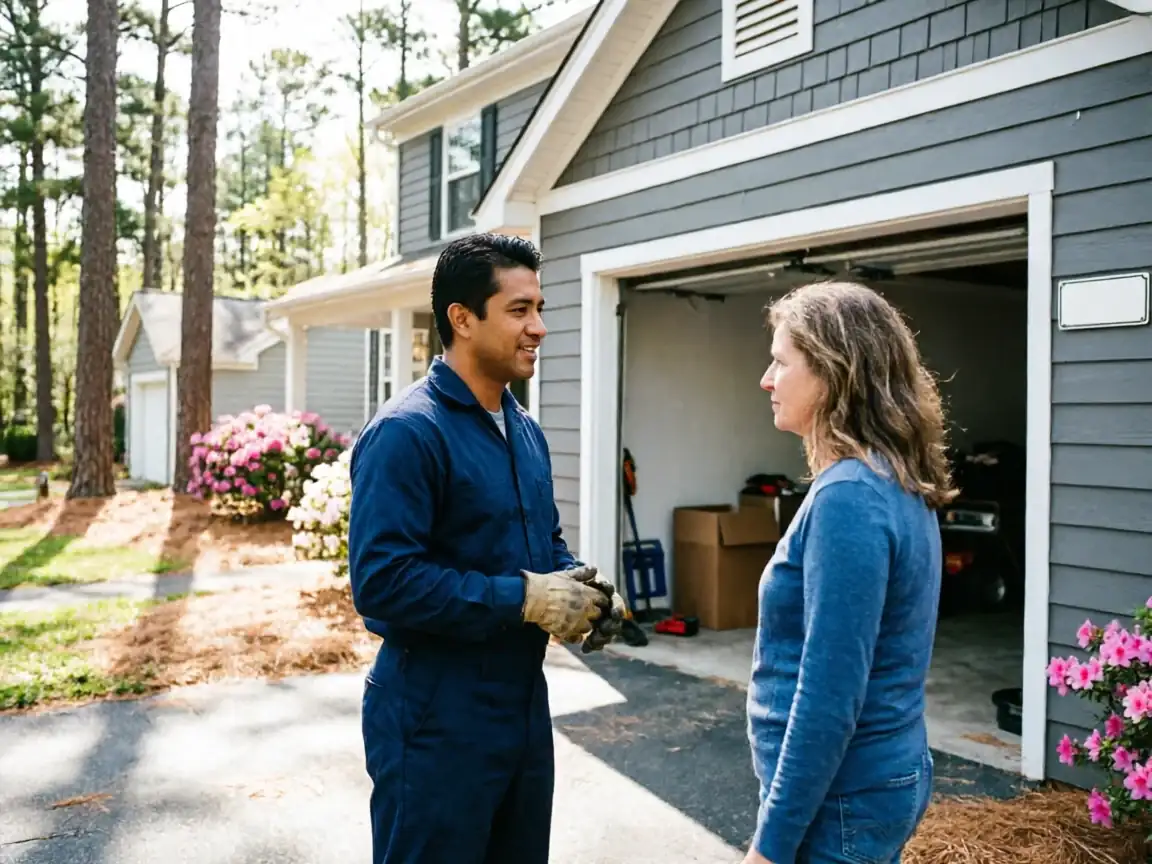
A technician in a blue uniform talks to a woman in front of an open garage.

Clear, up-front plan

You get the fix that’s needed and what drives the cost - before any work starts.

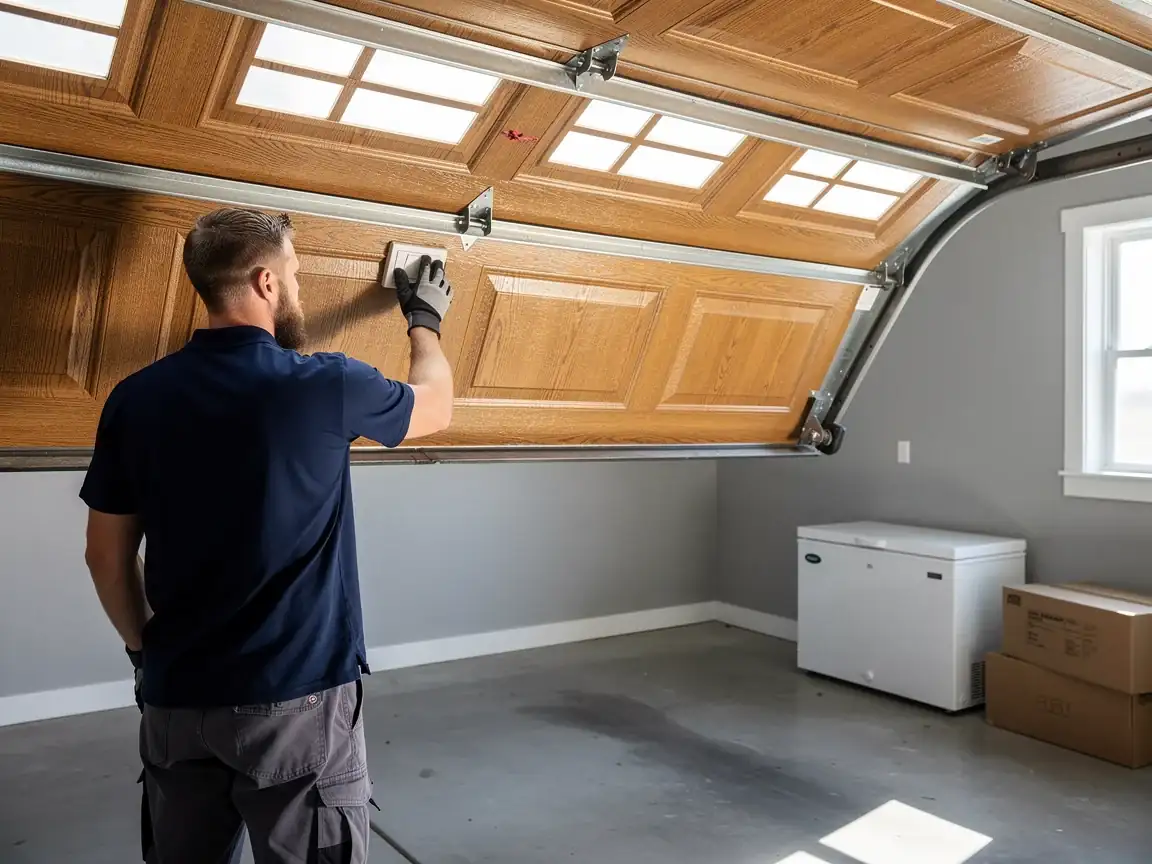
A technician in a blue shirt is working on a brown garage door.

Repaired & tested

The repair is done, the door is set true and tested, and the work area left clean.

Not sure which repair your door needs in Elizabethtown, KY? Describe what it’s doing - every job starts with a diagnosis.

How we work

What to expect

Diagnosis first

Every visit starts by finding what actually failed - not a pre-written parts list.

The right part for the door

Springs and openers matched to the door’s weight and age, so the fix holds up.

Straight answers

When a repair makes more sense than a replacement - or the reverse - you hear it plainly.

Clean, careful work

Tension released safely, hardware set true, the door tested under power before we leave.

29,678Residents in Elizabethtown
8Garage door services
5Neighborhoods & suburbs
KYServing Elizabethtown, KY
Questions

Frequently asked

Straight answers about garage door repair in Elizabethtown. Still unsure? Ask us directly.

01How far out does your crew travel for a maintenance visit in Hodgenville?

We come from Elizabethtown, about 13 miles away. There's no branch in Hodgenville itself, so visits here are scheduled trips rather than drive-by stops, which is why we ask about your door's age and symptoms ahead of time.

02Why does my door's hardware look different from newer doors I've seen listed online?

Most homes in this part of the service area were built in the 1957-2001 range, but Hodgenville runs older, closer to 1968. Spring sizes, drum styles, and track gauges from that era don't always match what's sold as a standard replacement today.

03Is it worth maintaining an original door this old, or should I replace it?

That depends on what we find. Steel hardware from the late 1960s can often be tuned and kept running, but if a part is obsolete and has to be special-ordered, replacement sometimes makes more sense than waiting on it. We'll tell you which situation you're in.

Ready to get your garage door sorted?

Tell us what it’s doing and where you are in Elizabethtown - we’ll take it from there.

Request a QuoteCall