Booking a Visit
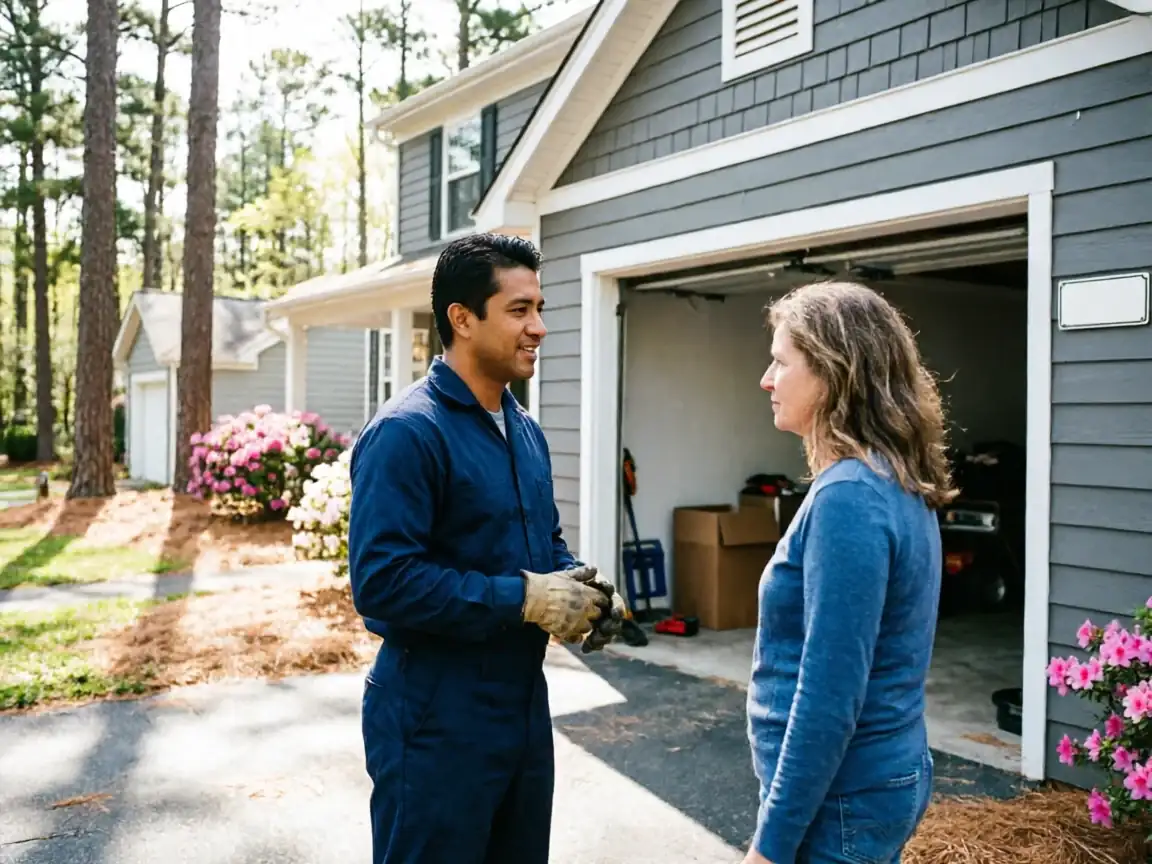
Hodgenville sits 13 miles out from our shop in Elizabethtown, which shapes how a call here actually works. We don't have a depot in town, so every job gets scheduled as a route stop, not a walk-in - the truck loads for Hodgenville specifically, with the spring sizes and roller hardware that fit what's actually on the houses out here. That's not a knock against the town, it's just what driving the distance means: we ask a few more questions on the phone before we come, because showing up without the right torsion spring on a 13-mile drive wastes your morning and ours. If you can tell us the door's age and whether it's one panel or sectional, we can load closer to right the first time.
We book by the day, not the hour, since a 13-mile pull means the schedule runs in loops rather than back-to-back slots inside Elizabethtown itself. That's the honest trade-off of covering a wider area instead of just the one town.
What Is on the Truck
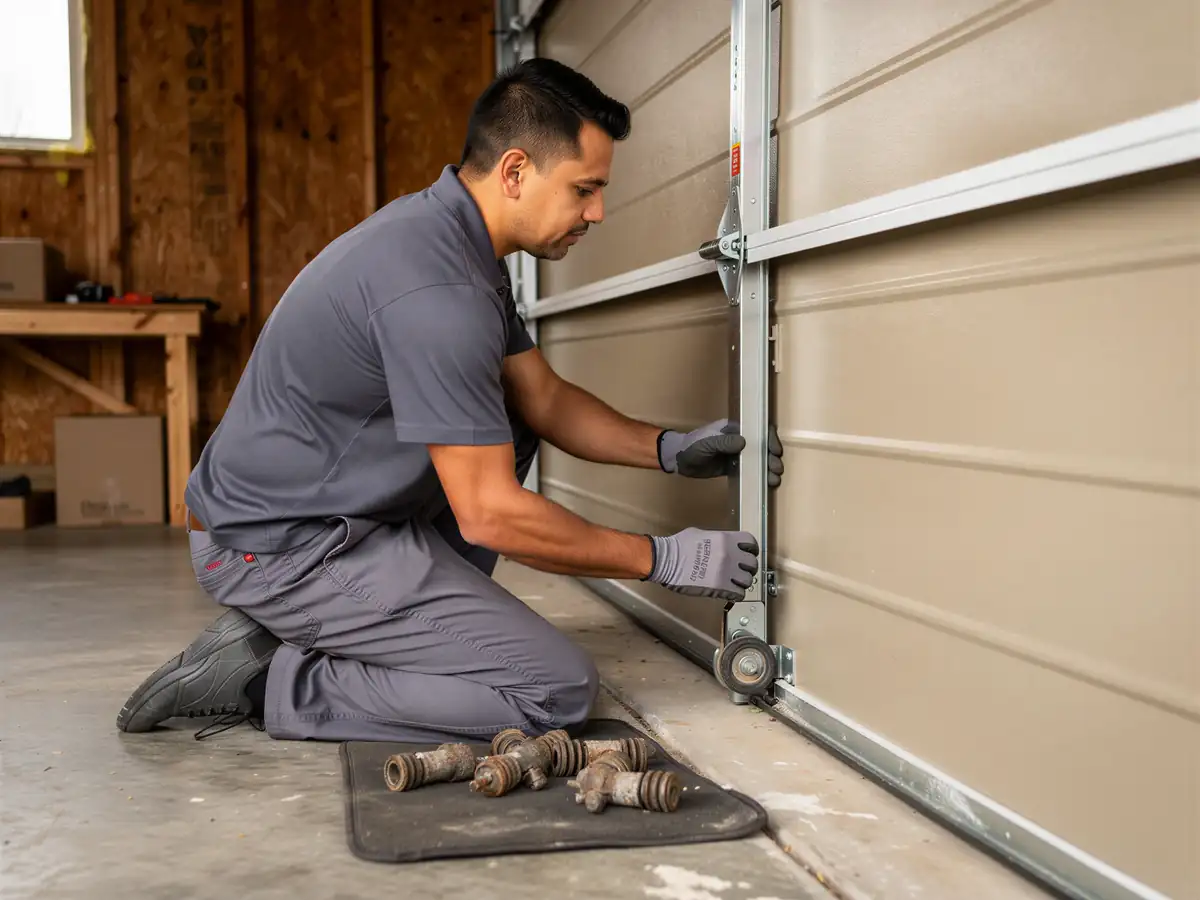
For Hodgenville calls we load for houses built mostly around 1968, which means standard torsion springs on steel track rather than the older side-mounted extension setups you'd find on something built before the 1960s. The truck carries common roller and cable sizes for that era of door, plus openers that match the chain-drive units that tend to show up on houses from that build window. We also carry parts for the COLD moderate climate band this whole service area sits in - weatherstripping and seals rated for freeze-thaw cycling, not the lighter gaskets made for milder regions.
We don't carry every custom panel size or specialty insulated door on the truck - those get special-ordered, and if your door is a less common width we'll tell you that on-site rather than stall you with a guess. Having the right stock for a 1968-era door doesn't mean we stock everything; it means we stock what actually breaks on these doors most often.
What the Repair Takes
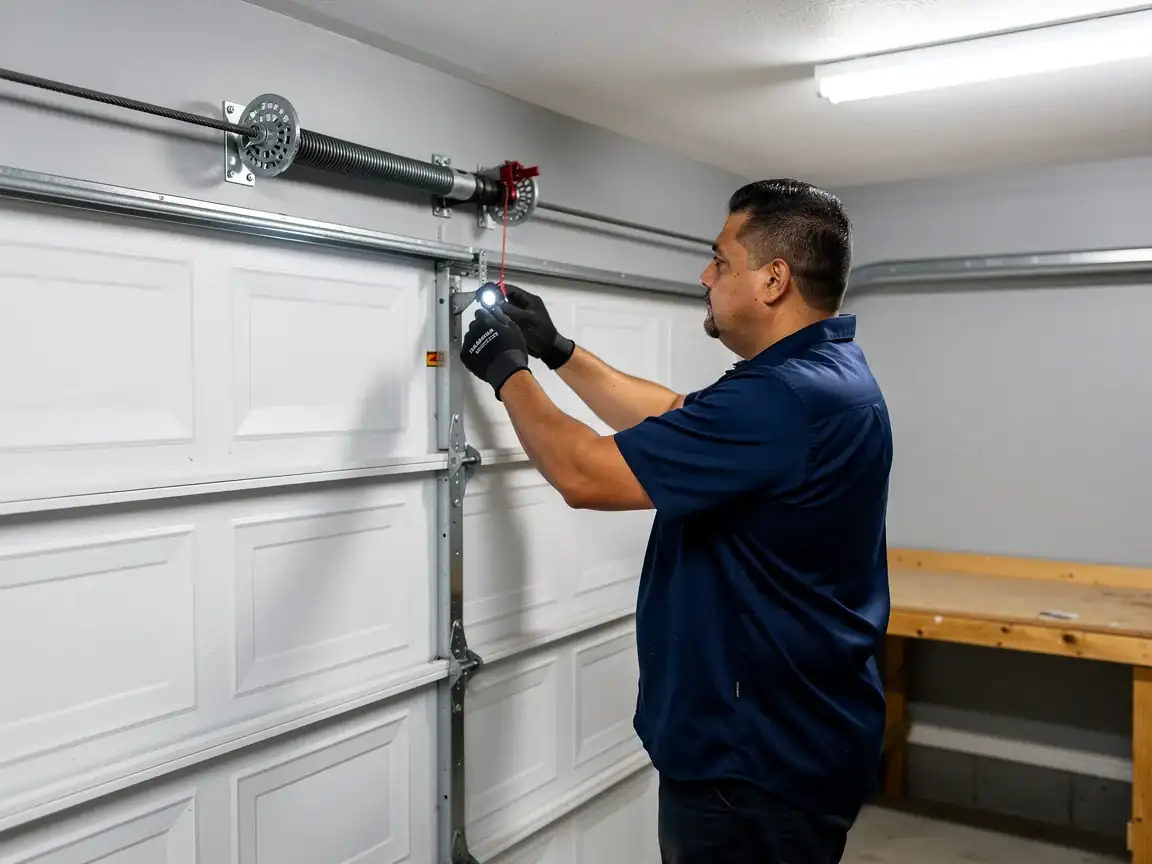
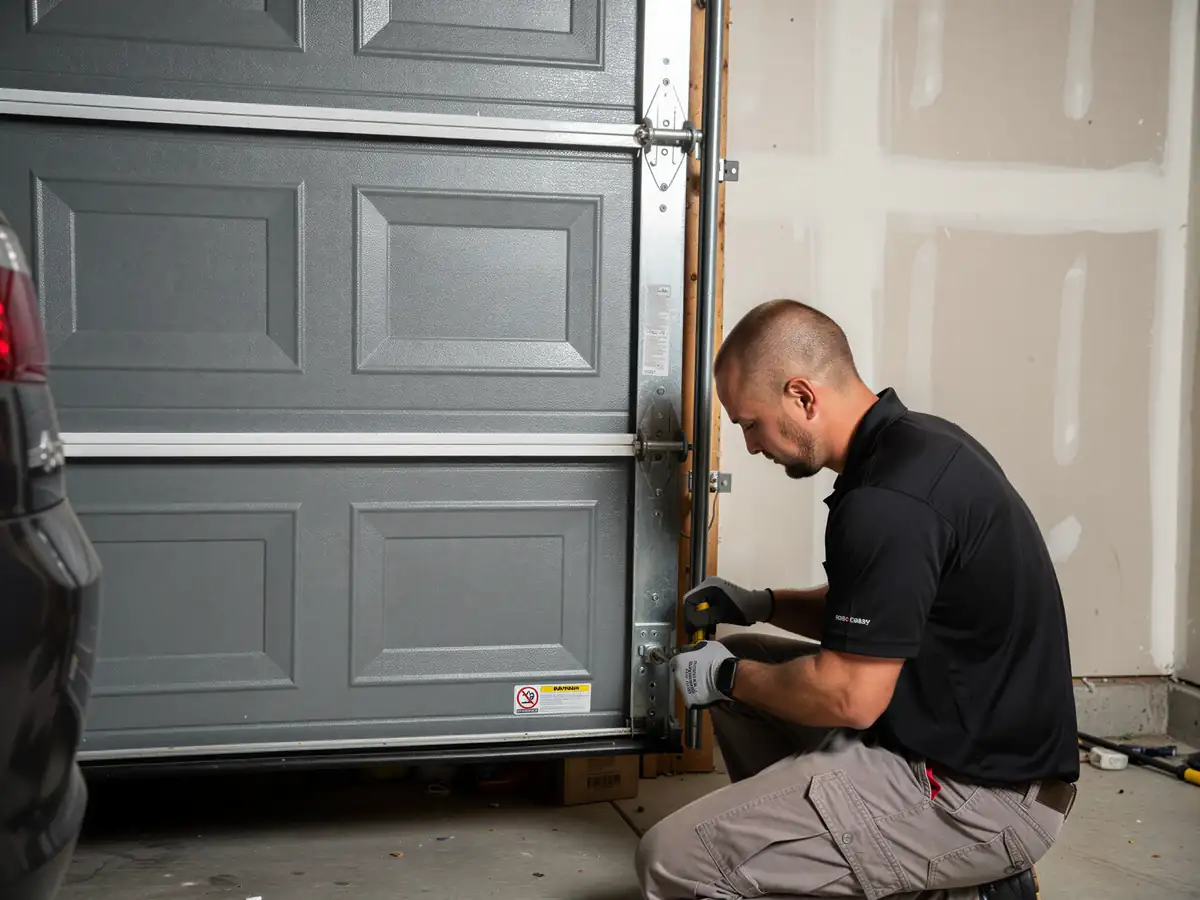
A torsion spring replacement on a standard steel door from this build era is usually a same-visit job once the truck is loaded right
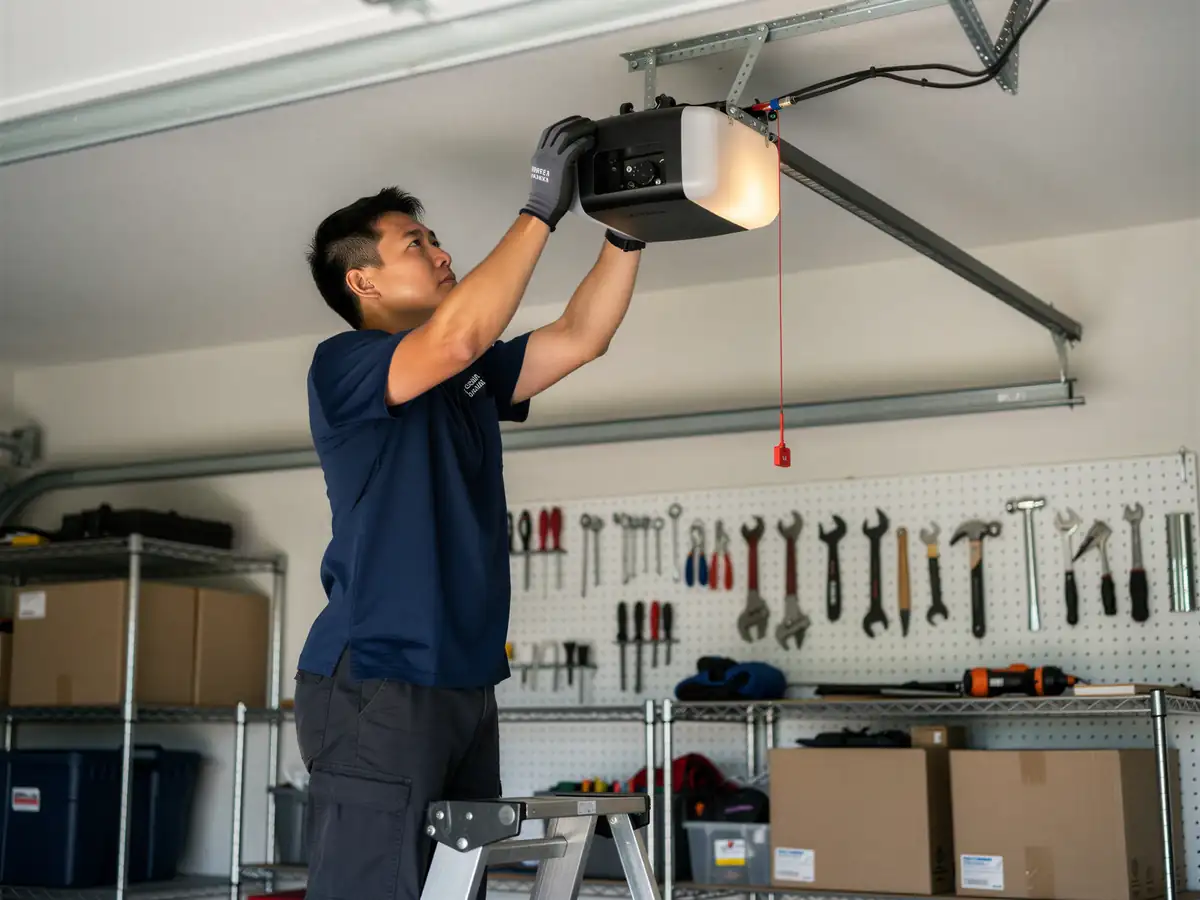
The hardware is common enough that we're not waiting on a special part. Opener swaps and track alignment on these houses run similarly straightforward, since the stud spacing and door widths from the late 1960s are consistent across most of the houses we see out this way.
Where it gets longer is anything tied to the cold
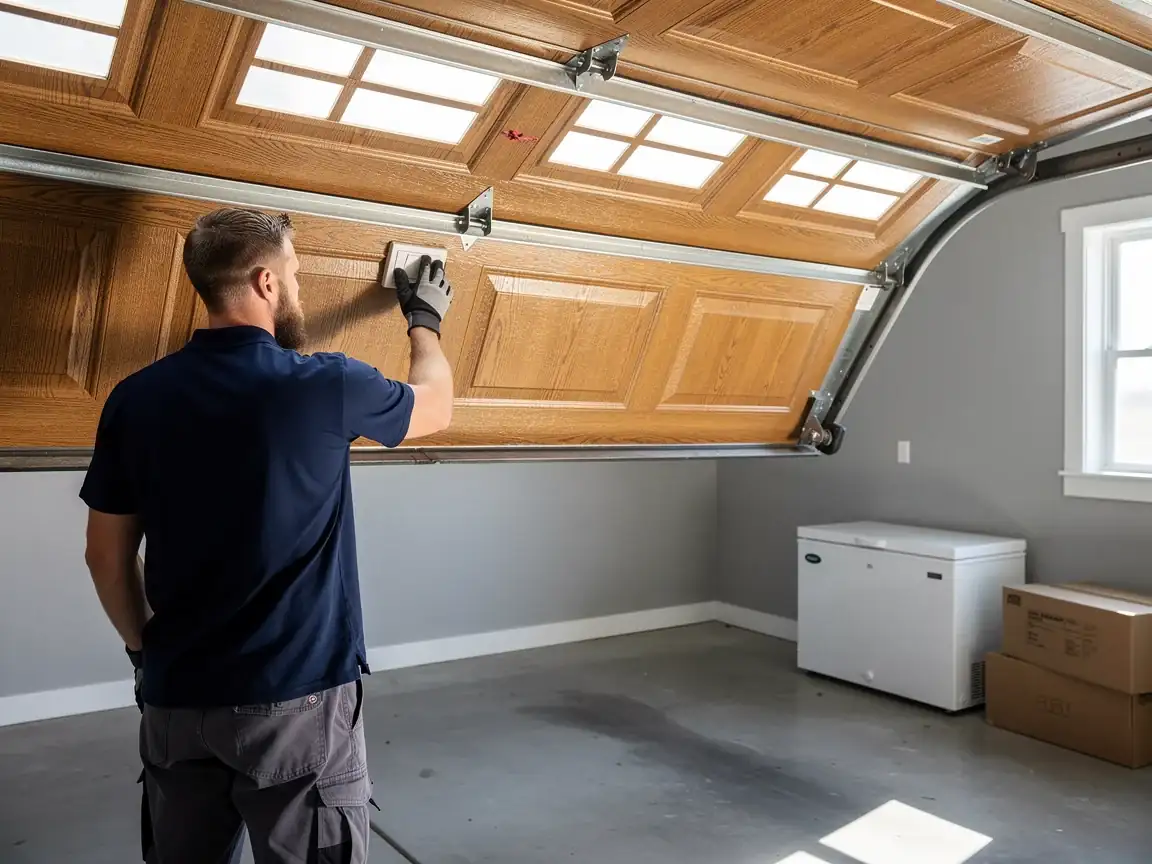
A seized opener gear or a track that's racked from ice buildup over a winter takes more diagnosis time than a straight spring snap, because we have to check whether the cold caused the failure or just exposed a weak part that was already failing. We're honest about that distinction rather than replacing parts that don't need it. And if a panel's been dented or rusted past patching, we'll say replacement beats repair rather than stretch a fix that won't hold through another winter.
What You Are Seeing
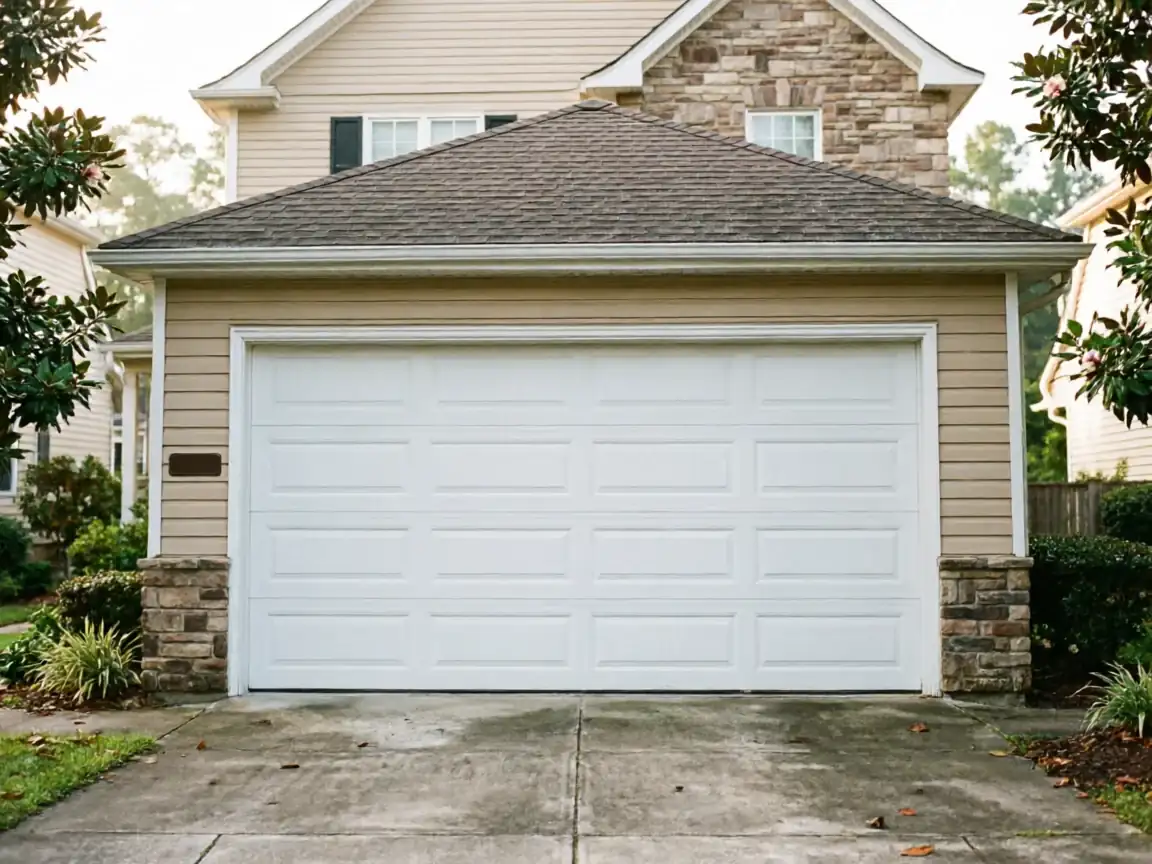
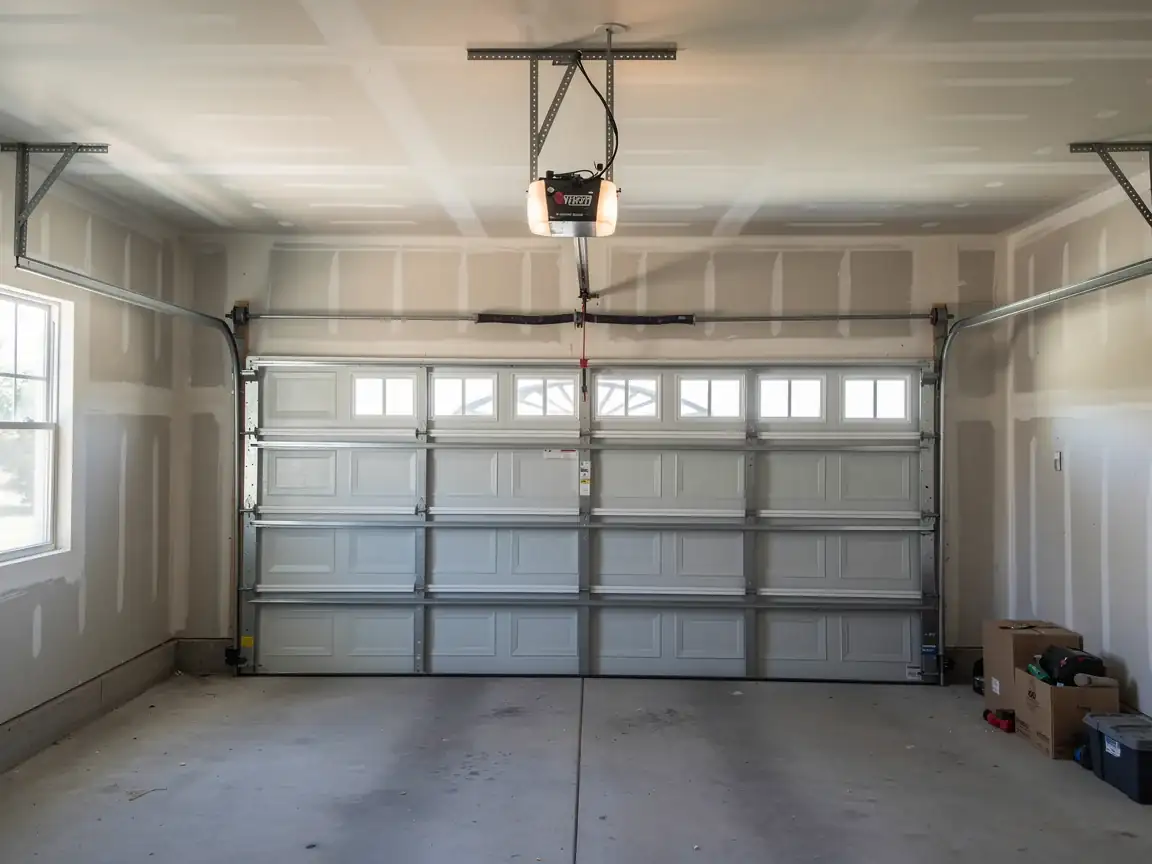
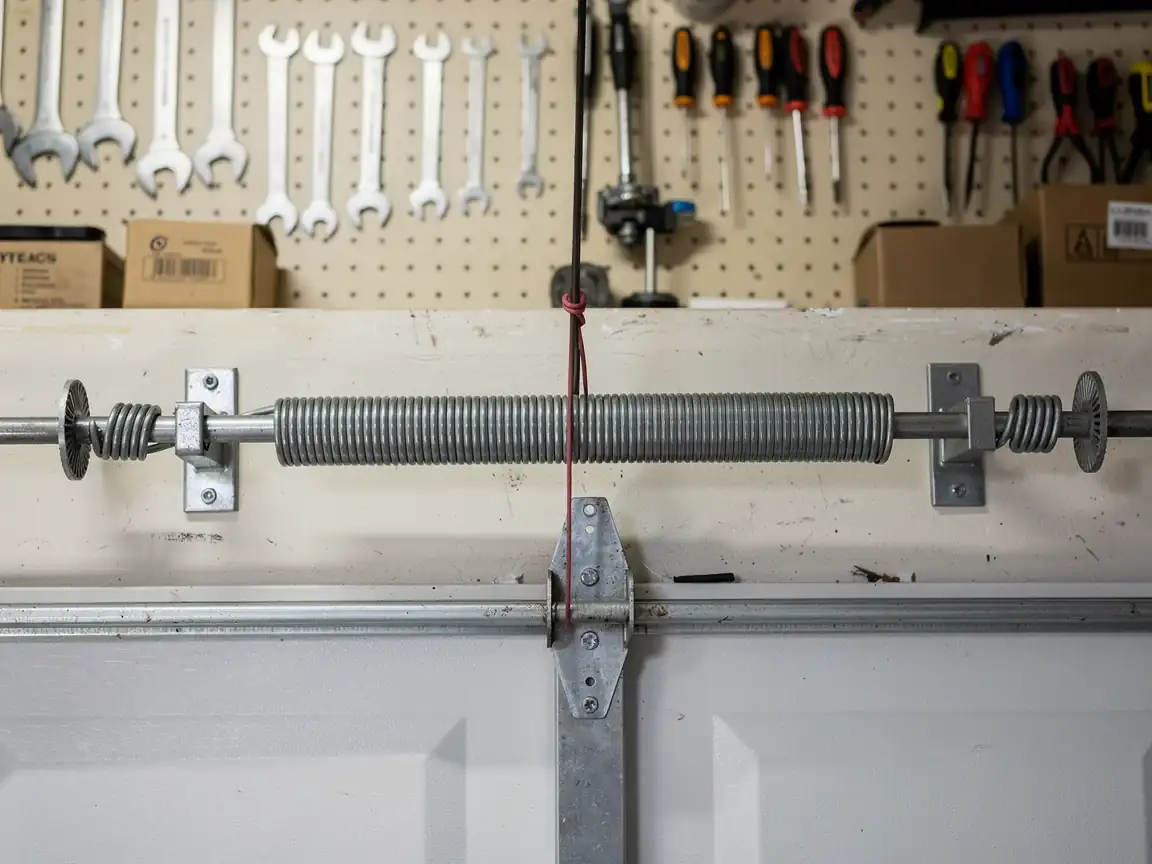
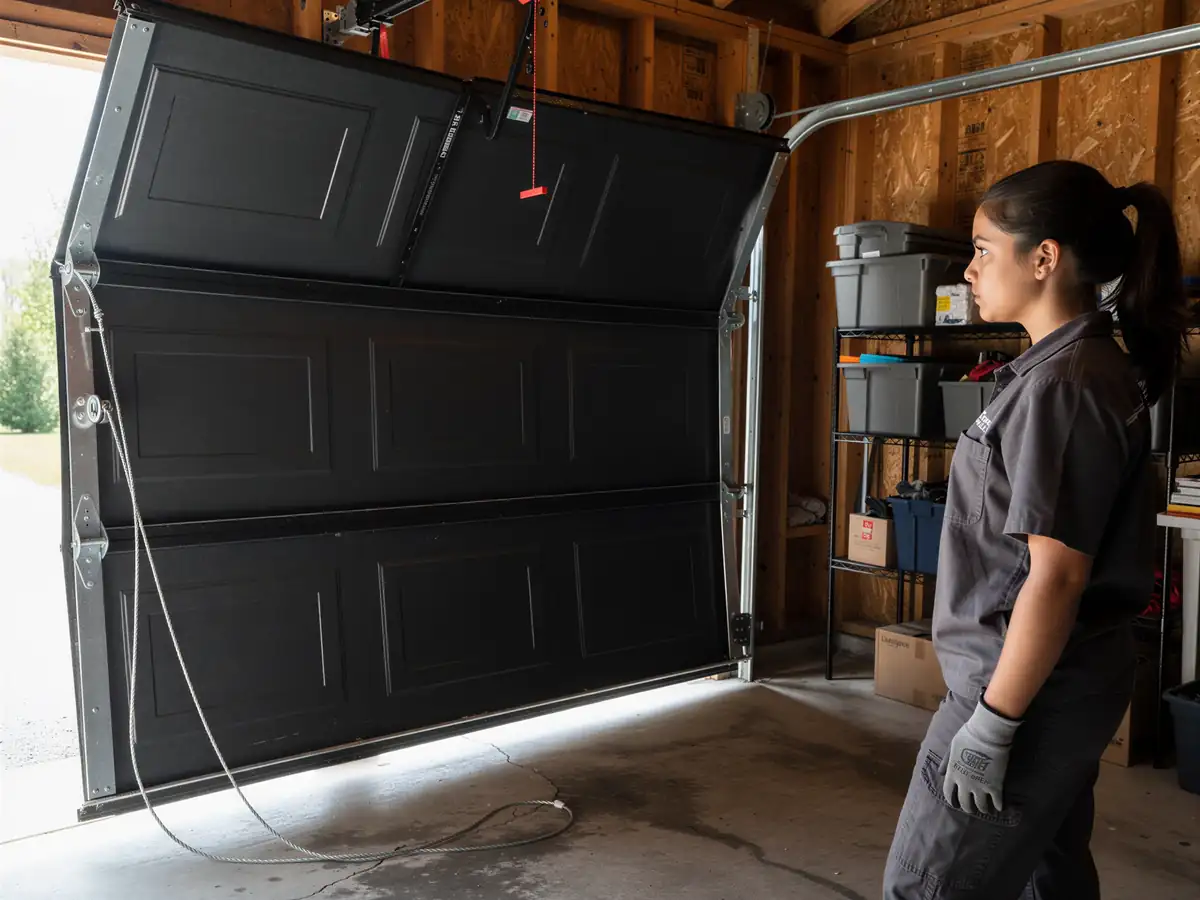
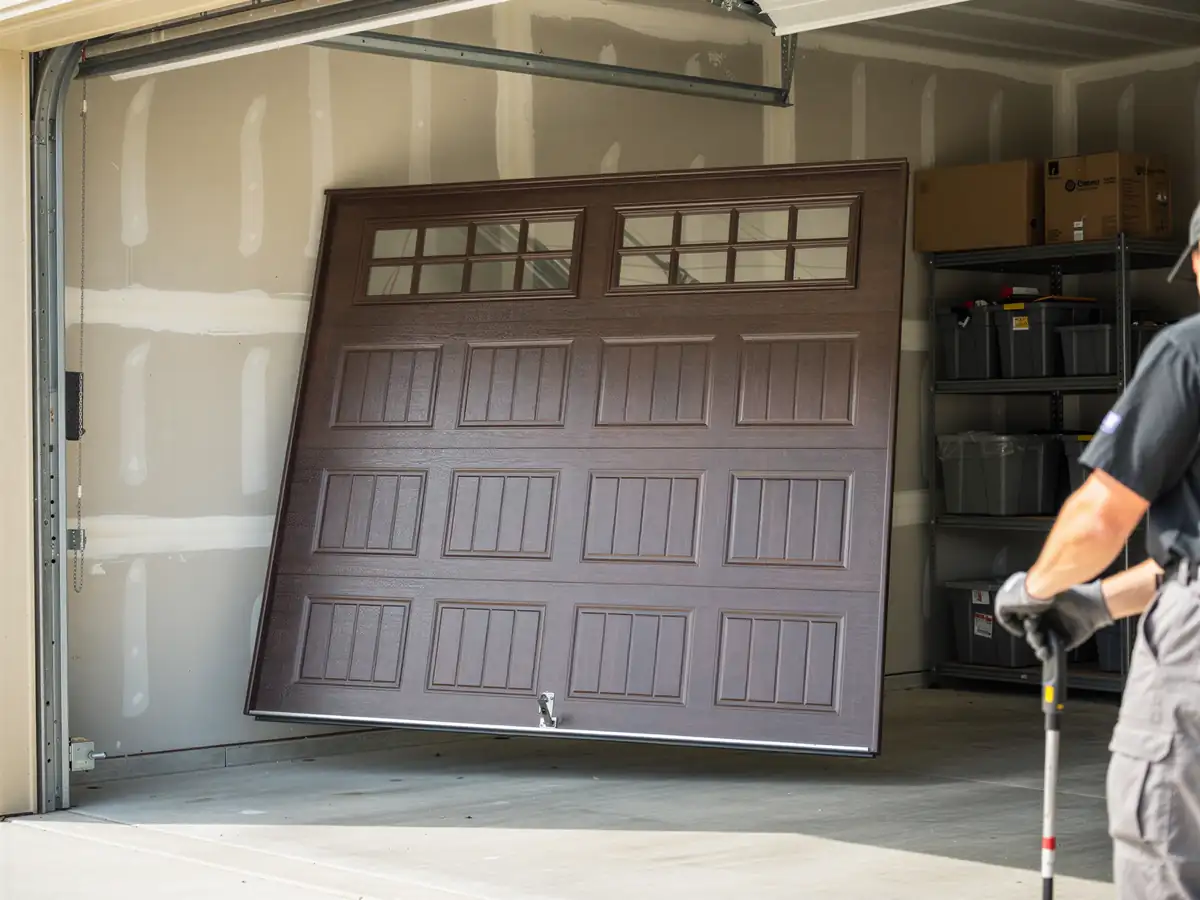
On a house from the late 1960s, the complaint we hear most is a door that reverses halfway up, or a spring that's audibly snapped overnight. Houses built in that window in this area tend to run steel sectional doors on torsion springs mounted above the opening, so a loud bang followed by a door that won't lift on its own is almost always that spring letting go, not the opener.
A slower, quieter symptom - the door drifting off level, or one side dragging - usually means a cable has started to fray rather than snap clean, which is common on hardware that's been cycling since the late '60s and hasn't been replaced. Either way, these are wear patterns tied to age and climate, not a one-off accident, so if it happened once it's worth having the rest of the hardware checked rather than waiting for the second side to go.
What Causes It Around Here
The COLD moderate climate band this area sits in means steel hardware contracts and expands through freeze-thaw cycles every winter, and springs and cables that have been doing that since a house went up around 1968 are due for fatigue regardless of how the door looks. That's the main driver we see on calls from this part of the service area - not misuse, just metal that's been through fifty-some winters of temperature swings.
Household income here runs around $58,750, a bit above the wider service area's $55,375, and across roughly 1,149 households in town the door hardware tends to be original or close to it rather than recently replaced, which is consistent with what we find on most calls - worn torsion hardware rather than a door that's been upgraded. We don't see that as a complaint, just a pattern: older hardware in a climate that's hard on steel.
Doing It Yourself
Checking the door's balance is something any owner here can do safely
Disconnect the opener, lift the door halfway by hand, and see if it holds. If it drops or flies up, the spring tension's off and that's not a DIY fix; torsion springs store enough force to cause real injury, and we don't recommend touching them yourself regardless of how simple a video makes it look.
What you can safely do
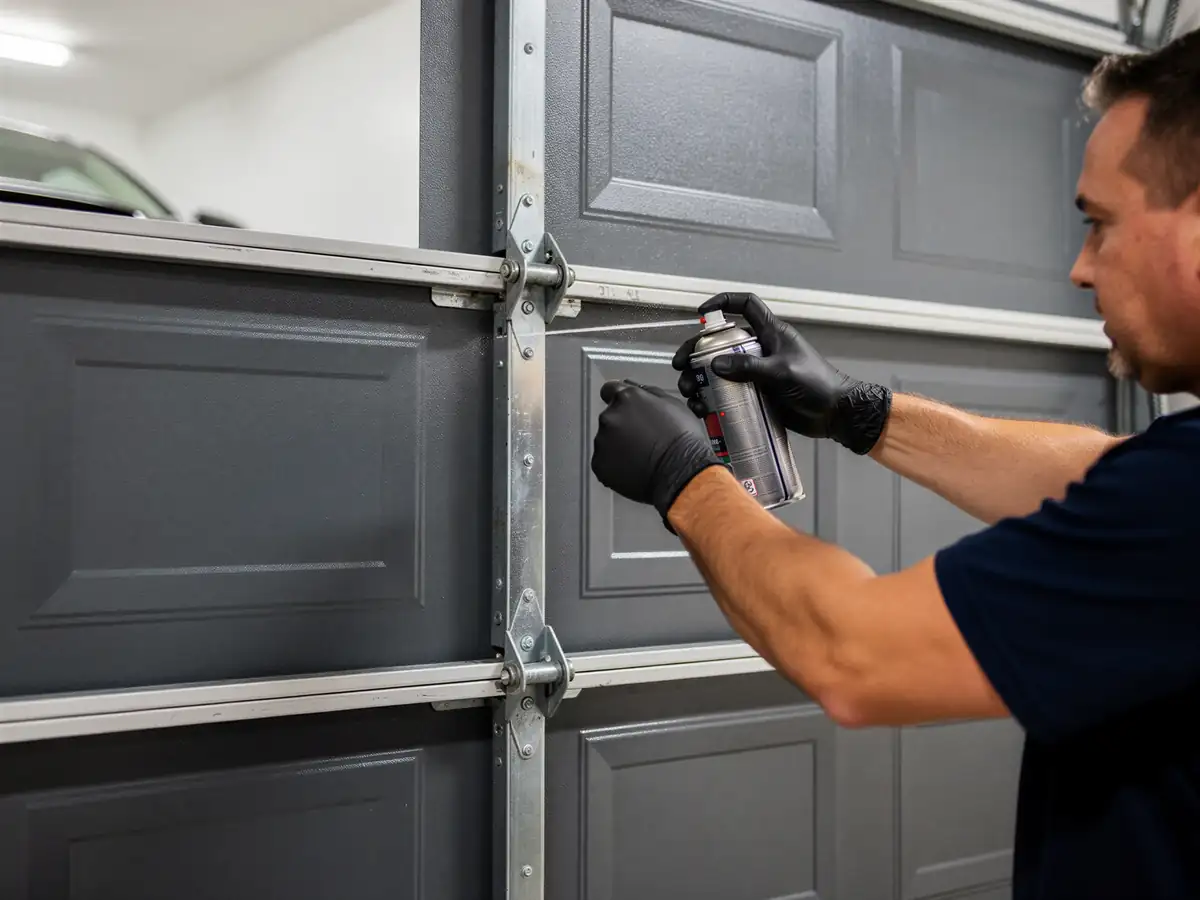
Lubricate rollers and hinges once or twice a year, especially before winter given the freeze-thaw cycling this area gets, and keep the track clear of debris. Tightening loose bolts on the track brackets is fine too. Beyond that - springs, cables, and anything involving the opener's internal gearing - it's worth a call rather than a repair attempt, especially on hardware that's been in place since the house was built.
For more on repair specifics in town, see our Hodgenville garage door repair page
Or for the full range of what we cover from the shop, the Elizabethtown service page has that.